





Yoga Sequencing: 5 Common Mistakes Yoga Teachers Should Avoid
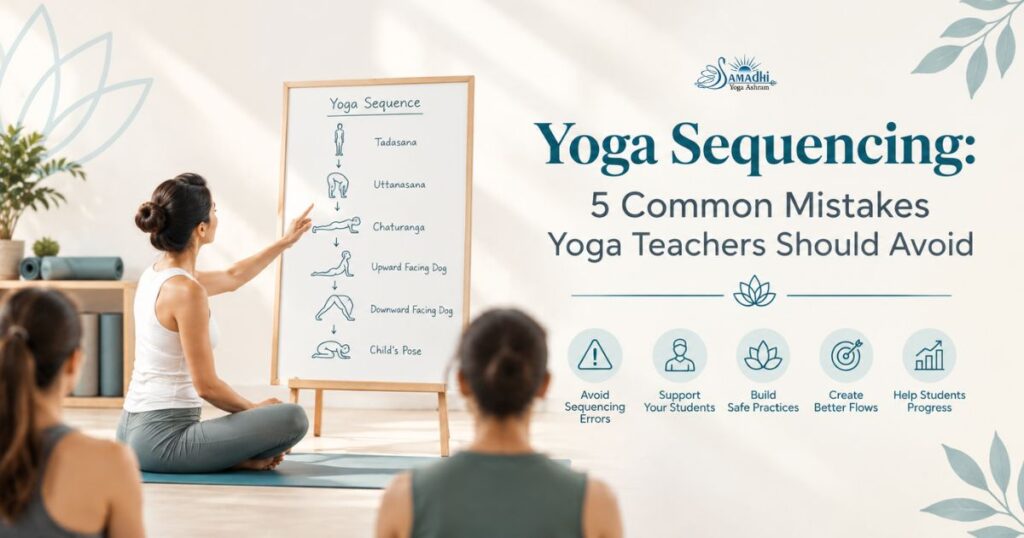
Table of Contents
- What Is Yoga Sequencing?
- 5 Common Yoga Sequencing Mistakes
- 1. Starting With Long Holds or Deep Stretches
- 2. Going To Hard Poses Too Soon
- 3. Adding Too Many Poses and Having No Clear Goal
- 4. Teaching The Same Way To Every Group
- 5. Rushing or Skipping Savasana
- How to Plan a Yoga Sequence in 6 Steps
- A Simple Yoga Class Structure
- Yoga Sequence for Beginners: What to Keep in Mind
- How to Adjust a Yoga Flow Sequence
- How to Get Better at Yoga Sequencing
- Quick Checklist Before You Teach
- Conclusion
- Frequently Asked Questions
- Should I always follow the same order in every class?
- Is a yoga flow sequence only for Vinyasa classes?
- What should I do if I forget the next pose while teaching?
- Is it okay to teach the same yoga sequence every week?
- How do I plan a class if a student has an injury or health condition?
Yoga sequencing is the order in which you arrange poses in a class. A good order helps students warm up, move with care and end the class feeling calm. A weak order can make a class feel rushed, hard or confusing, even when every pose is fine.
This article covers five common yoga sequencing mistakes and how to fix each one. It then shows how to plan a yoga sequence step by step. You will also find a simple yoga sequence for beginners and a checklist to use before class.
What Is Yoga Sequencing?
Yoga sequencing means choosing which poses to teach and in what order, so the class has a clear start, middle and end.
Each pose prepares the body for the next one. A yoga sequence is more than a list of poses. It is a plan for how the class will feel from the first breath to the last.
You will hear a few related terms:
- Yoga sequence: the set of poses in one class, in order.
- Yoga flow sequence: poses linked together with breath and movement.
- Yoga class flow: how the whole class feels as it moves along, including pace, rest and energy.
5 Common Yoga Sequencing Mistakes
1. Starting With Long Holds or Deep Stretches
A short pause at the start is helpful. It lets students arrive and slow down. The problem is holding still poses for a long time while the body is cold. Students can get bored and stretches can feel harder than they should.
Fix: Start with two or three minutes of calm breathing. Then move into gentle motion, such as Cat-Cow or side stretches. Save long holds for later in the class.
Deep forward folds need extra care. A seated forward fold such as Paschimottanasana asks a lot from the backs of the legs and the lower back. It usually feels better after students have moved and warmed up. Place it in the second half of the class and offer a bent-knee option.
2. Going To Hard Poses Too Soon
When a difficult pose comes early, students often feel stuck. Some push too hard. Others stop listening to their own breath and just watch you.
Fix: Build up in steps. Before a deep hip opener or a split, add lunges and gentle leg stretches first. Start with simple versions of a pose, then offer harder options later.
3. Adding Too Many Poses and Having No Clear Goal
A class made of random poses can feel like a list of exercises. Some teachers also worry that a class will feel empty, so they keep adding poses. Students then spend the class figuring out the next move instead of feeling the pose.
Fix: Pick one goal before you choose any poses. Keep it small, like “gentle hip stretch” or “slow flow for tired shoulders.” Then ask about each pose, “Does this help the goal?” If not, take it out. Repeating a few poses helps students learn them and feel them better.
4. Teaching The Same Way To Every Group
A sequence that works for one group may not suit another. A class of new students needs a slower pace than a class of regular students.
Fix: Look at your students before you start. Ask if anyone has pain or a health concern. Give more than one option for key poses: an easier one, the regular one and a harder one.
5. Rushing or Skipping Savasana
Classes often run late. Students need extra help. Someone has to leave a pose early. The first thing that gets cut is usually the ending. Then students leave without any rest.
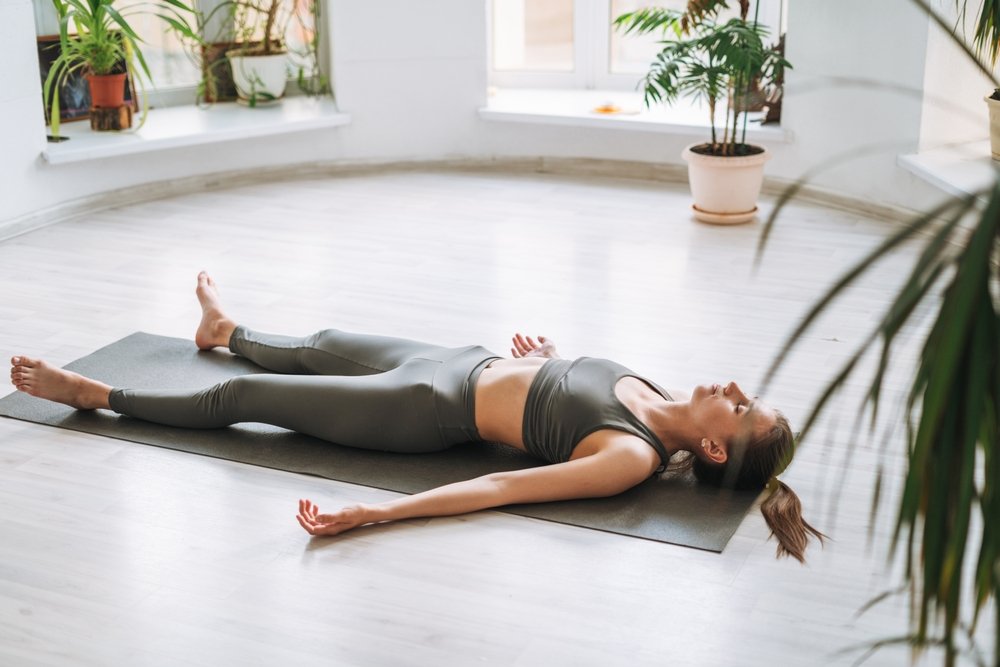
Fix: Plan the ending first and make sure you have enough time for it. Many teachers keep at least five minutes for Savasana, the final rest pose, lying on the back. Keep more time in longer classes. If you are running behind, remove a pose or a round from the middle instead. Slow the pace in the last ten minutes so students can come down gently.
How to Plan a Yoga Sequence in 6 Steps
You do not need a perfect method. This simple order works well for most classes.
- Pick one goal for the class.
- Think about your students. How experienced are they? Is anyone new? Are there age or fitness differences?
- Choose one main pose or focus. This is the “peak” of the class. It can be a pose, like Warrior II, or a body area, like hips.
- Work backwards from it. Ask what the body needs before this pose. Add poses that prepare those areas.
- Balance the body. Follow strong poses with a calming one. After backbends, many teachers offer Child’s Pose or a gentle forward fold. Check that the class works the front, back and sides of the body.
- Plan the ending and check the time. Add up how long each part will take. Remove a few poses if the plan is too full.
A Simple Yoga Class Structure
This is an example of a 60-minute class. You can change the times.
| Part of Class | What Happens | Example Time |
| Arrive | Students settle, breathe and set the mood | 5 min |
| Warm-up | Gentle movement for spine, shoulders, hips | 10 min |
| Build-up | Standing poses or flow that raise the heat | 20 min |
| Main focus | The peak pose or theme of the class | 12 min |
| Cool-down | Slower poses on the floor, gentle stretches | 8 min |
| Savasana | Final rest | 5 min |
Yoga Sequence for Beginners: What to Keep in Mind
A good yoga sequence for beginners is simple and easy to follow. New students are still learning the names of poses, how to breathe and how their bodies move.
Keep these points in mind:
- Use basic poses and explain them clearly.
- Give short, calm instructions, too many words can be confusing.
- Show easier versions without making anyone feel behind.
- Tell students they can rest in Child’s Pose at any time.
Simple beginner sequence (example)
This works as a base for a gentle 45 to 60 minute class. Change it to fit your students.
- Easy seated breath (2 to 3 minutes)
- Cat-Cow
- Table to Downward Dog (a few times, with rests)
- Low Lunge, each side
- Mountain Pose
- Warrior II, each side
- Triangle Pose, each side (offer a hand on the shin or a block)
- Bridge Pose
- Gentle reclined twist, each side
- Savasana
How to Adjust a Yoga Flow Sequence
The same poses can be arranged in many ways. Small changes make a different class.
By class goal.
- For an energizing class, add more standing poses and a steady pace.
- For a relaxing class, use slower poses, longer breaths and more floor work.
- For a focus class, choose one area, such as hips or shoulders and prepare it well.
By class length. A shorter class needs fewer poses, not faster ones. Keep the same parts (arrive, warm up, main focus, cool down, rest) but make each one shorter.
By yoga style. Some styles, like Ashtanga, follow a set order. In those, sequencing means teaching the order well. In other styles, like Hatha or Vinyasa, the teacher makes more of the choices.
How to Get Better at Yoga Sequencing
Sequencing improves with practice. These habits can help:
- Do the sequence yourself first. Move through it slowly and you will notice where it feels rushed or where a pose comes too early.
- Teach it to a friend or small group. Ask what felt hard or confusing.
- Note what worked. After each class, write down what you would keep and what you would change.
- Watch your students. Are they breathing calmly? Are they copying you and not listening to their bodies? Their faces and breath tell you a lot.
- Learn from experienced teachers. Take classes and notice how they move from one pose to the next.
Many new teachers learn sequencing in a structured course. If you are looking at yoga teacher training in India, check that the course includes sequencing lessons, practice teaching, and feedback from teachers. Time spent teaching real classes is where most of the learning happens.
Quick Checklist Before You Teach
- Does the class have one clear goal?
- Do the early poses prepare the body for the later ones?
- Are deep stretches and hard poses placed after the warm-up?
- Have I balanced the front, back and sides of the body?
- Do key poses have easier and harder options?
- Is there enough time for Savasana?
- Do I have a backup plan if the class runs late?
Conclusion
Good yoga sequencing helps students feel ready, calm and cared for. Most problems come from a few simple things: starting too hard, having no clear goal, forgetting who is in the room or rushing the ending.
You can fix all of these with a little planning. Pick one goal, build up in steps and give your students options. Keep enough time for Savasana.
Your first sequences will not be perfect and that is normal. Write down what worked after each class. Small changes over time will make your yoga class flow smoother and your students will feel the difference.
Frequently Asked Questions
Should I always follow the same order in every class?
No. There is no single order that works for every class. Most teachers use the same basic structure, as in the table above, and choose different poses inside it. If you want to try something new, change one thing at a time so you can see how students respond.
Is a yoga flow sequence only for Vinyasa classes?
No. A yoga flow sequence simply links poses with breath and movement. Vinyasa classes use it most but any style of yoga needs a thoughtful order of poses.
What should I do if I forget the next pose while teaching?
Stay calm. Ask students to breathe in the pose they are in or hold it a few more breaths. Look at your notes if you have them. Many teachers keep a small card or sheet with the class plan near their mat. Students usually do not notice a short pause.
Is it okay to teach the same yoga sequence every week?
Yes. Regular students often like a familiar class because they can learn the poses and see progress. You can keep the base the same and change one or two poses now and then to keep it fresh.
How do I plan a class if a student has an injury or health condition?
Ask the student before class. Encourage them to check with their doctor or health professional if they are unsure what is right for them. Then offer gentler options and let them skip any pose that does not feel right. Yoga teachers are not medical experts, so avoid saying that a sequence will fix or treat a condition.
This article is for general information and is not medical advice. If you have a respiratory or heart condition, are pregnant, or are unsure whether these practices suit you, please speak to your doctor before beginning. Yoga poses and breathing exercises should be practiced with proper guidance from a qualified yoga teacher to help ensure safe and correct practice.