Online Yoga Teacher Training: What to Know Before You Enroll
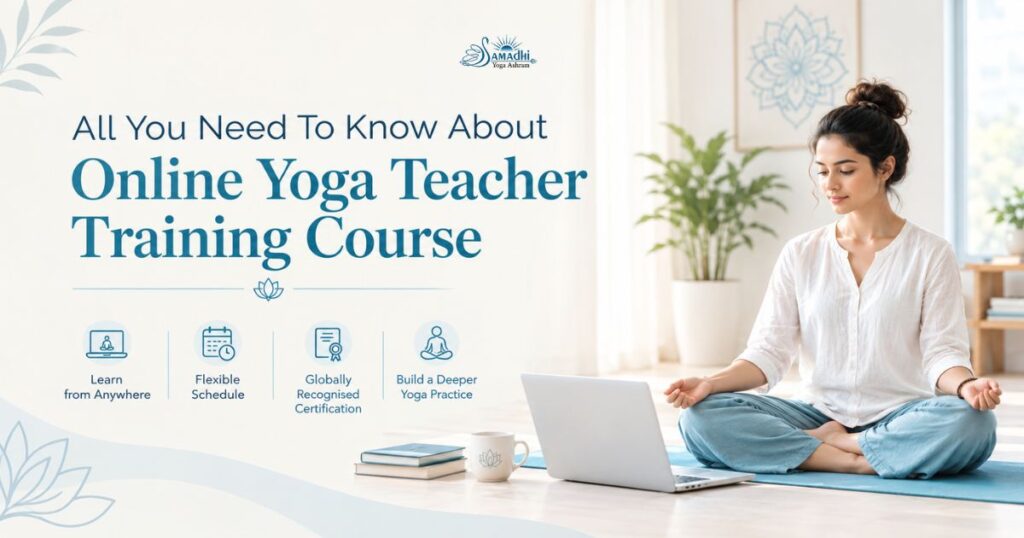
Table of Contents
- What Is Online Yoga Teacher Training?
- How Does Online Yoga Teacher Training Work?
- What Do You Learn in Online Yoga Teacher Training?
- Benefits of Online Yoga Teacher Training
- Limitations of Online Yoga Teacher Training
- Online vs In-Person Yoga Teacher Training
- Is Online Yoga Teacher Training Certification Valid?
- How to Choose an Online Yoga Teacher Training Course
- 200, 300 and 500 Hour Online Yoga Teacher Training
- Conclusion
- Frequently Asked Questions
- Do I need yoga experience before I join?
- What do I need to join online classes?
- Can I study at my own pace?
- How long does online yoga teacher training take?
- Can I teach yoga after finishing a 200-hour online course?
- Do I need the 200-hour course before the 300-hour course?
- What happens after I finish the course?
Online yoga teacher training (online YTT) is a course that teaches you how to teach yoga through the internet. You study from home with recorded lessons, live classes or a mix of both, plus study material. Some courses lead to a certificate. Some also let you apply for Yoga Alliance registration.
This guide explains how it works, what you learn, what it can and cannot do and how to pick a good course.
What Is Online Yoga Teacher Training?
Online yoga teacher training is a yoga teacher course you take on the internet instead of at a studio or ashram. You study on your computer, phone or tablet.
Online and in-person teacher training can cover many of the same topics but the way you learn and practice them is different.
Courses come in levels. The common ones are 200 hours, 300 hours and 500 hours. We explain these below.
How Does Online Yoga Teacher Training Work?
Every school does it a little differently. An online course may include:
- Recorded Lessons: These are videos or audio classes you watch when it suits you. You can watch them again.
- Live Classes: Some courses include live sessions where you join a teacher on Zoom at a set time and ask questions.
- Study Material: A school may give you a manual or e-books for reading.
- Assignments. These are written or practical tasks that check what you have learned.
- Teaching Practice: You practice leading a class yourself, often on video or with friends and family.
- Trainer Feedback: A good course tells you how the trainers will comment on your work.
- Final Assessment: A course may end with a test before you get a certificate. Ask how it works.
Samadhi Yoga Ashram has more than one online program and the format is different for each one. The 200-hour online courses are built around recorded lessons that you study at your own pace. The lessons are taught by teachers from the ashram in Rishikesh. Details such as how long you have access and how long you have to finish depend on the course, so check the course page before you enroll.

What Do You Learn in Online Yoga Teacher Training?
An online yoga teacher training program may cover these areas:
- Asana (yoga poses): How to do each pose, how to make it easier or harder, and when to avoid it.
- Pranayama (breathing practice): Simple breathing methods and how to teach them safely.
- Meditation: Different ways to sit, focus and relax.
- Yoga Philosophy: Ideas from texts such as the Yoga Sutras and the Bhagavad Gita.
- Anatomy: How the body moves and how to avoid common injuries.
- Alignment: How to place the body in a pose in a safe way.
- Sequencing: How to build a class from start to finish.
- Teaching Methods: How to give clear instructions, use your voice and handle a group.
- Teaching Practice: Leading real or practice classes.
- Ethics: How to treat students with respect and create a safe and respectful learning environment.
The exact syllabus depends on the school and the yoga style. Samadhi’s 200-hour online multi-style course covers Hatha, Ashtanga and Vinyasa, along with pranayama, meditation and yoga philosophy. Its separate Kundalini courses focus on Kundalini yoga.
Read More: Yoga Sequencing: 5 Common Mistakes Yoga Teachers Should Avoid
Benefits of Online Yoga Teacher Training
Here are the main benefits:
1. It Fits Around Your Life: You learn from home. You do not need to leave your job or family for weeks. This can suit people who study around work, school or family responsibilities.
2. It Can Cost Less: You save on flights, hotels and food. Fees vary a lot between schools, so compare the full cost before you decide.
3. You Can Learn at Your Own Pace: Recorded lessons let you go back to a topic you did not fully understand. Some courses also add live sessions where you can ask questions.
4. You Practice In Your Own Space: Practicing and teaching at home can help you build a routine that fits your daily life.
5. You Learn Skills Beyond Yoga: Leading a class means speaking clearly, listening and guiding a group. These skills can also be useful in work and daily life.
Read More: How to Deepen Your Yoga Practice: 10 Practical Ways
Limitations of Online Yoga Teacher Training
Online training is not right for everyone. Here is what to keep in mind:
- Less Face-To-Face Time: You talk to trainers and classmates on a screen, not in the same room.
- Limited Hands-On Correction: A teacher cannot touch or adjust your pose through a camera. Feedback is mostly by words and video.
- You Need Self-Discipline: No one is in the room to keep you on schedule. You must make time for study and practice.
- Internet Problems Can Get In The Way: A weak connection can make it hard to stream lessons or join live sessions.
- It Is a Different Experience From An Ashram: Living with a group, sharing meals and following a daily routine cannot be copied on Zoom.
None of this means online training is bad. It is a different way to learn and it works well for some people.
Online vs In-Person Yoga Teacher Training
| Factor | Online | In-Person |
| Location | Anywhere with internet | At the school or ashram |
| Schedule | Recorded lessons and self-study, plus live sessions on some courses | Usually a fixed daily schedule |
| Travel | Not required | Usually required |
| Accommodation | Your own home | Often at or near the school |
| Flexibility | Usually higher | Usually more fixed |
| Trainer interaction | On screen | Face to face |
| Physical correction | Mostly verbal and video feedback | Direct observation may be possible |
| Learning environment | Your home | Group setting |
Neither format is better for everyone. Online may suit you if you work, have a family or cannot travel. In-person may suit you if you want a break from daily life and more hands-on guidance.
Samadhi Yoga Ashram also runs in-person 200 hour yoga teacher training in Rishikesh if you prefer to learn at the ashram.

Is Online Yoga Teacher Training Certification Valid?
It depends. Not every online yoga certificate is accepted everywhere. Whether yours is accepted can depend on:
- The school that gives the certificate
- The specific program you take
- The type of certificate you receive
- Yoga Alliance registration, where it applies
- The rules of the studio or gym you want to work for
- Local rules in your country
About Yoga Alliance: Yoga Alliance is a U.S. based organisation that sets standards for Registered Yoga Schools (RYS) and Registered Yoga Teachers (RYT). It also has its own rules for schools that teach online. These rules can change, so check the current details on the Yoga Alliance website.
Registering with Yoga Alliance is optional. Some studios and gyms ask for it. Others do not. If you have a job in mind, ask the employer what they need.
How to Choose an Online Yoga Teacher Training Course
Before choosing an online yoga teacher training course, check these points:
- Check the Trainers: Read their bios. Look at how long they have been teaching and what they have studied.
- Read the Syllabus: Make sure it covers the topics you want, such as anatomy, sequencing and teaching methods.
- Check the School’s Credentials: See if the school is listed with Yoga Alliance. You can look it up on the Yoga Alliance website.
- Know What You Get At the End: Ask what kind of certificate you receive. Ask if it lets you register with Yoga Alliance.
- Ask About Live Sessions: Does the course have any? If you miss one, is it recorded?
- Ask About Teaching Practice: Will you lead classes yourself?
- Ask About Feedback: How do trainers check your work and your teaching?
- Read Recent Reviews: Look at more than one place, such as Google, Yoga Alliance and social media.
- Check the Time Frame: Ask about start dates, how long you have access and how long you have to finish. Do not assume you can start at any time or take as long as you like.
- Add Up the Full Cost: Ask about extra fees for books, exams, certificates and registration.
- Read the School’s Policies: Look at the refund, postponement and missed class rules before you pay.
200, 300 and 500 Hour Online Yoga Teacher Training
Hour levels show how deep the training goes.
- 200 Hours (foundation): This is the common starting level for people who want formal yoga teacher training. It covers the basics of poses, breathing, anatomy, philosophy and teaching. See Samadhi’s online yoga teacher training course for details.
- 300 Hours (advanced): This level goes further into teaching skills, practice and study. Samadhi’s 300 hour online yoga teacher training course is designed for teachers who already have a 200-hour certificate.
- 500 Hours (advanced): A 500-hour program involves deeper and more extensive teacher training. The exact structure and entry requirements depend on the school and program. You can read about Samadhi’s 500 hour online yoga teacher training on its course page.
Conclusion
Online yoga teacher training can be a useful option if you want to study from home, keep up your daily routine and work toward becoming a yoga teacher. Before you enroll, compare the course format, syllabus, teaching practice, trainer support, certification and total cost.
If you want to study at home, look at the online course options. If you want face-to-face learning and the ashram experience, an in-person course may be a better fit.
Frequently Asked Questions
Do I need yoga experience before I join?
Entry requirements vary by school and course. Check the course page before you enroll. At Samadhi, the requirements are listed on each course page. The 300-hour course, for example, is designed for people who already have a 200-hour certificate.
What do I need to join online classes?
You need a computer, laptop or phone, and a steady internet connection. A microphone helps if your course has live sessions.
Can I study at my own pace?
It depends on the course. Some online courses are built around recorded lessons, so you choose when to watch them. Check the course page for how long you have access and how long you have to finish.
How long does online yoga teacher training take?
It depends on the course. Some are self-paced, others mix live classes with self-study. Check the course page for the access period and the time limit.
Can I teach yoga after finishing a 200-hour online course?
It depends on the school, the employer and the rules where you plan to teach. Check what applies in your area before you look for work.
Do I need the 200-hour course before the 300-hour course?
The 300-hour course is designed for teachers who have already finished a 200-hour training. Check the entry rules on the course page.
What happens after I finish the course?
You receive your certificate from the school. If you want to register with Yoga Alliance, the steps depend on your course. Read the registration details on the course page, or ask the Samadhi team before you enroll.
This article is for general information and is not medical advice. If you have a respiratory or heart condition, are pregnant, or are unsure whether these practices suit you, please speak to your doctor before beginning. Yoga poses and breathing exercises should be practiced with proper guidance from a qualified yoga teacher to help ensure safe and correct practice.