





Mudras in Yoga: 10 Types, Benefits and How to Practice Them
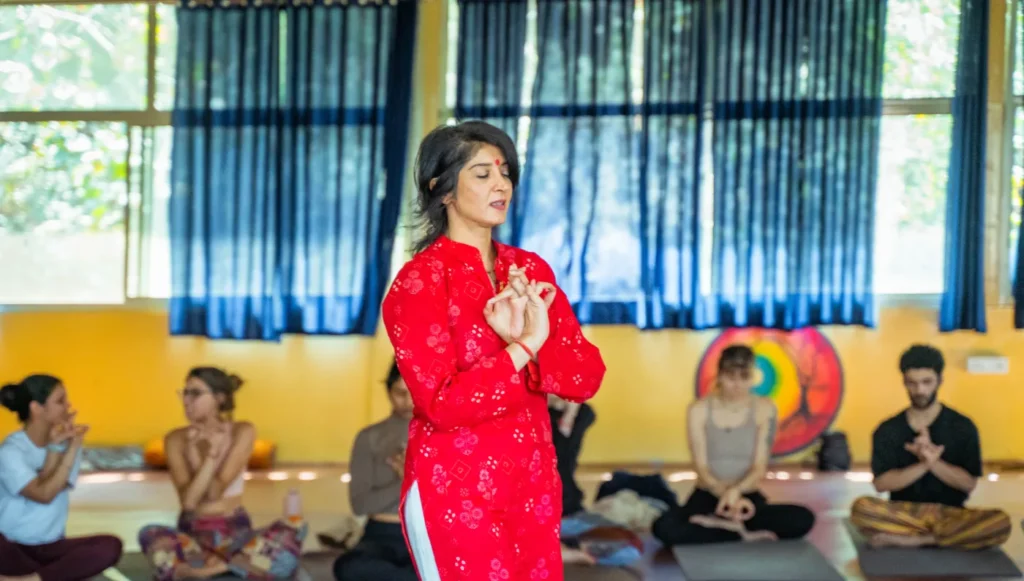
Table of Contents
- What Are Mudras in Yoga?
- How Do Mudras Work?
- 10 Types of Mudras in Yoga
- 1. Gyan Mudra (Gesture of Knowledge)
- 2. Chin Mudra (Gesture of Consciousness)
- 3. Dhyana Mudra (Gesture of Meditation)
- 4. Anjali Mudra (Gesture of Greeting)
- 5. Prana Mudra (Gesture of Life Energy)
- 6. Apana Mudra (Gesture of Letting Go)
- 7. Prithvi Mudra (Gesture of Earth)
- 8. Vayu Mudra (Gesture of Air)
- 9. Shunya Mudra (Gesture of Space)
- 10. Adi Mudra (First Gesture)
- Benefits of Mudras
- How to Practice Mudras
- How Long Should You Practice Mudras?
- Can Beginners Practice Mudras?
- Precautions When Practicing Mudras
- Final Thoughts
- Frequently Asked Questions About Mudras
- Can I practice mudras lying down?
- Can I do more than one mudra in a day?
- Do I have to close my eyes?
- Can I use mudras during pranayama?
- Do both hands have to make the same mudra?
- Can I do mudras without meditating?
- Why do my fingers feel tired or tingly?
Think about the last picture you saw of someone meditating. Their hands were probably resting on their knees, with the thumb and first finger lightly touching. That hand position is a mudra.
Mudras are hand gestures used in yoga and meditation. They’re easy to learn, you don’t need any props, and you can do them almost anywhere.
In this guide, we’ll look at what mudras are and why yogis use them. Then we’ll go through 10 common yoga mudras, one by one, with simple steps for each. We’ll also cover how long to hold them, how to start as a beginner, and a few things to be careful about.
What Are Mudras in Yoga?
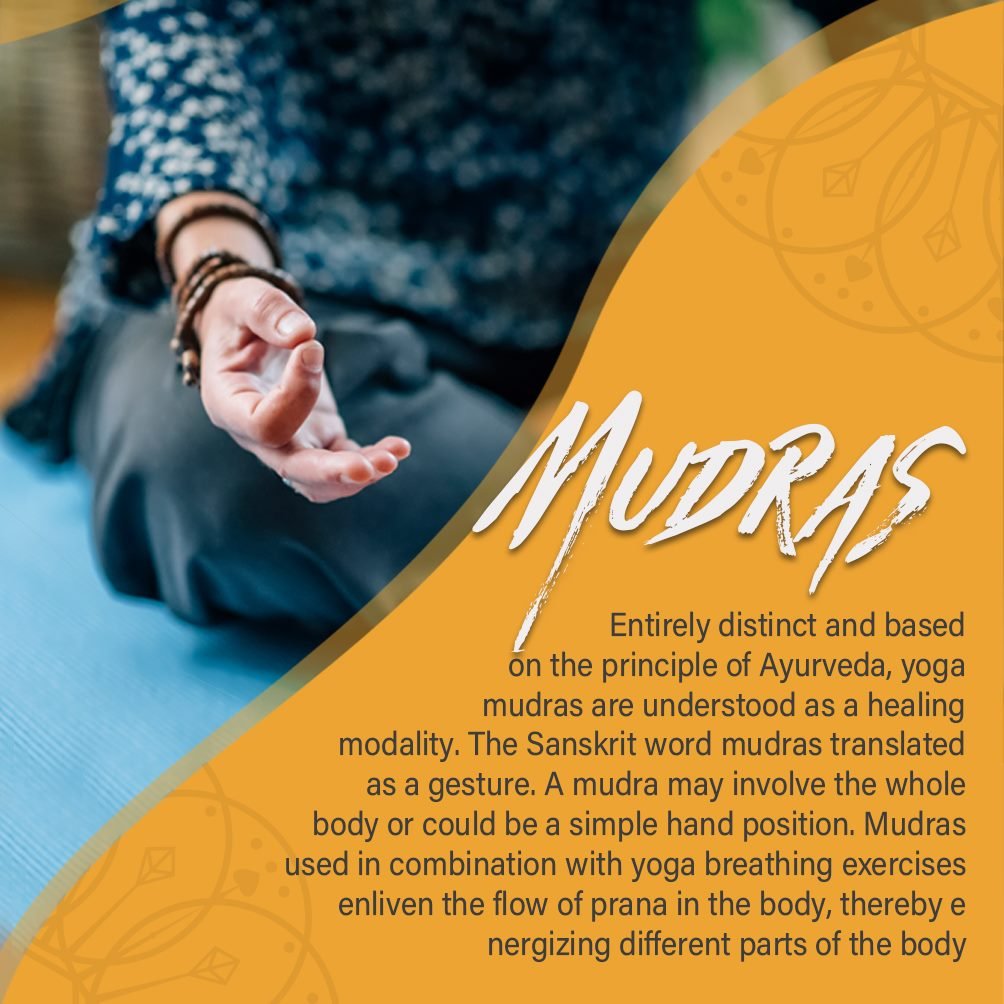
A mudra is a special way of holding your hands (and sometimes your whole body) during yoga, breathing practice or meditation.
The word comes from Sanskrit. It’s often translated as “seal” or “gesture.” One way to picture it: a mudra helps “seal in” your attention while you practice, so it doesn’t move away as easily.
You’ll usually see mudras used:
- While meditating
- During pranayama, which means yogic breathing practice
- In some yoga poses
- In prayer and ritual in Indian traditions
Most people today know mudras as hand gestures. In Sanskrit these are called hasta mudras. “Hasta” simply means hand.
Old hatha yoga books, like the Hatha Yoga Pradipika and the Gheranda Samhita, also talk about mudras. But many of those are quite different. They use the whole body, the breath and inner muscle control, and they’re meant to be learned slowly with a teacher. In this article, we’re sticking to hand mudras. They’re gentle, simple and a good place for anyone to begin.
You’ll also spot mudras outside of yoga. They show up in Indian classical dance, in Buddhist statues and paintings, and in many Hindu and Buddhist rituals.
How Do Mudras Work?
In yoga, the traditional idea is that mudras guide prana.
Prana is the Sanskrit word for life energy. It’s the energy that keeps you alive, and yoga links it closely with the breath. By shaping your fingers in a certain way, yogis believe you can guide this energy and bring about a certain feeling or state of mind.
A lot of modern mudra teaching also connects each finger with one of the five elements:
- Thumb: fire
- Index finger: air
- Middle finger: space
- Ring finger: earth
- Little finger: water
The idea is that when you touch or fold certain fingers, you increase or calm that element in the body. This is a belief from tradition. Science hasn’t proven it. Still, it’s a handy way to understand why each mudra looks the way it does.
There’s a simple side to it too. When your hands have a clear job, you tend to move around less. The feeling of your fingers touching gives your mind something small to rest on. And after a while, simply making the mudra starts to tell your body, “Okay, it’s time to slow down.” Plenty of teachers think this is a big part of why yoga mudras feel good.
10 Types of Mudras in Yoga
There are hundreds of types of mudras out there. You don’t need most of them. The 10 below are some of the most common, and all of them are fine for beginners.
Before you try any of them, find a comfortable seat. The floor, a cushion or a chair all work. Sit tall but not stiff, let your shoulders drop, and breathe through your nose. You’ll come back to this same starting point each time.
1. Gyan Mudra (Gesture of Knowledge)
If you only learn one mudra, this is usually the one. “Gyan” means knowledge or wisdom.
How to practice:
- Touch the tip of your thumb to the tip of your index finger. They’ll form a small circle.
- Let the other three fingers stay straight, but loose.
- Rest the backs of your hands on your knees, palms up.
- Close your eyes and breathe slowly.
How long: 5 to 10 minutes is plenty to start
What it’s traditionally used for: Gyan Mudra is linked with focus, learning and clear thinking. It’s also the go-to hand position for a lot of meditation and breathing practice, simply because it’s so easy to hold.
2. Chin Mudra (Gesture of Consciousness)
Chin Mudra uses the same finger shape as Gyan Mudra. The only change is that your palms face down.
How to practice:
- Join the tips of your thumb and index finger.
- Keep the other fingers relaxed.
- Rest your hands on your knees, palms facing down.
How long: Around 5 to 10 minutes
What it’s traditionally used for: With the palms turned down, this mudra is often described as grounding. Some teachers suggest it when you feel restless and want to settle in.
Just so you know, not every yoga school uses these two names the same way. Some flip them around. That’s okay. Pick one version, stay relaxed and keep practicing.
3. Dhyana Mudra (Gesture of Meditation)
“Dhyana” means meditation. You’ve likely seen this one on statues of the Buddha, where the hands rest in the lap.
How to practice:
- Place your left hand in your lap, palm up.
- Lay your right hand on top of it, also palm up.
- Let your thumb tips touch lightly, making a soft oval.
- Allow your hands to rest near your belly.
How long: As long as your meditation lasts. Ten minutes is a nice start
What it’s traditionally used for: Deep meditation and a quiet mind. It’s also just very restful. Your arms are supported, so your shoulders can finally let go.
4. Anjali Mudra (Gesture of Greeting)
You probably already know this one. It’s the hand position people use when they say “Namaste.” “Anjali” means offering.
How to practice:
- Bring your palms together in front of your chest.
- Let your thumbs rest lightly near your breastbone.
- Relax your elbows.
- Press your palms together softly. No squeezing needed.
How long: A few breaths is enough. Stay longer if you like
What it’s traditionally used for: Respect, gratitude and greeting. Many yoga classes open or close with it. Even a few breaths here can feel like pressing a small pause button.
5. Prana Mudra (Gesture of Life Energy)
This mudra is named after prana, the life energy we talked about earlier.
How to practice:
- Bend your ring and little fingers.
- Bring their tips to the tip of your thumb.
- Keep your index and middle fingers straight.
- Rest your hands on your knees, palms up.
How long: 5 to 15 minutes
What it’s traditionally used for: It’s believed to lift your energy. Some teachers suggest it on days when you feel tired or flat.
6. Apana Mudra (Gesture of Letting Go)
In yoga, “apana” is the energy that moves downward in the body. It’s linked with letting go of what the body doesn’t need.
How to practice:
- Touch the tips of your middle and ring fingers to your thumb tip.
- Leave your index and little fingers straight.
- Rest your hands on your thighs, palms up.
How long: 5 to 15 minutes
What it’s traditionally used for: Tradition connects it with digestion and the body’s natural way of clearing things out. Some people also use it as a way of letting go emotionally.
You may read that this mudra “removes toxins.” That idea comes from tradition, not from science. If you have ongoing stomach or digestion trouble, please talk to a doctor.
7. Prithvi Mudra (Gesture of Earth)
“Prithvi” means earth. The ring finger is the earth finger, so that’s the one you use here.
How to practice:
- Touch the tip of your ring finger to the tip of your thumb.
- Keep your other fingers straight.
- Rest your hands on your knees, palms up.
How long: 5 to 15 minutes
What it’s traditionally used for: Feeling steady and grounded. It’s a nice one to try when your mind feels scattered.
8. Vayu Mudra (Gesture of Air)
“Vayu” means air or wind. The index finger stands for air, and in this mudra you fold it down.
How to practice:
- Fold your index finger so the tip touches the base of your thumb.
- Rest your thumb gently over that folded finger.
- Keep the other three fingers straight.
- Place your hands on your knees.
How long: 5 to 10 minutes
What it’s traditionally used for: In some yoga teachings, too much “air” is linked with feeling restless or uneasy. This mudra is used to calm it down. People often reach for it when they feel anxious.
Keep the thumb pressure light. Some teachers also say it’s best not to hold this one for very long stretches.
9. Shunya Mudra (Gesture of Space)
“Shunya” means empty, or space. The middle finger is the space finger, so this time that’s the one you fold.
How to practice:
- Fold your middle finger so its tip touches the base of your thumb.
- Press your thumb gently over it.
- Keep your other fingers straight.
- Rest your hands on your knees.
How long: 5 to 10 minutes
What it’s traditionally used for: Some mudra traditions link it with the ears and with a heavy, dull feeling. Many people simply find it quiet and calming.
You’ll find websites saying this mudra fixes ear problems. There’s no good evidence for that. If you have ear pain, hearing changes or dizziness, see a doctor.
10. Adi Mudra (First Gesture)
“Adi” means first. The hand shape is said to look like the way a baby’s hand curls up before birth.
How to practice:
- Tuck your thumb into your palm, so the tip sits near the base of your little finger.
- Bend your other fingers over the thumb to make a loose fist.
- Rest your hands on your thighs, palms down.
- Check that your fist is soft. It shouldn’t be tight.
How long: A few minutes. It’s often done right before breathing practice
What it’s traditionally used for: Slowing down the breath and quieting the mind. Many teachers use it to help students settle before pranayama.
Benefits of Mudras
Mudras don’t work like magic buttons. Their real value is in how they support the rest of your practice.
Here are some mudra benefits from regular practice:
- Mudras can help you stay focused because your hands give your mind something simple to pay attention to.
- They can also help you sit still for longer, as your hands have a set position and you may feel less like moving around.
- Using the same mudra often can turn it into a habit. Over time, your body may start to relax when you make it.
- Mudras can also help you pay more attention to your breathing, especially when you use them with slow, steady breaths.
- You can practice yoga mudras almost anywhere and you do not need a yoga mat, special clothes, or any other equipment.
Now, an honest word about evidence. The specific mudra benefits tied to each mudra, like better digestion, more energy or balancing the elements, mostly come from yoga tradition and personal experience. Research on mudras themselves is still very limited. A lot of the calm people feel probably comes from sitting quietly, breathing slowly and paying attention. And that’s exactly what a mudra asks you to do.
So think of mudras as a gentle support for your well-being. They’re not a treatment, and they should never take the place of medical care.
How to Practice Mudras
Getting started is simple. A few tips help a lot, though.
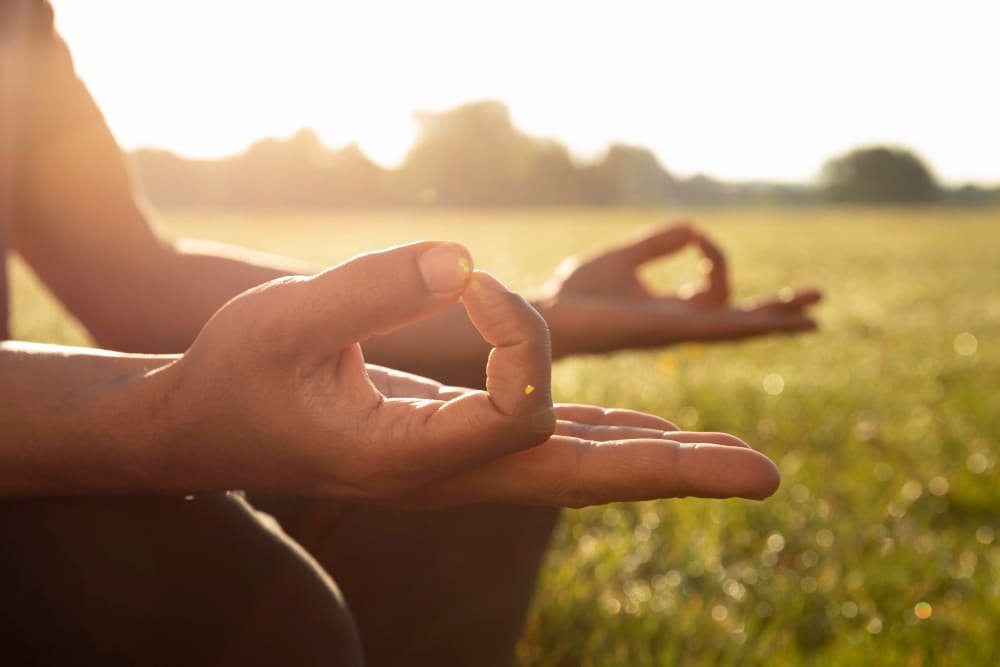
- Sit comfortably on a cushion or a chair with your back tall and relaxed
- Let your fingers touch lightly without pressing hard
- Breathe through your nose and let your breath slow down on its own
- Relax your shoulders, jaw and forehead
- Keep your attention on your fingertips or your breath
- Practice at a quiet time, such as early morning or evening
- Wait a while after a meal if you are adding breathing exercises
- Practice a little every day instead of a lot once a week
- Start with one or two mudras and stick with them for a few weeks
How Long Should You Practice Mudras?
If you’re new, 5 to 10 minutes at a time is a great place to start.
Once that feels easy, you can slowly build up to 15 or 20 minutes. Some traditions suggest 30 to 45 minutes a day, usually split into two or three shorter sessions.
There isn’t one right answer for everyone. It depends on:
- Which mudra you’re doing
- The teacher or tradition you follow
- How your hands and body feel
Meditation mudras like Gyan, Chin and Dhyana are usually used throughout your practice. Others, like Vayu and Shunya, tend to be held for shorter times. If you’re ever unsure, let comfort decide.
Can Beginners Practice Mudras?
Yes, absolutely. Mudras are one of the easiest parts of yoga to pick up. Most hand mudras are gentle and safe for most people.
Here’s an easy way to begin:
- Start with Gyan Mudra or Dhyana Mudra, both are simple and very common.
- Sit with it for 5 minutes a day, breathing slowly.
- After a week or two, add a second mudra if you want.
- Notice how each one feels. Don’t expect anything dramatic.
A good teacher can help you go deeper. Mudras are usually taught alongside meditation, breathing and yoga philosophy in aYoga Teacher Training in Indiaprogram, and in more depth in a Kundalini Yoga Teacher Training course.
Precautions When Practicing Mudras
Mudras are very low-risk. Still, a few simple things are worth keeping in mind.
- Mudras do not replace medical care, so keep following your doctor’s advice
- Release the position if you feel pain, numbness or tingling
- Use a light touch so you do not strain the small joints in your fingers
- Change the mudra to suit you if you have arthritis, a hand injury or carpal tunnel syndrome, or ask a doctor or physiotherapist first
- Stop and breathe normally if you feel dizzy during breathing practice
- Do not trust claims that mudras can cure diseases or help in a medical emergency
Final Thoughts
You don’t need to learn all ten mudras this week. Honestly, you don’t need to learn all ten at all.
Pick one or two that you like. Sit with them for a few minutes each day. Keep your hands soft and your breath easy, and see what you notice. Small, steady practice is what makes mudras feel like a natural part of your day.
Frequently Asked Questions About Mudras
Can I practice mudras lying down?
Yes, if sitting is hard for you, lie on your back and rest your hands by your sides or on your belly. It works well during relaxation at the end of a yoga class. You might fall asleep more easily, though.
Can I do more than one mudra in a day?
Yes, many people use two or three different mudras at different times of day. Just try not to jump between lots of them in one short session. Give each one a few minutes so you can actually feel what it’s like.
Do I have to close my eyes?
No, closing your eyes can help to focus on yourself , but it’s not a rule. If it makes you sleepy or uneasy, keep your eyes a little open and let your gaze rest on the floor in front of you.
Can I use mudras during pranayama?
Yes, and it’s very common. Gyan, Chin and Adi Mudra are popular choices. In alternate nostril breathing, one hand is busy closing the nostrils, and that hand has its own position called Nasika Mudra.
Do both hands have to make the same mudra?
For the mudras in this article, usually yes. A few, like Dhyana and Anjali, use both hands together as one shape. If one hand is hurt or busy, doing the mudra with just one hand is fine.
Can I do mudras without meditating?
Yes, you can hold a mudra while resting, listening to soft music or even sitting on a train. It may feel stronger when your mind is quiet, but there’s no strict rule here.
Why do my fingers feel tired or tingly?
Most of the time, it’s because you’re pressing too hard or holding it too long. Relax your fingers, shake out your hands and try a shorter session next time. If the tingling keeps happening even when you’re not practicing, it’s worth seeing a doctor.
This article is for general information and is not medical advice. If you have a respiratory or heart condition, are pregnant, or are unsure whether these practices suit you, please speak to your doctor before beginning. Yoga poses and breathing exercises should be practiced with proper guidance from a qualified yoga teacher to help ensure safe and correct practice.