





Shatkarma: Yogic Cleansing Processes In Kundalini Yoga

Table of Contents
- What Is Shatkarma?
- What Are the Six Shatkarmas?
- 1. Jal Neti
- 2. Sutra Neti
- 3. Kunjal Dhauti
- 4. Kapalbhati
- 5. Trataka
- 6. Agnisar Dhauti
- Are Shatkarmas Safe for Beginners?
- Shatkarma and Kundalini Yoga
- Conclusion
- Frequently Asked Questions
- What does Shatkarma mean?
- What are the six Shatkarmas?
- Is Shatkarma suitable for beginners?
- What is Shatkarma yoga?
- Is Shatkarma the same as Kundalini Yoga?
- Can I practice Shatkarmas without a teacher?
- How often should Shatkarmas be practiced?
- Are there any age restrictions for Shatkarma practices?
‘Shatkarma‘ is an old Sanskrit term for six cleansing practices in traditional Hatha Yoga. The word comes from “shat“, meaning six and “karma“, meaning action.
These practices are traditionally used to prepare the body for things like asana, pranayama, and meditation. Each one works on a different part of the body, including the nose, stomach, eyes, and abdomen.
Some are easy enough to try on your own. Others really do need proper guidance. In this article, we’ll go through all six Shatkarmas, what each one involves, and the precautions worth keeping in mind.
What Is Shatkarma?
Shatkarma is a group of six cleansing techniques written about in old Hatha Yoga texts, mainly the Hatha Yoga Pradipika and the Gheranda Samhita. People wrote these books hundreds of years ago as guides for yogis getting ready for serious practice.
Here’s the basic thought behind it: before doing breathing exercises or sitting for long meditation, the body shouldn’t feel heavy, blocked, or stuffy. So yogis came up with ways to rinse the nose, clear the stomach, work the eyes, and tighten the belly muscles. These aren’t yoga poses, and they’re not breathing exercises either. They stand apart from both, in their own little category.
In the old sequence of Hatha Yoga, Shatkarma comes before pranayama. The reasoning was that a body full of leftover mucus, waste, or tension makes it harder to sit still and breathe with any real control. Clearing that stuff out first was supposed to make everything after it go more smoothly. That’s the traditional view, straight from the old texts. It isn’t something modern science has tested and confirmed, so it’s worth keeping that line clear as you read on.
What Are the Six Shatkarmas?
The six we’re covering here are Jal Neti, Sutra Neti, Kunjal Dhauti, Kapalbhati, Trataka, and Agnisar Dhauti. Each one deals with a different area, from your nose all the way down to your belly and up to your eyes.
1. Jal Neti
Jal Neticleans the nose using salt water. You’ll need a small pot for this, often called a neti pot, filled with lukewarm water and a pinch of non-iodized salt.
Here’s how it goes. Tilt your head to one side over a sink, place the pot’s tip into the upper nostril, and let the water run in one side and out the other. Breathe through your mouth while this happens. Once that side is done, switch and do the other. After both sides are finished, bend forward and take a few quick breaths to dry out your nose completely.
People traditionally use Jal Neti to clear out dust, mucus, and blockages, and to make breathing feel a bit freer. Some do it right before pranayama for that reason.
A few things matter here, though. The water needs to be clean and mixed at the right salt level, because plain water can hurt the inside of your nose. Drying your nose properly afterward is just as important, since leftover water sitting in the sinuses can leave you feeling stuffy later. If you’ve got an active ear infection, a recent nose injury, frequent nosebleeds, or you’ve had nasal surgery, check with a doctor first. And honestly, it helps to learn this from a teacher the first time instead of just copying a video.

2. Sutra Neti
Sutra Neti takes nasal cleansing a step further. Instead of water, it uses a thin thread or a soft rubber tube.
The thread, well lubricated, gets passed gently through one nostril until it reaches the back of the throat, then pulled out through the mouth. You hold both ends and move it back and forth a few times before slowly drawing it out. It’s a much more delicate process than Jal Neti, since you’re putting something through a sensitive area of the body.
Traditionally, people use this one for deeper blockages, and it’s seen as a step up from the water-based version.
Because of how it works, there’s more room for things to go wrong if it’s done poorly. It can make you cough, leave your throat scratchy, or even cause a bit of bleeding if the thread isn’t handled with care. This isn’t something to learn from a written guide. You need an experienced teacher showing you the right angle and pace, in person. And if you have a nasal injury, an active sinus infection, or any nose-related condition, get a doctor’s opinion before even thinking about trying it.
3. Kunjal Dhauti
Kunjal Dhauti, also known as Vaman Dhauti, cleans the stomach. You drink salt water, then bring it back up.
It’s done early morning, on an empty stomach. You drink several glasses of lukewarm salt water, one right after another, until you feel a strong urge to vomit. Then you bend forward, gently trigger the reflex with your fingers, and let the water come back out. You keep going until the water comes out clear.
People traditionally use this to clear out excess mucus, acidity, or leftover food from the stomach. Some practitioners do it now and then to feel lighter before certain yoga sessions.
This is one of the stronger practices on this list, and it’s not for everyone. Anyone with stomach ulcers, a hernia, high blood pressure, heart trouble, or acid reflux should skip it completely, and pregnant women should stay away from it too. It’s also not something to do often, since bringing up water again and again can harm the throat and stomach lining over time. Learn this one in person, from someone qualified who can watch how your body reacts and fix your technique on the spot.
4. Kapalbhati
Kapalbhatiis fast breathing work. You push air out through the nose with force, and the inhale that follows just happens on its own, without any effort. The name roughly means “shining skull”, which points to the old belief that it clears and brightens the head.
To try it, sit up straight, take a normal breath in, then sharply pull your belly inward to push the air out through your nose. The breath in happens automatically right after. You repeat this in quick rounds, starting small and building up slowly over weeks, not days.
One thing worth mentioning: Kapalbhati gets described a little differently depending on where you read about it. The old Hatha Yoga texts list it under Shatkarma, but a lot of modern yoga classes teach it as a pranayama technique instead, since it’s so tied to breath and the belly. Both views are common, and either way, it sits in that group of practices working the breath and abdomen together.
Old texts say this practice energizes the body and clears the nasal passages, but that’s a traditional claim, not something backed by medical research, so it shouldn’t be treated as a cure for anything.
Given the forceful breathing and strong belly movement involved, this one isn’t for everyone. Skip it if you have high blood pressure, heart disease, a hernia, recent abdominal surgery, vertigo, or epilepsy, and avoid it during pregnancy or your period. If you’re new to it, start with just a handful of rounds under guidance rather than diving in hard, since rushing it can leave you dizzy or strained.
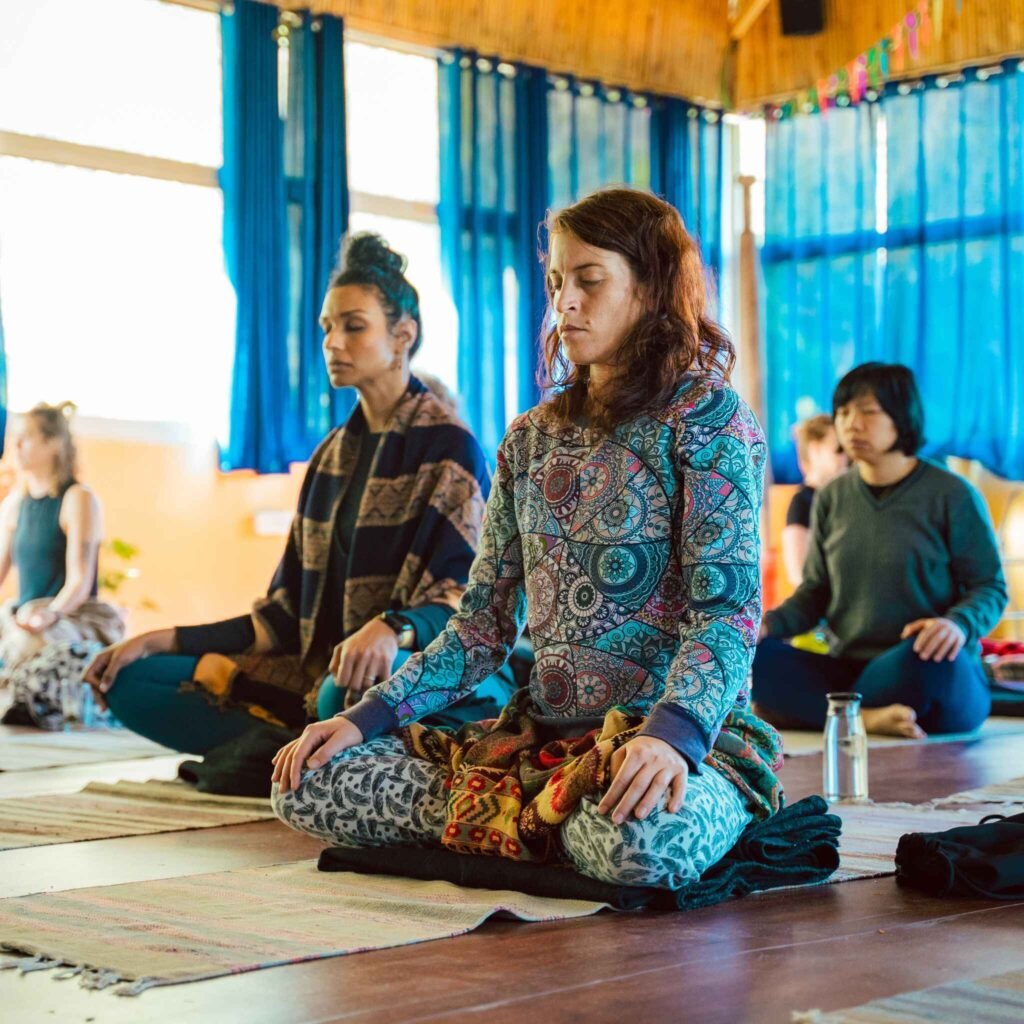
5. Trataka
Trataka means steady gazing, usually done by looking at a candle flame without blinking, for as long as feels comfortable.
Sit in a dim, quiet room with a candle at eye level, about an arm’s length away. Rest your gaze softly on the flame, without forcing your eyes to stay open past comfort, until they naturally start to water. At that point, close your eyes and hold onto the image of the flame in your mind for a bit before opening them again.
This one is traditionally used to sharpen focus and settle a busy mind, and plenty of people practice it as a form of meditation on its own. Some also describe it as a gentle workout for the eye muscles, though again, that’s a traditional idea rather than something medically proven.
A few precautions to keep in mind. Don’t force your eyes to stay open past what’s comfortable, and blink whenever you need to. If you have glaucoma, epilepsy, migraines, an eye infection, or you’ve recently had eye surgery, skip this one or ask your doctor first. It’s also best done in low light, not while staring straight into strong sunlight, which can strain or hurt your eyes.
6.Agnisar Dhauti
Agnisar Dhauti, also called Agnisar Kriya, works the belly through fast pumping movements. It’s traditionally connected to strengthening digestion, and its name refers to fire, pointing back to that link with the body’s digestive energy.
Here’s how it’s done. Stand with your feet apart, bend forward a little, and rest your hands on your thighs. Breathe out fully, then hold the breath out while pumping your belly in and out quickly, several times in a row. After a set of pumps, release, stand up straight, and breathe normally before starting another round.
Old teachings say this practice improves digestion and tones the belly muscles, but that’s traditional knowledge, not confirmed medical fact.
Since it’s done with the breath held out and involves repeated belly contractions, this one comes with real precautions. Always practice on an empty stomach, ideally first thing in the morning. It’s not meant for pregnant women, or for anyone with a hernia, ulcers, high blood pressure, or heart problems, and it should be skipped after recent abdominal surgery. If you’re just starting out, learn the timing and breath-holding from a teacher first, since pushing too hard or holding the breath too long can leave you lightheaded.
Are Shatkarmas Safe for Beginners?
The honest answer is: it depends on which one you’re asking about.
Jal Neti is usually the gentlest of the six, and it’s often the first one beginners try, though it still needs the right water mix and proper drying afterward. Trataka is fairly easy to start too, since it doesn’t put any physical strain on the body beyond keeping your eyes open a bit longer than usual.
The other four are a different matter. ‘Sutra Neti’ means putting a thread through your nose, and that genuinely calls for an experienced teacher standing right there with you, at least the first several times. Kunjal Dhauti involves making yourself vomit, and there’s a whole list of health conditions that rule it out on their own. Kapalbhati and Agnisar Dhauti both bring in forceful belly work and breath control, and rushing either one can leave you dizzy or uncomfortable.
Here’s a rule that holds up well: if a practice puts something into the body, forces a reflex like vomiting, or holds the breath while working the belly hard, it needs real instruction, not a blog post you read once. This article is a good starting point for understanding what these practices actually involve, but it can’t replace a teacher who watches your form, knows your health history, and fixes your mistakes as they happen. This is exactly the kind of thing a properKundalini Yoga Teacher Training covers in depth, since Shatkarma yoga is usually taught as part of that foundation, with someone experienced guiding you through each practice step by step rather than leaving you to work it out alone. If you’re pregnant, managing a health condition, or new to yoga altogether, talk to a qualified teacher before trying any of the stronger Shatkarmas.
Shatkarma and Kundalini Yoga
Shatkarma grew out of the Hatha Yoga tradition, and Hatha Yoga shares a lot of common ground with Kundalini Yoga, which is why people often bring the two up together.
Kundalini Yoga puts a heavy focus on breath control, sustained attention, and getting the body’s energy channels ready for deeper practice. Shatkarma fits into that picture as a step taken before all this. The old thinking goes that a body free of blockages in the nose, stomach, and gut lets breath and energy move more easily during the later stages of practice, including the breathing work and meditation used in Kundalini Yoga.
That said, it’s worth not overselling this connection. Doing Shatkarma won’t wake up Kundalini energy on its own, and no cleansing technique guarantees any spiritual result by itself. These ideas come from traditional yogic teaching, and they make more sense as part of a longer practice built with proper guidance over time, not as some shortcut to a deeper state.
Read More: Kundalini Yoga Guide: Meaning, Energy and Benefits
Conclusion
Shatkarma yoga covers six traditional cleansing practices from Hatha Yoga: Jal Neti, Sutra Neti, Kunjal Dhauti, Kapalbhati, Trataka, and Agnisar Dhauti. Each one works on a different part of the body, from the nose and stomach to the eyes and belly, and all six come from old yoga texts rather than modern medicine.
A couple of these, like Jal Neti and Trataka, are simple enough to try with some basic guidance. Others need real supervision and shouldn’t be picked up from instructions alone. Knowing what each Shatkarma actually involves, and being honest about your own health, matters far more than rushing to try all six right away. If you want to learn these the right way, working with an experienced teacher, such as those at Samadhi Yoga Ashram, gives you a much safer path than trying to figure it out on your own.
Frequently Asked Questions
What does Shatkarma mean?
It’s a Sanskrit word meaning “six actions.” It points to six traditional yogic cleansing practices used to clear the nose, stomach, gut, eyes, and belly before deeper yoga work.
What are the six Shatkarmas?
Jal Neti, Sutra Neti, Kunjal Dhauti, Kapalbhati, Trataka, and Agnisar Dhauti. Some older texts group similar practices under slightly different names, but these six cover the main parts of the body that Shatkarma deals with.
Is Shatkarma suitable for beginners?
Some of it, yes. Jal Neti and Trataka are approachable with basic guidance. Sutra Neti, Kunjal Dhauti, Kapalbhati, and Agnisar Dhauti carry more risk and really do need a trained teacher first.
What is Shatkarma yoga?
It’s the practice of these six cleansing techniques as part of a Hatha Yoga routine, usually done before pranayama and meditation to get the body ready.
Is Shatkarma the same as Kundalini Yoga?
No. Shatkarma is a set of cleansing practices from Hatha Yoga. Kundalini Yoga is its own tradition, centered on breath, sound, and meditation. People sometimes practice Shatkarma alongside it as a preparatory step, but they’re not the same thing.
Can I practice Shatkarmas without a teacher?
Jal Neti and Trataka can be done carefully at home once you know the right method. Sutra Neti, Kunjal Dhauti, Kapalbhati, and Agnisar Dhauti involve more technique and more risk, so they’re best learned in person.
How often should Shatkarmas be practiced?
There’s no single schedule that fits all of them. Jal Neti is often done daily or a few times a week. Something stronger like Kunjal Dhauti is usually done occasionally, not every day. A teacher can help you figure out what makes sense for your body and experience level.
Are there any age restrictions for Shatkarma practices?
Gentler ones like Jal Neti can often be adapted for older children and adults. The more intense practices generally aren’t recommended for young children or elderly people with health conditions. A teacher’s guidance really helps here, since it depends a lot on the person.
This article is for general information and is not medical advice. If you have a respiratory or heart condition, are pregnant, or are unsure whether these practices suit you, please speak to your doctor before beginning. Yoga poses and breathing exercises should be practiced with proper guidance from a qualified yoga teacher to help ensure safe and correct practice.