





6 Yoga Practices for Anyone Who Does a Whole Lot of Sitting
Table of Contents
- Why Sitting All Day Demands a Yoga Practice?
- 6 Yoga Poses for Sitting All Day
- 1. Cat-Cow Stretch (Marjaryasana-Bitilasana)
- 2. Child’s Pose (Balasana)
- 3. Seated Pigeon (Eka Pada Rajakapotasana variation)
- 4. Eagle Arms (Garudasana Arms)
- 5. Standing Forward Fold (Uttanasana)
- 6. Reclined Spinal Twist (Supta Matsyendrasana)
- How to Build a Real Yoga Practice Around Your Sitting Schedule?
- Conclusion
- Frequently Asked Questions
- Which yoga practice improves posture while sitting for long hours?
- How often should I do yoga if I sit all day?
- What types of yoga practices are best for back pain from sitting?
- Can I do yoga exercises at my desk without a mat?
- How long does it take to see results from a yoga practice for sitting?
Why Sitting All Day Demands a Yoga Practice?
Many people know that sitting too much isn’t great but the details matter. When you sit for extended periods, your hip muscles shorten and tighten, your glutes become less active, your upper back rounds forward and your neck moves forward to adjust.
A consistent yoga practice directly helps reduce all of this. Unlike random stretches, types of yoga practices from gentle to flow-based are built around the exact movement patterns that sitting reduces. They lengthen what gets short, strengthen what gets weak, and teach your nervous system again to hold your body upright with ease.
Some of these yoga poses can also be adapted for a workday and practiced while sitting in a chair. Regular practice may help you:
- Relieves back pain
- Opens tight hips
- Improves posture
- Reduces tension headaches
- Boosts circulation
- Calms the nervous system
6 Yoga Poses for Sitting All Day
1. Cat-Cow Stretch (Marjaryasana-Bitilasana)
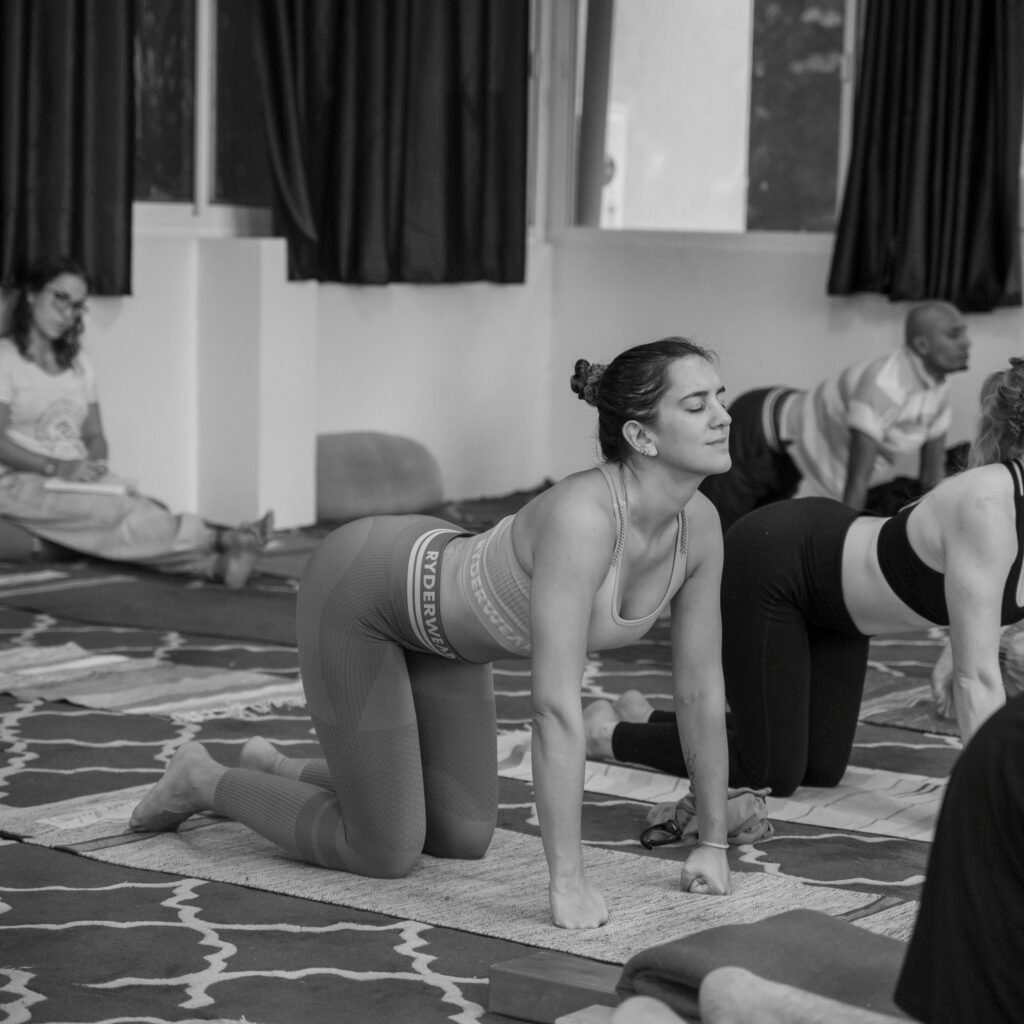
If you could only do one yoga practice, it would be cat-cow. This foundational movement from yoga for sitting routines warms up the entire spine in under a minute, and the relief is immediate.
These two poses gently move the spine through rounding and arching. This can help loosen the back after sitting for long periods and bring some movement to areas that stay in one position for too long.
How To Do It:
- Get on the mat and place your hands and knees on the floor.
- Keep your hands under your shoulders and your knees under your hips.
- Keep your back straight and look down at the mat.
- Take a slow breath in and lift your chest. Let your belly move down toward the floor.
- Gently lift your head and look slightly forward.
- Now breathe out and slowly round your back toward the ceiling.
- Bring your chin toward your chest as you round your back.
- Keep moving slowly between these two positions with each breath.
- Repeat the movement 5 to 10 times.
Pro Tip: If you’re at the office, you can do a seated version of Cat-Cow in your chair: sit tall, then arch and round your back with each breath. Less effective than the floor version, but still powerful.
2. Child’s Pose (Balasana)
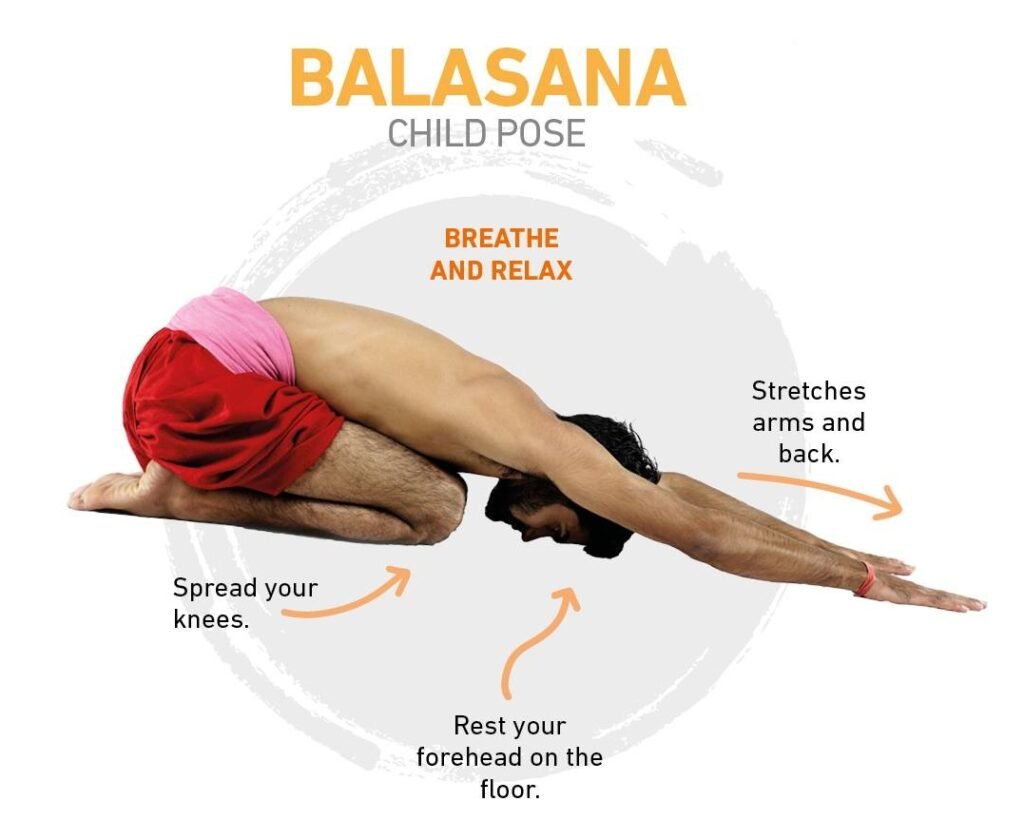
Child’s Pose is arguably the most gentle posture in any yoga practice. It gently stretches the lower back, hips, thighs, and ankles, all the areas that feel the most stress from long hours of sitting. This is the pose to go to when your lower back feels tight and heavy.
In Child’s Pose, gravity does the work. As you rest your forehead on the mat and extend your arms forward (or rest them alongside your body), your spine naturally stretches, and the tightness in your lower back starts to ease. It also activates the parasympathetic nervous system, meaning it signals to your body that it’s safe to relax. If you’re looking for a deeper understanding of yoga, consider joining a yoga teacher training in India.
How To Do It:
- Kneel on the mat and bring your big toes together.
- Keep your knees a little apart.
- Slowly sit back on your heels. If this feels uncomfortable, do not force your body.
- Bend your upper body forward and bring your forehead toward the mat.
- Stretch your arms forward and place your hands on the mat. You can also keep your arms by your sides.
- Relax your shoulders and let your body relax.
- Stay in this position for 1 to 3 minutes and breathe slowly.
Modification for Tight Hips: Place a folded blanket between your thighs and calves if your hips don’t reach your heels. The goal is relaxation, not strain.
3. Seated Pigeon (Eka Pada Rajakapotasana variation)
If there’s one area that suffers most from sitting, it’s the hips and the piriformis, a small muscle deep in your hip. Tight hips can put extra stress on your lower back and cause the mild pain many desk workers feel in the middle of the day. This yoga practice focuses on these areas.
The pigeon pose is famous in yoga practices for one reason: it can help relax the piriformis and outer hip muscles that become tight when you sit for hours. This seated variation is an easy sitting yoga pose for most people and can even be done in a chair. It is one of the useful sitting asanas for people who sit for long hours.
How To Do It:
- Kneel on your mat and put your hands on the floor.
- Bring your right leg forward.
- Bend your right knee and place your right foot near your left hand.
- Slowly move your left leg straight back.
- Keep the top of your left foot on the mat.
- Keep both hands on the mat for support.
- Sit up straight and keep your chest facing forward.
- If this feels too hard, place a folded blanket under your right hip.
- If you feel comfortable, slowly bend forward over your right leg.
- Hold the pose for 30 seconds to 1 minute.
- Slowly return to the starting position and repeat on the other side.
4. Eagle Arms (Garudasana Arms)
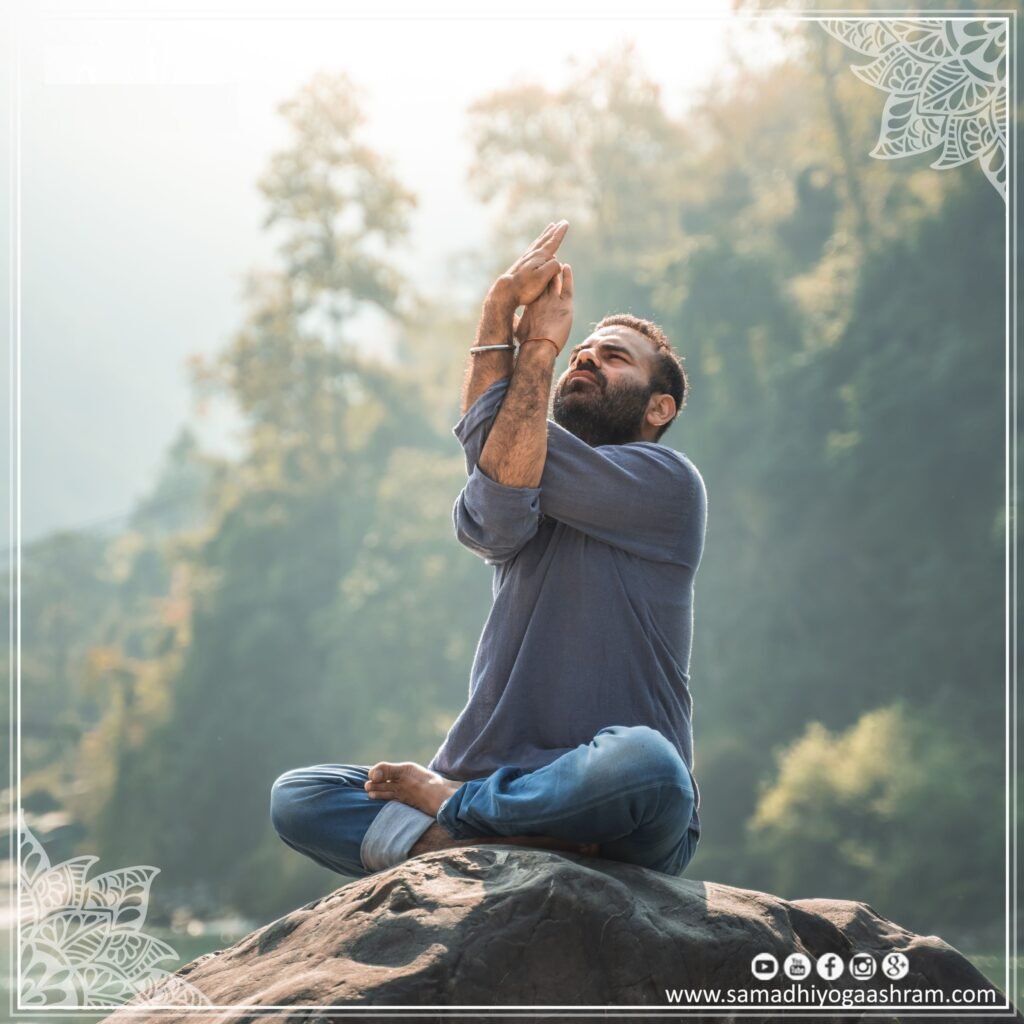
Which yoga practice improves posture while sitting for long hours? Eagle Arms is consistently one of the top answers from physiotherapists and yoga teachers alike. It works on the muscles in your upper back and the back of your shoulders. These muscles can become tight when you sit with your shoulders rounded forward.
This upper-body yoga exercise creates a powerful stretch across the upper back and between the shoulder blades, precisely the area that gets stiff, tight, and knotted from typing and screen time. It also reverses the internal rotation pattern that desk work creates in the shoulder joint.
How To Do It:
- Sit or stand tall. Extend both arms forward at shoulder height.
- Cross your right arm under your left, bending both elbows.
- Try to bring your palms together (or wrap fingers around your wrists).
- Lift your elbows slightly and round your upper back. Feel the stretch between your shoulder blades.
- Hold 30–45 seconds. Unwind and switch sides. Repeat 2–3 times.
Can’t get palms to touch? Hold a strap or use the back of your hands instead. The stretch is in the upper back; the hand position is secondary.
5. Standing Forward Fold (Uttanasana)
Standing forward fold is a yoga pose that can work well for everyone. In one simple movement, it stretches the hamstrings, calves, lower back, and neck, similar to a downward-facing dog pose, and works your back muscles that can become tight when you sit for hours.
One of the most satisfying yoga exercises for desk workers, Uttanasana uses gravity to lengthen the entire back body while simultaneously relaxing the spine. When you gently move your body or slowly move your head from side to side in the pose, you can also release neck tension.
How To Do It:
- Stand straight on your mat. Keep your feet about 6–8 inches apart.
- Keep your arms by your sides and take a slow breath in.
- Breathe out and slowly bend forward from your hips.
- Let your head and upper body hang toward the floor.
- Keep your knees slightly bent if your legs feel tight.
- Place your hands on the floor, your legs, or a yoga block.
- Relax your neck and let your head hang down.
- Take slow, easy breaths while you stay in the pose.
- Hold the pose for 20 to 30 seconds.
- Slowly bend your knees and come back up to standing.
6. Reclined Spinal Twist (Supta Matsyendrasana)
This is a yoga practice you can do at the end of a day when you sit a lot. The reclined spinal twist helps release tension in your upper and lower back. It can also help your body relax and prepare for sleep. It is a popular pose in many types of yoga, from Hatha to Yin.
How To Do It:
- Lie on your back on your mat with both legs straight.
- Bend your right knee and bring it toward your chest.
- Keep your left leg straight on the mat.
- Stretch both arms out to the sides.
- Slowly move your right knee over to the left side of your body.
- Keep your right shoulder on the mat. Your right knee does not have to touch the floor.
- Turn your head to the right if it feels comfortable.
- Stay here for 30 seconds to 1 minute and breathe normally.
- Bring your right knee back to the middle and straighten your leg.
- Repeat the same steps with your left knee, keeping your right leg straight.
Nighttime Ritual Tip: Combine Child’s Pose and Reclined Spinal Twist as a 5-minute pre-sleep yoga practice. Over 2 weeks, most people notice a significant reduction in morning back stiffness.
How to Build a Real Yoga Practice Around Your Sitting Schedule?
Knowing six sitting yoga asanas is a start. The goal is to make yoga a regular habit. The research is clear even 10 minutes of intentional yoga done daily produces more benefit than a 60-minute class done occasionally.
Morning (5 minutes): Wake Up the Spine
Start with Cat-Cow (2 minutes), Standing Forward Fold (2 minutes) and Eagle Arms (1 minute). This short yoga practice prepares your body for a day of sitting and works the muscles that help you keep good posture.
Midday (5–10 minutes): Reset and Recharge
Seated pigeon pose on both sides (4 minutes), eagle arms (1 minute), and a quick standing forward fold. The midday yoga practice is about preventing the tiredness that so many desk workers experience in the second half of the day.
Evening (5–10 minutes): Relaxand Restore
Child’s Pose (2 minutes) and Reclined Spinal Twist, both sides (4 minutes). This yoga practice before bed can improve sleep quality and how you feel when you wake up the next morning.
Conclusion
Consistency matters more than doing a long routine. A minute of cat-cow between meetings, a child’s pose before bed, and a few rounds of eagle arms while you’re on hold. These small, repeated moments add up faster than most people expect, and your body will tell you that within the first week.
Whether you stick to these six stretches or build a fuller routine around them, the goal stays the same: give your body the movement that sitting takes away. Start small, stay consistent, and let your spine, hips, and shoulders slowly remember what it feels like to move freely again.
Frequently Asked Questions
Which yoga practice improves posture while sitting for long hours?
Eagle Arms (Garudasana Arms) and Cat-Cow are the most targeted yoga practices for improving posture in desk workers. Eagle Arms directly strengthens and stretches the upper back muscles that become weak with prolonged sitting, while Cat-Cow restores spinal movement. A daily practice combining both can produce visible postural improvements within 2–3 weeks.
How often should I do yoga if I sit all day?
Ideally, short practices of 5–10 minutes, two to three times per day. One morning, one midday, and one evening yoga practice is the best approach. However, even one 10-minute session daily is far better than nothing. Consistency over duration is the key principle.
What types of yoga practices are best for back pain from sitting?
Yin yoga and restorative yoga are the most effective types of yoga practices for chronic back pain caused by sitting, as they hold poses for extended periods, allowing deep connective tissue to release. Hatha yoga is also excellent, as it balances strength with flexibility. Avoid high-intensity Vinyasa or power yoga until your back pain has significantly reduced.
Can I do yoga exercises at my desk without a mat?
Yes. Eagle arms, seated cat-cow, and seated spinal twists can all be done in your office chair without a mat or any equipment. They won’t be as deep as their floor-based versions, but they meaningfully reduce tension and stiffness when done every hour during a long workday.
How long does it take to see results from a yoga practice for sitting?
Most people notice reduced stiffness and improved comfort within 3–5 days of a consistent daily yoga practice. Postural changes and significant pain reduction typically become visible and measurable within 3–4 weeks. Long-term structural changes in flexibility and spinal health build over several months of regular practice.
This article is for general information and is not medical advice. If you have a respiratory or heart condition, are pregnant, or are unsure whether these practices suit you, please speak to your doctor before beginning. Yoga poses and breathing exercises should be practiced with proper guidance from a qualified yoga teacher to help ensure safe and correct practice.