





Vrikshasana (Tree Pose): How To Do It, Benefits And Precautions
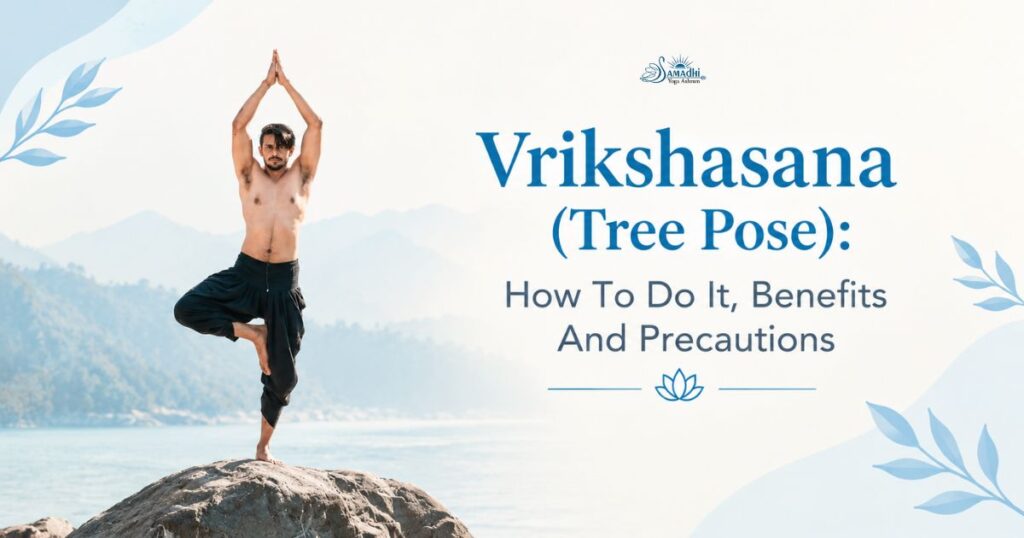
Table of Contents
- What Is Vrikshasana?
- Benefits Of Vrikshasana Or Tree Pose
- How To Do Vrikshasana, Or Tree Pose, Step-by-Step?
- Precautions Of Tree Pose
- Conclusion
- Frequently Asked Questions
- What is Tree Pose called in Sanskrit?
- How long should I hold Vrikshasana?
- Is Tree Pose good for beginners?
- Which muscles does Vrikshasana work?
- Why do I keep losing balance in Tree Pose?
- Is Vrikshasana safe during pregnancy?
- What is the best time to practice Tree Pose?
Standing on one leg looks easy until you try it. Staying steady while your body stays straight takes real focus and control. This is what makes Vrikshasana, or Tree Pose yoga, such a useful yoga pose.
It may look like a simple standing pose, but it works on many things at once. Your legs get stronger. Your mind learns to slow down and focus. And your whole body learns to hold one steady position without moving.
Anyone can try this pose, whether you are just starting yoga or have practised for years. With regular practice, you will notice better balance, stronger legs, better posture, and a calmer mind.
In this article, you will learn how to do Vrikshasana Pose the right way, along with its benefits, precautions to keep in mind and common questions people ask before trying this pose.
What Is Vrikshasana?
Vrikshasana comes from two Sanskrit words — Vriksha (tree) and Asana (pose). It’s a one-legged standing balance posture, and it’s often the first balancing asana taught to students in yoga schools and yoga teacher training courses because it’s simple to learn but genuinely effective for building stability.
A common question beginners ask is “Which yoga pose looks like a tree?” The answer is Vrikshasana, also known as Tree Pose. When you stand firmly on one leg and raise your arms overhead, your body looks like a tree, with strong roots, a steady trunk and branches reaching upward.
Benefits Of Vrikshasana Or Tree Pose
- Helps you balance better by making your ankle and foot muscles stronger
- Makes your legs and belly muscles stronger
- Helps you focus your mind and stay calm
- Helps you stand straight and fixes bad posture
- Strengthens the tissues that connect your muscles to your bones, helping prevent injuries
- Opens up your hips and makes them more flexible
- Helps you feel calm and less stressed
- Helps your brain know where your body is, so you move better
- Stretches your spine and makes your back more flexible
- Helps improve emotional stability
Just like other standing poses like Tadasana, Vrikshasana Pose also builds a strong foundation and helps improve overall body alignment when practised consistently.
How To Do Vrikshasana, Or Tree Pose, Step-by-Step?
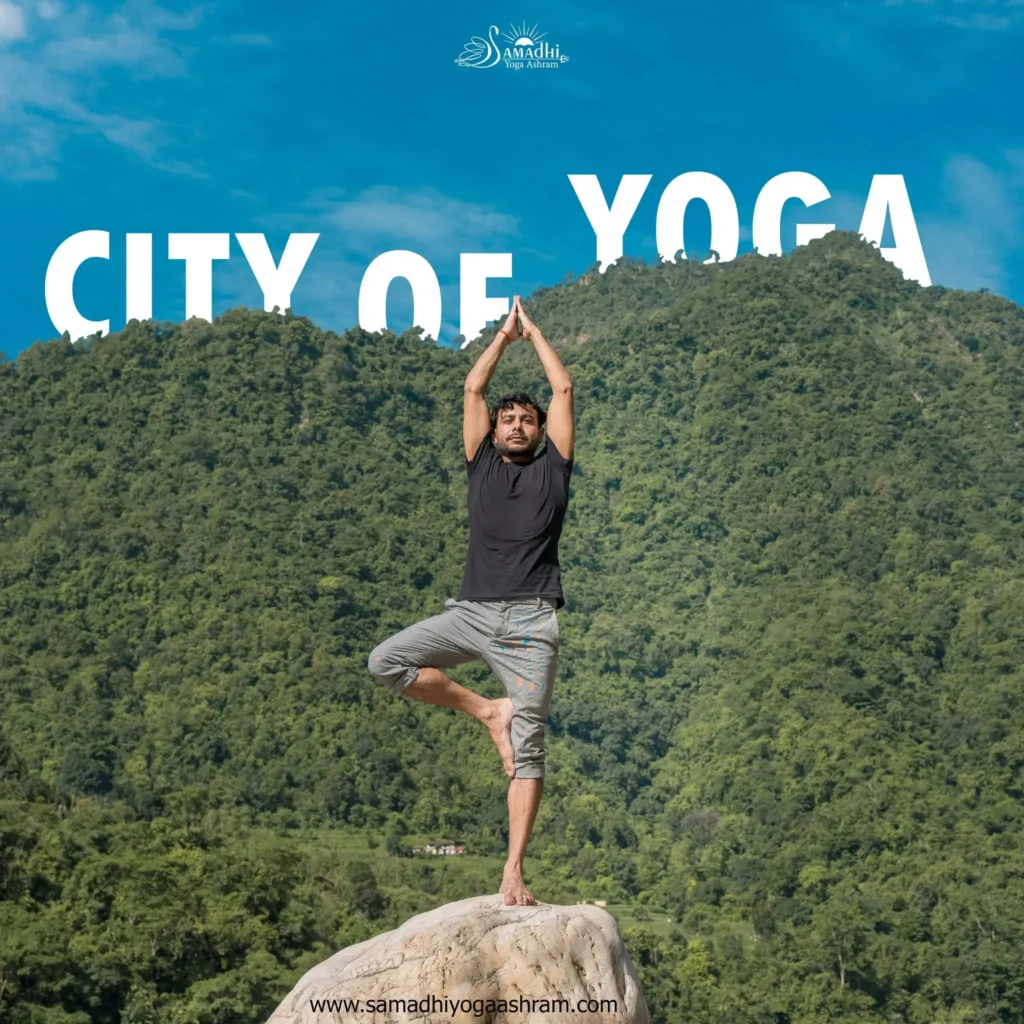
Quick answer: Stand on one leg. Place the sole of your other foot on the inner side of your standing leg, either above or below the knee. Join your palms together and raise your hands over your head. Hold the pose for 20 to 30 seconds and breathe normally. Never place your foot directly on your knee.
To get the complete benefits of Vrikshasana yoga, or Tree Pose yoga, it is important to follow all the steps correctly and practice under the guidance of expert yoga teachers.
- Stand straight with your feet together and arms by your sides.
- Put your weight on your right foot.
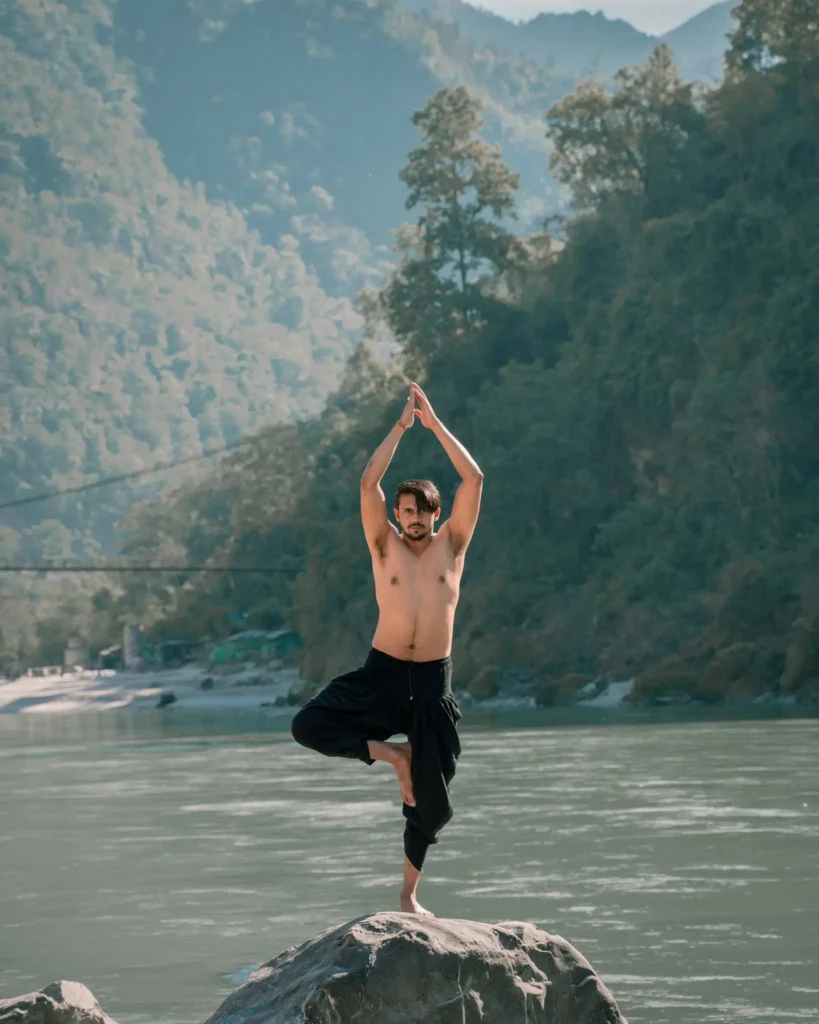
- Bend your left knee and place your left foot on the inner side of your right thigh.
- Keep your body straight and find your balance.
- Slowly raise your hands above your head. Keep your palms together.
- Look at one point in front of you and breathe normally.
- Breathe in as you raise your hands. Breathe out as you lower them.
- Slowly bring your left foot down.
- Stand normally and repeat the same steps with your right leg.
You can learn to do this asana in a proper manner when you join Yoga Teacher Training in India.
Precautions Of Tree Pose
Apart from learning how to do the pose, it is also important to know the precautions to keep in mind.
- First, you must be sure to warm up properly before attempting any kind of yoga pose. This will prevent muscle strain.
- If you are just starting out, you need to practice near a wall for support.
- If you want to maintain balance, you need to focus on a specific point in front of you.
- Do not put pressure on your knee. Also, do not place your foot near the knee joint.
- Your hips should be at one level, without any tilt.
- Always be sure to breathe deeply while you are in the pose.
Teaching Note: At Samadhi Yoga Ashram, we’ve noticed most beginners lose balance not because of weak legs, but because they fix their gaze on a moving object instead of a still one. In our yoga teacher training programmes, the very first correction our teachers give new students is to pick one unmoving spot at eye level and not look away until you’re steady. This single adjustment usually fixes 80% of balance issues within the first class.
Conclusion
You will fall out of Vrikshasana yoga a few times before you get it right. This happens to everyone, and that is normal.
This pose is not just about strong legs. It teaches you to stay still even when your body wants to move and your mind wants to rush. Practice it for a few weeks, and you will notice a change. Balancing will feel easy, without even trying hard.
So next time you practice, don’t aim for perfect. Just see how long you can hold the pose, then try again the next day.
Frequently Asked Questions
What is Tree Pose called in Sanskrit?
Tree Pose is called Vrikshasana. It comes from two words: ‘Vriksha’ means ‘tree’, and ‘Asana’ means ‘pose’.
How long should I hold Vrikshasana?
Start with 15 to 20 seconds on each leg. As you get better, you can hold it for 30 to 60 seconds.
Is Tree Pose good for beginners?
Yes. It is one of the first balance poses taught to beginners. It is simple to learn and helps build strength and focus from day one.
Which muscles does Vrikshasana work?
It works your ankles, calves, thighs, glutes, and core. It also engages your back and shoulder muscles when you raise your arms.
Why do I keep losing balance in Tree Pose?
Most people lose balance because they look at a moving point instead of a still one. Pick one fixed spot in front of you and keep your eyes on it.
Is Vrikshasana safe during pregnancy?
It can be safe in early pregnancy with a teacher’s guidance, using a wall for support. Always check with your doctor first.
What is the best time to practice Tree Pose?
Early morning on an empty stomach is best. But you can also practice in the evening if that suits you better.
This article is for general information and is not medical advice. If you have a respiratory or heart condition, are pregnant, or are unsure whether these practices suit you, please speak to your doctor before beginning. Yoga poses and breathing exercises should be practiced with proper guidance from a qualified yoga teacher to help ensure safe and correct practice.