




Tadasana (Mountain Pose): Steps, Benefits & Key Things to Know
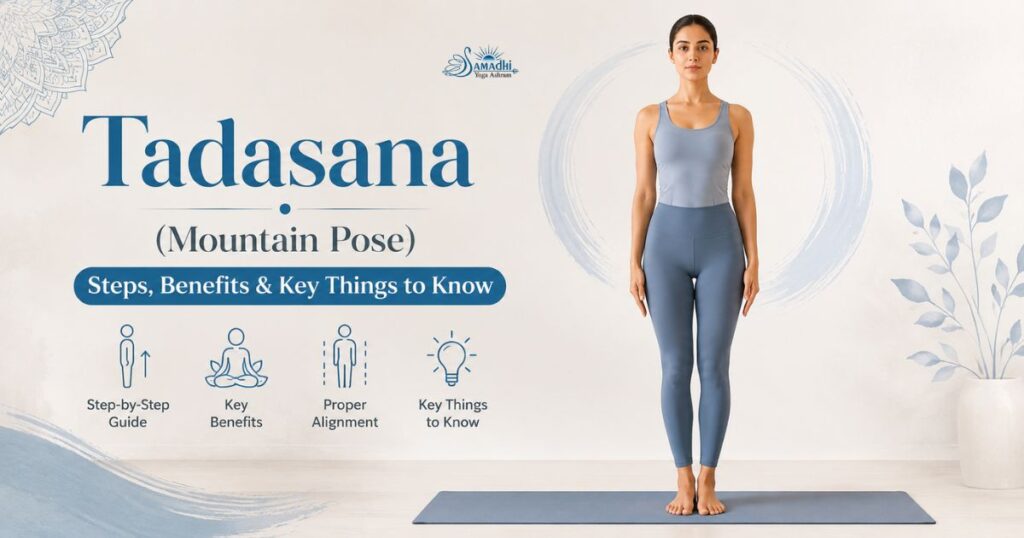
Table of Contents
- What Does “Tadasana” Mean?
- Tadasana (Mountain Pose): Benefits You Should Know
- 8 Easy Steps to Follow
- Common Mistakes to Avoid
- Ideal Time to do the Mountain Pose or Tadasana
- Contraindications and Cautions
- Warming Up Before Tadasana
- Making Tadasana a Part of Your Daily Life
- Final Takeaway
- Frequently Asked Questions
- Is Tadasana good for beginners?
- How long should you hold Mountain Pose?
- What muscles does Tadasana work?
- Can Tadasana fix bad posture?
- Should Tadasana be done on an empty stomach?
- Who should avoid Tadasana or modify it?
- Is Tadasana just standing, or is it actually doing something?
- Does Tadasana help with stress or anxiety?
- What poses come after Tadasana?
- Can kids and older adults practice Tadasana safely?
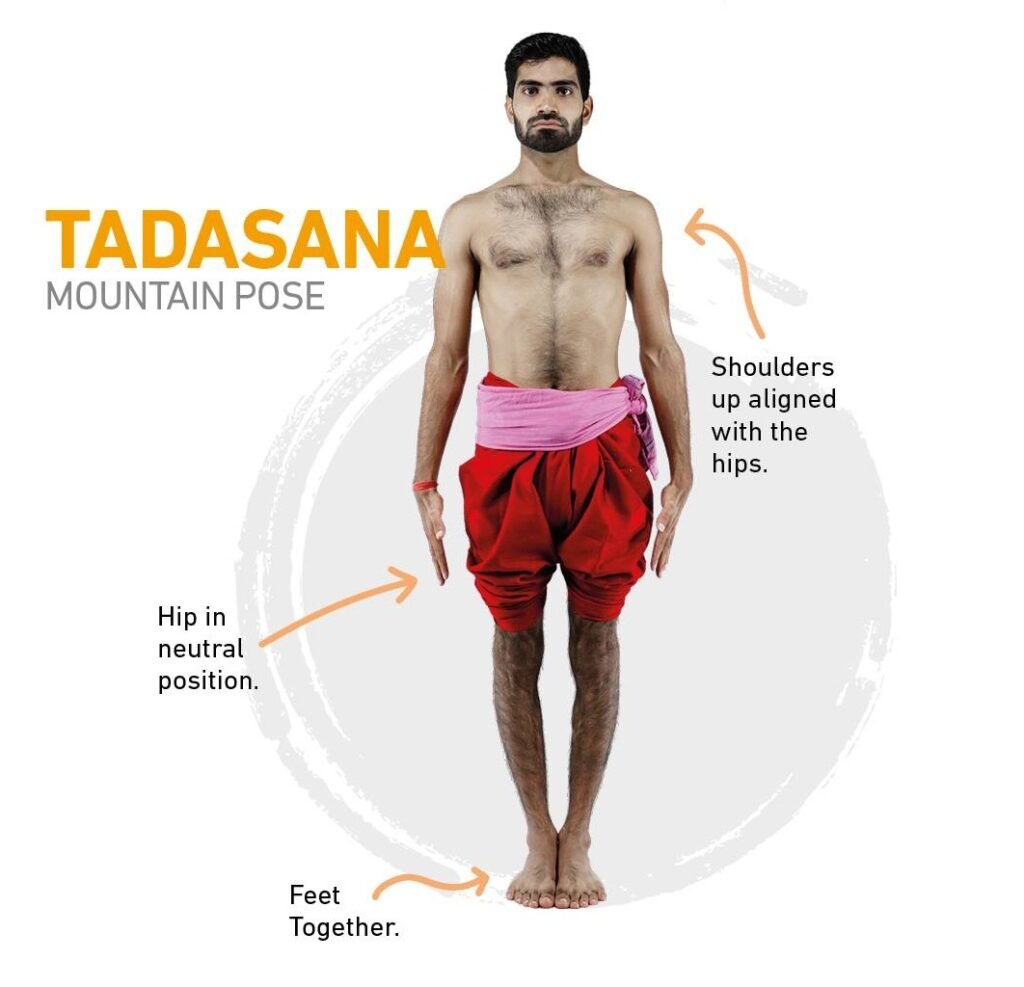
Tadasana, or Mountain Pose, is a satisfying stretching and toning exercise for the whole body. It is a great asana which stretches the arms, the chest, the abdominal muscles, the spine, and the leg muscles, along with giving a sense of balance. It is so easy, an asana that can be performed by all age groups. This is also known as the heavenly stretch pose, as you stretch yourself towards heaven. Tadasana, or mountain pose, is a fundamental standing posture and is, therefore, the foundation for all other poses like Trikonasana.
What Does “Tadasana” Mean?
Tadasana comes from two Sanskrit words, ‘tada‘, meaning ‘mountain‘, and ‘asana‘, meaning ‘pose’ or ‘seat‘. It’s pronounced tah-DAH-sah-nah. The name reflects the feeling of the pose; you hold yourself with the same steadiness a mountain has: rooted through the feet, still through the spine, unmoved from the inside out.
Tadasana (Mountain Pose): Benefits You Should Know
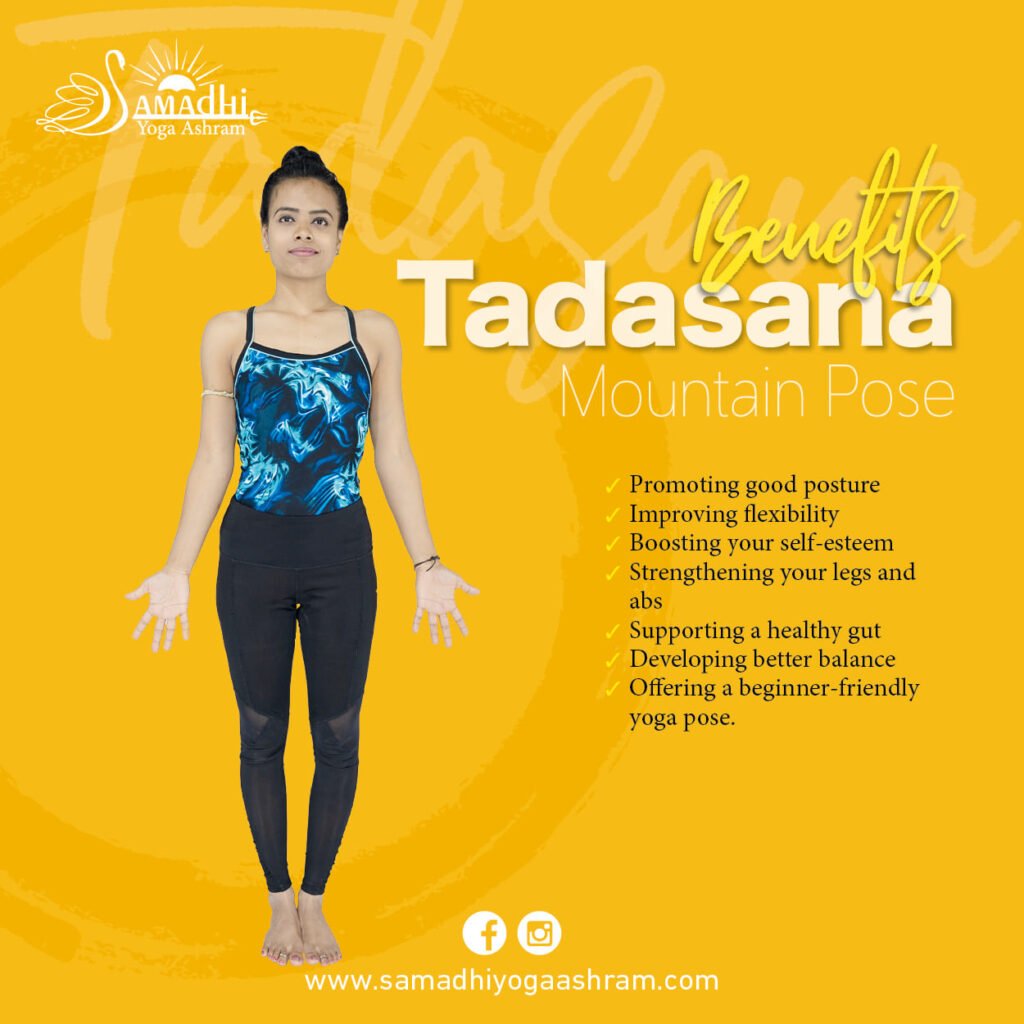
Practice Tadasana yoga often and you’ll notice it does more than stretch your legs and straighten your back; it settles your mind too. Anyone can do this pose, whether you’re young, old, flexible or still working on it. Just pay attention while you do it. Stand in Mountain Pose yoga with real focus and something shifts: your attention turns inward, the noise quiets down and you start to feel a kind of joy that was already there, just waiting to be noticed. Keep practicing and you’ll keep finding more of it.
Let’s take a look at the benefits of practising the Mountain Pose or Tadasana:
- Stand in this pose regularly and your posture starts to change on its own.
- Your spine settles into better alignment, without you forcing it.
- Your legs get stronger — thighs, calves, all of it.
- Your feet and ankles build strength too, since they carry most of your weight in this pose.
- Balance improves the more you practice holding still.
- You start noticing things about your own body you never paid attention to before.
- Your weight spreads more evenly across your feet instead of leaning to one side.
- It gives your whole body a light, gentle stretch.
- Your shoulders drop and relax instead of staying tight near your ears.
- Breathing gets easier and deeper when you stand tall like this.
- Holding the pose for even a minute sharpens your focus.
- You gain more control over your own body and movements.
- Standing steady becomes easier, even on days you feel a bit off-balance.
- Everyday stress and tension start to ease off, bit by bit.
- It naturally pulls your attention toward your breath.
- You become more conscious of how you’re standing, even outside of practice.
- It’s the pose most other standing poses are built on, so it sets you up well for those.
- Your movements become smoother and more in sync with regular practice.
- There’s a steady, grounded feeling that comes with this pose.
- Most people feel noticeably calmer by the time they’re done.
These Tadasana benefits come from traditional yogic teachings and the experience of long-time practitioners, rather than clinical research. If you have a diagnosed heart, blood pressure, or nervous system condition, it’s a good idea to check with your doctor before beginning.
8 Easy Steps to Follow
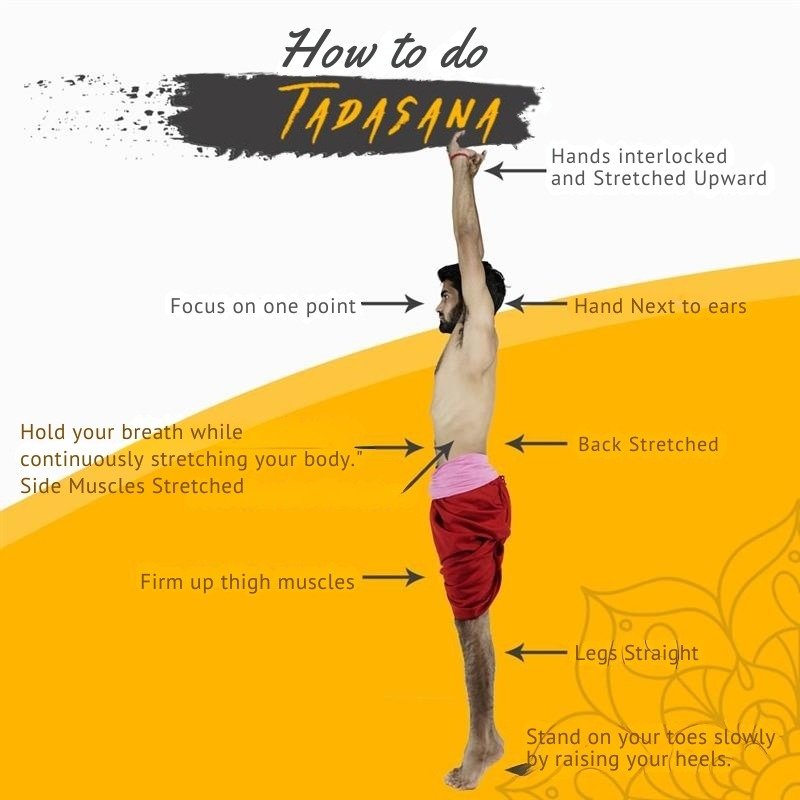
Follow these steps while practicing the Mountain Pose yoga, or Tadasana yoga, to get its full mental and physical health benefits.
- Begin by standing straight, legs slightly apart, and hands at your sides.
- Lift your hands above your head and look straight ahead.
- Then interlock your fingers and turn them upwards. Make sure your palms are facing the sky.
- Look slightly upward, just above eye level.
- Now take a deep breath and extend your arms, shoulders, and chest upwards.
- Lift your heels in a way so that the weight of your body is held by the toes.
- Gently stretch your whole body from the feet to the head. Hold the pose for a few seconds.
- Then slowly bring down your heels while exhaling.
Keep in mind that during the whole practice, your eyes should remain steadily fixed in front, a little above eye level. The longer you hold the pose, the more beneficial it is for the body. The capacity to perform & hold the pose differs from person to person. So don’t compel yourself to hold for a much longer time. As per your capacity, begin with 10–15 seconds of practice, and then gradually build up to about a minute as it feels comfortable. There’s no need to rush this.
Common Mistakes to Avoid
Tadasana yoga looks simple, but a few small habits quietly undo its benefits:
- Don’t make your knees stiff. Keep them relaxed.
- Don’t curl your toes. Keep your feet relaxed and place your weight evenly on both feet.
- Don’t push your head forward. Keep your chin level and look straight ahead.
- Don’t lift your shoulders toward your ears. Keep them relaxed.
- Don’t hold your breath. Breathe slowly and normally.
- Don’t put more weight on one foot. Try to keep your weight equal on both feet.
Ideal Time to do the Mountain Pose or Tadasana
The ideal time to practice the Mountain Pose, or Tadasana, is in the early morning. Before practising the Mountain Pose or Tadasana, you need to be sure to keep your stomach & bowels empty. You must have your meals at least four to six hours prior to doing this pose so that your food gets digested & there is enough energy for you to disperse during the practice.
You can practice it once or twice a day to get the most from the Mountain Pose Tadasana. Consistent daily practice is what helps you experience the full range of Mountain Pose benefits over time.
Contraindications and Cautions
Proper form and technique are crucial to guarantee the safety and effectiveness of a yoga practice. If you have any of the following health problems, you must talk with your physician before practising the Mountain Pose or Tadasana:
- Low back pain
- Shoulder injury
- Pregnant women
- Back or arm injury
- Hyperacidity
- Hernia
- Slip disc
- Migraine
- Insomnia
- Low blood pressure
You may practice the alternative yoga poses if you can’t do the Mountain Pose or Tadasana, such as:
- Volcano Pose
- Easy Pose Variation: Side Bend
- Mountain Pose Side Bend
Warming Up Before Tadasana
Tadasana yoga doesn’t require an elaborate warm-up, but a couple of minutes of gentle movement helps you settle into it more comfortably:
- Ankle Rotations: A few slow circles in each direction to loosen the joints you’ll be balancing on.
- Shoulder Rolls: A few rolls forward and back to release tension before lifting the arms overhead.
- A Gentle Standing Forward Fold: Hang for a few breaths to release the lower back before standing tall again.
Once Tadasana feels steady, it naturally leads into other standing poses like Trikonasana (Triangle Pose), which builds on the same alignment.
Making Tadasana a Part of Your Daily Life
Tadasana does not ask much of you, just a few minutes and a little consistency. Yet over time, those quiet minutes add up to something real.
Most of us spend our days hunched over phones and laptops without even noticing. Mountain Pose Tadasana, gently undoes that damage. A few mindful minutes each morning can improve your posture, release tension in your neck and shoulders, and help you start the day feeling grounded and clear-headed.
It works for everyone. Kids who practise it regularly stand taller and carry themselves with more confidence. Older adults use it to stay balanced and keep their joints moving freely. And the best part: you need no equipment, no gym, no special space. Just stand, breathe, and pay attention. Start small. Even five minutes a day is enough.
Want to learn more about Tadasana? You can enrol in our 200 hour yoga teacher training in Rishikesh and practise this pose under expert guidance.
Final Takeaway
Tadasana may look like just standing, but there is a lot more happening beneath the surface. It builds balance, sharpens focus, and slowly corrects the postural habits that most of us have spent years developing without realizing it.
The beauty of this pose is that it meets you where you are. Whether you are a beginner stepping onto the mat for the first time or someone who has been practising for years, Mountain Pose Tadasana always has something to offer.
You do not need to perfect it on day one. Just show up, stand tall, and breathe. With regular practice, the changes will come quietly, steadily, and in ways you may not expect.
Frequently Asked Questions
Is Tadasana good for beginners?
Yes, it’s usually the very first pose taught in yoga because it needs no flexibility or strength to start. You’re just learning to stand with awareness, so anyone can do it from day one.
How long should you hold Mountain Pose?
Start with 10-15 seconds and work up to about a minute over time. There’s no magic number here; what matters more is that your breath stays steady while you hold it, not the clock.
What muscles does Tadasana work?
It engages your front thigh muscles, core, and the small supporting muscles in your feet and ankles, while gently stretching your calves, chest, and shoulders. Because everything is working at once to keep you upright, it builds full-body awareness rather than isolating one muscle group.
Can Tadasana fix bad posture?
It can help retrain posture habits, especially the slouch that comes from sitting at a desk or looking at a phone all day. Practicing it daily teaches your body what “neutral spine” actually feels like, so that alignment starts carrying over into how you sit and walk too.
Should Tadasana be done on an empty stomach?
Ideally, yes. Wait at least 3–4 hours after a meal before practicing Tadasana. Early morning is a good time because your stomach is empty and your body feels fresh and alert.
Who should avoid Tadasana or modify it?
Skip it or modify it if you have a slipped disc, a recent back or shoulder injury, low blood pressure, or if you are pregnant; check with a doctor first. Most people can do a gentler version, feet flat, no heel lift, even when the full pose isn’t advisable.
Is Tadasana just standing, or is it actually doing something?
It looks like standing, but it’s active; you’re intentionally keeping your ankles, hips, shoulders, and ears in one line instead of slouching as usual. This helps improve posture, balance, and body awareness. That small effort is what makes Tadasana a yoga pose rather than just standing normally.
Does Tadasana help with stress or anxiety?
Many practitioners use it that way, since the pose naturally slows the breath and pulls attention inward. It’s often the entry point into pranayama or meditation for that reason, not just a physical warm-up.
What poses come after Tadasana?
Trikonasana (Triangle Pose) is the most common next step, since it builds directly on the same standing alignment. Most beginner standing sequences use Tadasana as the reset pose between other postures too.
Can kids and older adults practice Tadasana safely?
Yes, it’s one of the safest poses in yoga, which is exactly why it’s taught to complete beginners first. Kids pick up better coordination and body awareness from it, and older adults often lean on it to stay steady on their feet and keep their joints moving.
This article is for general information and is not medical advice. If you have a respiratory or heart condition, are pregnant, or are unsure whether these practices suit you, please speak to your doctor before beginning. Yoga poses and breathing exercises should be practiced with proper guidance from a qualified yoga teacher to help ensure safe and correct practice.