





What Are the 8 Limbs of Yoga? Meaning, Benefits and Practice
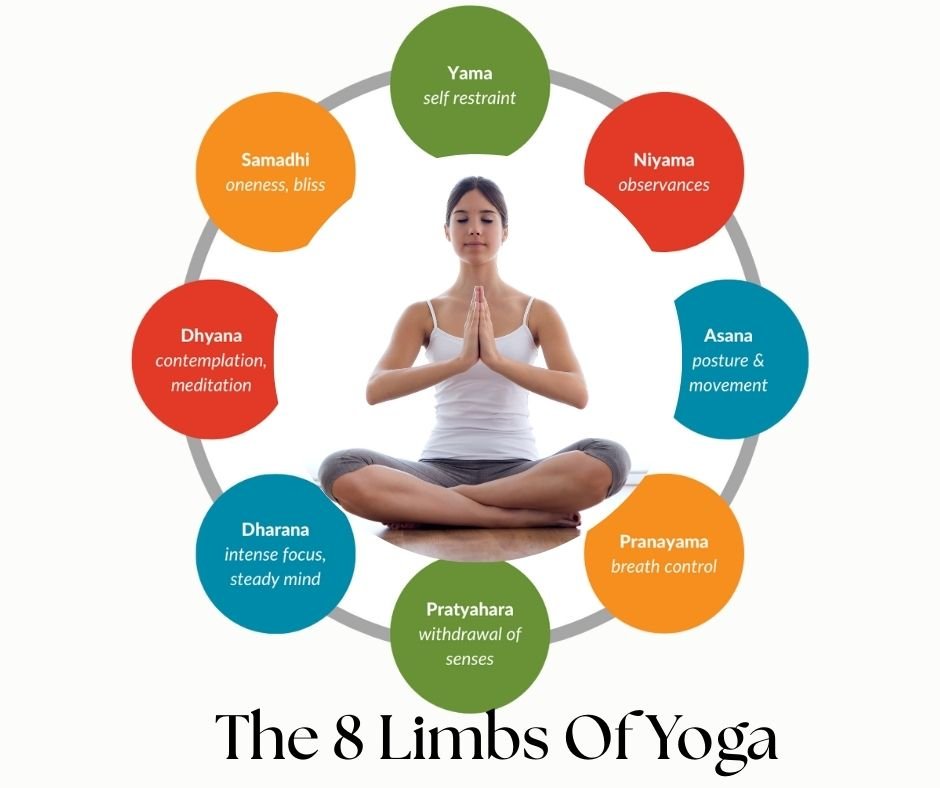
Table of Contents
- What Are the 8 Limbs of Yoga?
- Who Introduced the Eight Limbs of Yoga?
- The 8 Limbs of Yoga Explained
- 1. Yama (How You Treat Others)
- 2. Niyama (How You Treat Yourself)
- 3. Asana (Posture)
- 4. Pranayama (Breath Control)
- 5. Pratyahara (Pulling the Senses Inward)
- 6. Dharana (Concentration)
- 7. Dhyana (Meditation)
- 8. Samadhi (Complete Absorption)
- Benefits of Practicing the 8 Limbs of Yoga
- How to Practice the 8 Limbs of Yoga in Daily Life
- Are the 8 Limbs of Yoga Only About Physical Poses?
- Conclusion
- Frequently Asked Questions
- Is Patanjali’s Ashtanga Yoga the same as Ashtanga Vinyasa Yoga?
- Do I have to finish one limb before starting the next?
- Do I need to be religious to follow the eight limbs?
- How long does it take to reach samadhi?
- Can I learn the 8 limbs of yoga by myself?
- Which limb should a beginner start with?
Ask most people what yoga is, and they’ll describe a class. Mats, stretches, maybe a bit of sweating. That’s fair. It’s what yoga looks like in most places today.
But the old texts paint a much bigger picture. The 8 limbs of yoga are eight parts of a full way of practicing yoga. They come from the Yoga Sutras of Patanjali, and they cover how you treat people, how you look after yourself, your body, your breath, your senses and your mind. Yoga poses are only one part of this wider practice.
Below, you’ll find each limb explained in plain words, along with small ways to try them in real life.
What Are the 8 Limbs of Yoga?
Here’s the quick answer. The eight limbs of yoga are:
- Yama: how you treat others
- Niyama: how you treat yourself
- Asana: posture
- Pranayama: breath control
- Pratyahara: pulling the senses inward
- Dharana: concentration
- Dhyana: meditation
- Samadhi: complete absorption
That’s also the traditional order. The first five deal with things you can see or feel, like behavior, body and breath. The last three happen inside the mind.
The Sanskrit name for this path is Ashtanga Yoga. “Ashta” means eight. “Anga” means limb. Nothing more mysterious than that.
The word “limb” is a good choice, too. Your arms and legs don’t grow one after another. They grow together. Many teachers see these eight parts the same way. You work on several at once instead of climbing them like stairs.
Who Introduced the Eight Limbs of Yoga?
A sage named Patanjali. He wrote about them in the Yoga Sutras, a short text made up of around 196 brief sayings. The eight limbs show up in the second chapter.
One thing to clear up: Patanjali didn’t invent yoga. People were practicing it long before him. What he did was gather the ideas and set them out in a clear, usable way. Nobody knows exactly when he lived. Scholars’ guesses range from a few centuries BCE to around 400 CE.
The 8 Limbs of Yoga Explained
1. Yama (How You Treat Others)
Yama is about the way you act toward the world. There are five of them:
- Ahimsa: Don’t cause harm. That includes words and even thoughts, not just actions.
- Satya: Be honest.
- Asteya: Don’t take what isn’t yours. This covers more than objects. Taking credit or someone’s time counts too.
- Brahmacharya: Traditionally, celibacy or control of sexual energy. A lot of modern teachers read it more loosely, as moderation and not wasting your energy.
- Aparigraha: Don’t grab more than you need. Let go of greed.
None of this is new advice, really. Most of us learned some version of it as kids. The hard part is actually doing it.
Try this: choose one yama and watch it for a week. Say you pick ahimsa. Notice every time a harsh comment is on the tip of your tongue. You’ll probably slip up. That’s okay. Noticing is where it starts.
2. Niyama (How You Treat Yourself)
If yama looks outward, niyama looks inward. These are personal habits, and again there are five:
- Saucha: Keep your body, your space and your mind clean.
- Santosha: Be satisfied with what you have.
- Tapas: Discipline. Keep going when it gets hard.
- Svadhyaya: Study yourself, and read things that help you grow.
- Ishvara Pranidhana: Surrender to a higher power. Some people see it as simply letting go of the need to control everything.
Santosha is a nice one to begin with. At night, think of one thing from your day that was good enough as it was. A decent cup of tea or a quiet walk. It sounds small but it adds up.
3. Asana (Posture)
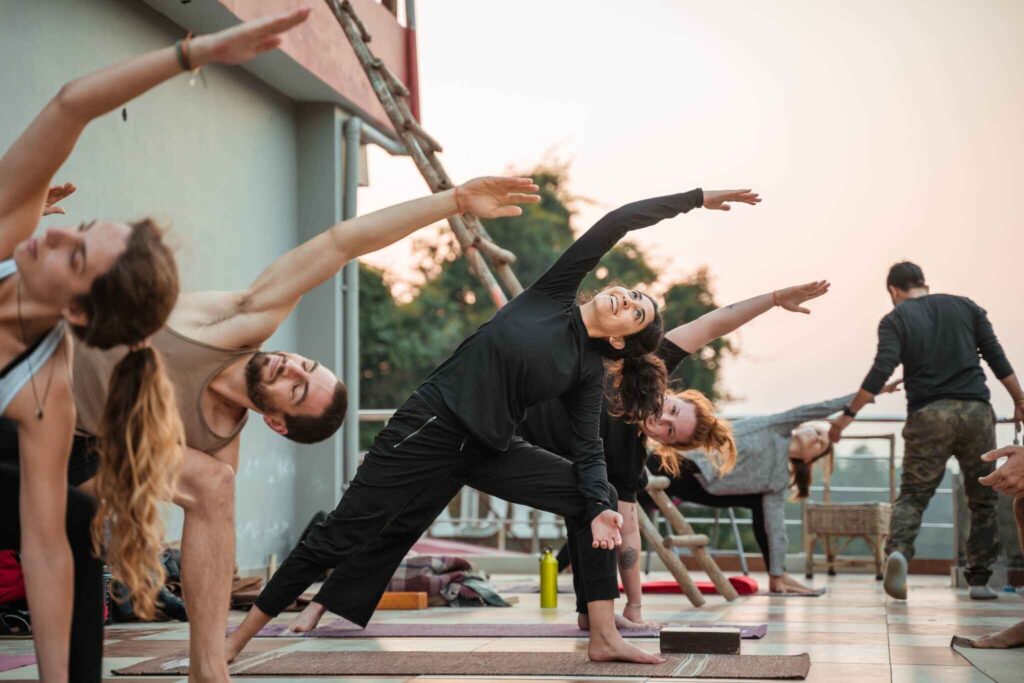
This is the one everyone knows. Here’s the surprise, though. In the Yoga Sutras, asana mostly means a seat that’s steady and comfortable. The point was to sit still for breathing and meditation without aches or moving around.
Many yoga poses used in classes today came much later. They mostly came from Hatha yoga and modern yoga teachers.
So if you go to a yoga class, you’re practicing asana. Just try not to worry about how far you can stretch. Being steady and relaxed in a pose matters more. And now and then, sit quietly for five minutes with your back upright and at ease. That’s asana in its oldest sense.
4. Pranayama (Breath Control)
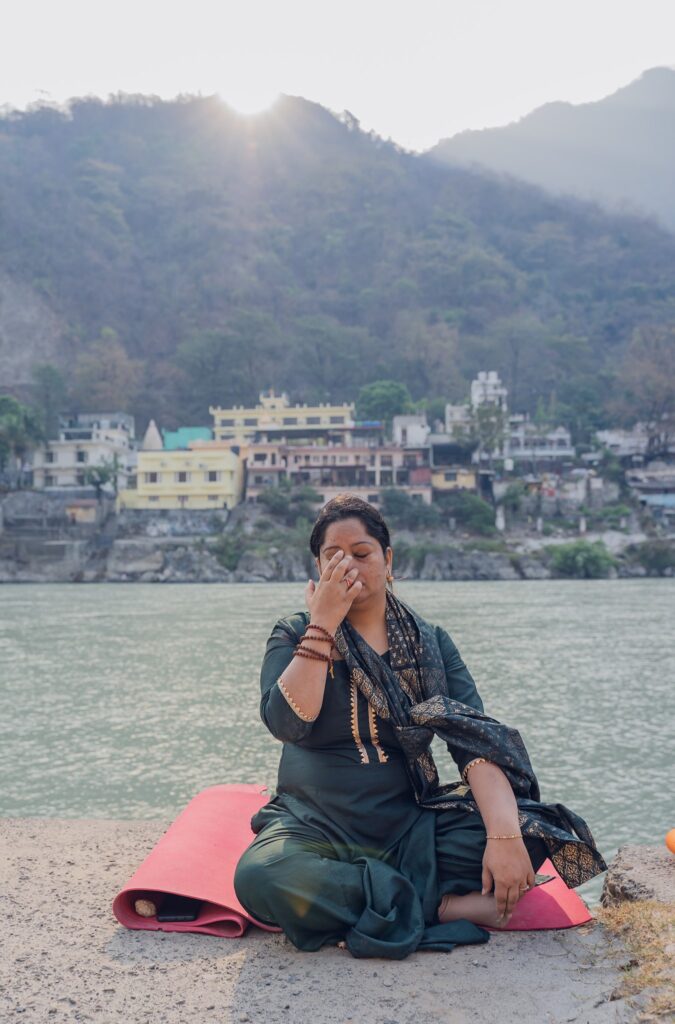
“Prana” means life energy. Your breath is the clearest sign of it. Pranayama is the practice of slowing and guiding your breath on purpose.
Why bother? Because breath and mind move together. When you’re anxious, your breath goes short and fast. When you slow it down, the mind often follows.
An easy start: breathe in through your nose for four counts. Breathe out for four to six counts. Keep going for two or three minutes. Stronger breathing methods exist, but learn those from a trained teacher.
Read More: 5 Pranayamas That You Should Make a Part of Your Daily Life
5. Pratyahara (Pulling the Senses Inward)
Your senses are always trying to get your attention. A phone lights up, someone laughs in the next room or a smell comes in from the kitchen. Before you know it, your attention is gone.
Pratyahara means letting those things be there without chasing after them.
This limb sits in the middle for a reason. It links the outer work of the body and breath with the inner work of the mind.
To get a feel for it, close your eyes and listen. Hear the sounds around you, but don’t label them or follow them. Let them come and go.
6. Dharana (Concentration)
With the senses a bit quieter, you can rest your attention on one thing. Your breath, a candle flame, a sound, a single word. Anything works.
Your mind will wander. Everyone’s does. Dharana is simply bringing it back, over and over.
A simple exercise: count your breaths from one to ten. Lost count? Go back to one. You’ll lose count a lot at first. That’s not failing. Coming back is the practice.
7. Dhyana (Meditation)
Dharana and dhyana sound alike, but there’s a difference. In dharana, you keep pulling your attention back. In dhyana, you don’t need to. The focus just flows, steady and unbroken, like oil poured from one jug to another.
You can’t force this. It tends to show up on its own after a while of regular concentration practice. Sit a little each day and give it time.
8. Samadhi (Complete Absorption)
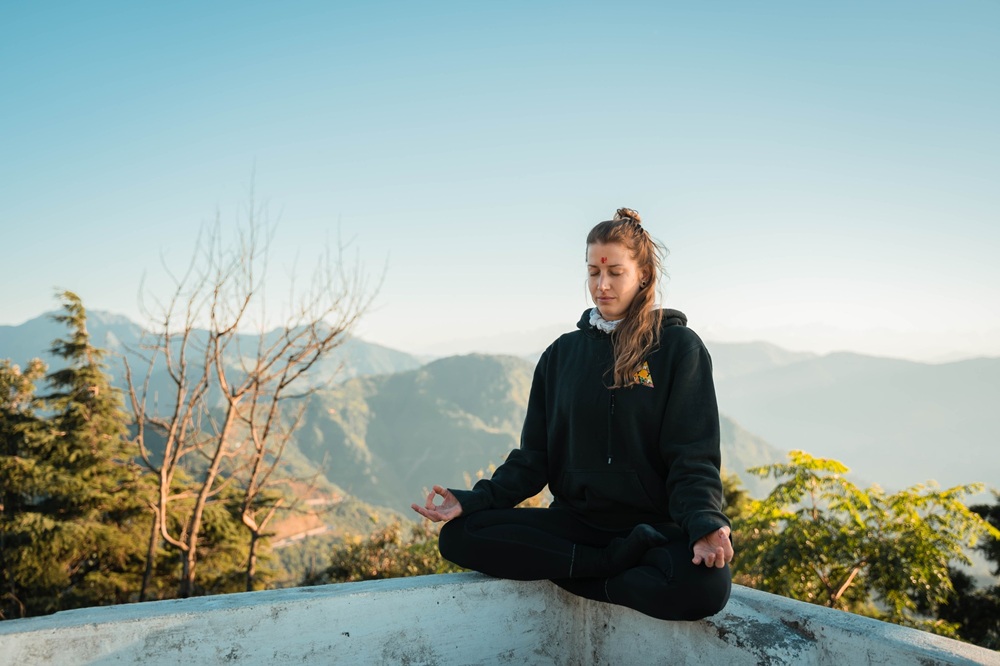
Samadhi is the last limb and the goal of the whole path. In very deep meditation, the line between “me” and “the thing I’m focusing on” fades away.
The Yoga Sutras describe several levels of samadhi. The highest is said to bring freedom from suffering. Different traditions explain it in different ways, so it’s hard to pin down in a sentence.
For most of us, it helps to see samadhi as a direction rather than a finish line. You don’t practice it directly. It comes from the other seven limbs working together over a long time.
Benefits of Practicing the 8 Limbs of Yoga
In tradition, the eight limbs lead toward inner peace and freedom. Modern studies mostly look at the poses, breathing and meditation parts. Here’s what people commonly notice:
- Slow breathing and meditation may help you feel calmer and less stressed
- Regular poses can support flexibility, balance and strength
- Concentration practice can help you stay on one task longer
- The yamas and niyamas can help you toward kinder, more honest relationships
- Self-study can help you spot your habits and reactions more clearly
- Some people find that slow breathing before bed helps them sleep better
- Being happy with what you have can reduce the constant feeling of wanting more
- A daily routine can bring a bit of calm and structure to busy days
Yoga isn’t a substitute for medical care. If you have a health condition, check with your doctor before starting something new.
How to Practice the 8 Limbs of Yoga in Daily Life
No ashram needed. No hours on a mat. Here’s what the 8 yoga limbs can look like on a normal day.
- Morning: Sit for five minutes after you wake up. Take ten slow breaths, then count a few more to settle your mind. Make your bed or clear your desk before you start work.
- At Work: Tell the truth, even when a small lie would be easier. If a coworker had the idea, say so. Have a lot of work to do? Stop and take three slow breaths before you reply to that email.
- At Meals: Put the phone away. Actually taste your food. It sounds too simple to count but it trains your senses to stay with one thing.
- In a Heated Chat: Before you answer in anger, ask yourself if your words will hurt. Try listening all the way through instead of planning your comeback.
- Evening: Do 15 or 20 minutes of gentle yoga. Then, before bed, look back at your day honestly. What went well? What would you change?
- Once a Week: Give away something you don’t use anymore.
Don’t try all of this in one go. Pick one small habit, stick with it for a while, then add another. Showing up a little every day beats doing a lot once in a while.
Are the 8 Limbs of Yoga Only About Physical Poses?
No, poses are one limb out of eight. The rest deal with how you act, how you look after yourself, your breath, your senses and your mind.
That surprises a lot of people, since most classes focus almost entirely on poses. But in Patanjali’s system, the body is prepared so the mind can settle. Each limb makes the next one a little easier:
- Living by good values means less guilt and inner conflict, so the mind feels calmer.
- A steady posture lets you sit still.
- Calm breathing quiets the restless energy that keeps thoughts racing.
- Pulling in the senses cuts down on outside distractions.
- With all that in place, concentration and meditation can finally begin.
So if you already take yoga classes, you’re already practicing one limb. The other seven can make that practice feel much fuller.
Conclusion
Yoga is a lot more than a workout. Patanjali’s eight limbs lay out one connected path: living with good values, keeping personal discipline, caring for the body, working with the breath, calming the senses, training focus, going deeper into meditation and, in the end, reaching a state of deep awareness.
If you want to understand these teachings more deeply, yoga teacher training in India can help you study yoga philosophy, asana, pranayama, meditation and other traditional practices in a structured way.
You don’t have to get all of it right. Pick the limb that feels closest to where you are now, stay with it patiently, and let the rest come in its own time.
Frequently Asked Questions
Is Patanjali’s Ashtanga Yoga the same as Ashtanga Vinyasa Yoga?
No. Patanjali’s Ashtanga Yoga is the eight-limbed path from the Yoga Sutras. Ashtanga Vinyasa is a modern, physical style made popular by K. Pattabhi Jois in the 1900s. It uses the same name, but it’s a set series of flowing poses.
Do I have to finish one limb before starting the next?
Not really. The limbs do come in an order, and the inner ones lean on the outer ones. But most teachers tell beginners to work on a few at once, like good values, poses and breathing, rather than waiting to “complete” one.
Do I need to be religious to follow the eight limbs?
No. People from many faiths, and people with none, use these practices. Ishvara pranidhana is sometimes explained as devotion to God and sometimes as trusting life and letting go. You can take it in a way that fits what you believe.
How long does it take to reach samadhi?
There’s no set timeline. The old texts describe it as the fruit of long, steady practice, often over many years. It’s more useful to focus on practicing each day than on reaching an end point.
Can I learn the 8 limbs of yoga by myself?
You can pick up the basic ideas on your own by reading and trying simple practices. For poses and stronger breathing methods, a qualified teacher is a good idea. They can help you avoid injury and understand the deeper teachings properly.
Which limb should a beginner start with?
Many teachers say yama and niyama, since they shape everything else. In practice, though, most beginners find poses and simple breathing the easiest way in. Start wherever feels natural to you.
This article is for general information and is not medical advice. If you have a respiratory or heart condition, are pregnant, or are unsure whether these practices suit you, please speak to your doctor before beginning. Yoga poses and breathing exercises should be practiced with proper guidance from a qualified yoga teacher to help ensure safe and correct practice.