





Utkatasana (Chair Pose): Benefits, Steps & Common Mistakes Beginners Must Avoid
Table of Contents
- What Is Utkatasana (Chair Pose)?
- What Does Utkatasana Mean?
- A Brief History of Utkatasana
- How to Do Utkatasana: Step-by-Step Process
- Chair Pose Key Alignment Tips
- Benefits of Utkatasana or Chair Pose
- Variation of Utkatasana Worth Trying
- Common Mistakes in Utkatasana & Fixes
- Precautions & When Not To Do Utkatasana
- Pre- & Post-Pairing Poses With Utkatasana
- Moving Forward
- Frequently Asked Questions
- What is Utkatasana in yoga?
- Is Utkatasana suitable for beginners?
- Do I need equipment to practice the chair pose?
- Can I practice Utkatasana every day?
- Does the chair pose affect my knees?
- What are the main benefits of Utkatasana?
- Should I do Utkatasana (chair pose) if my lower back is aching?
What Is Utkatasana (Chair Pose)?
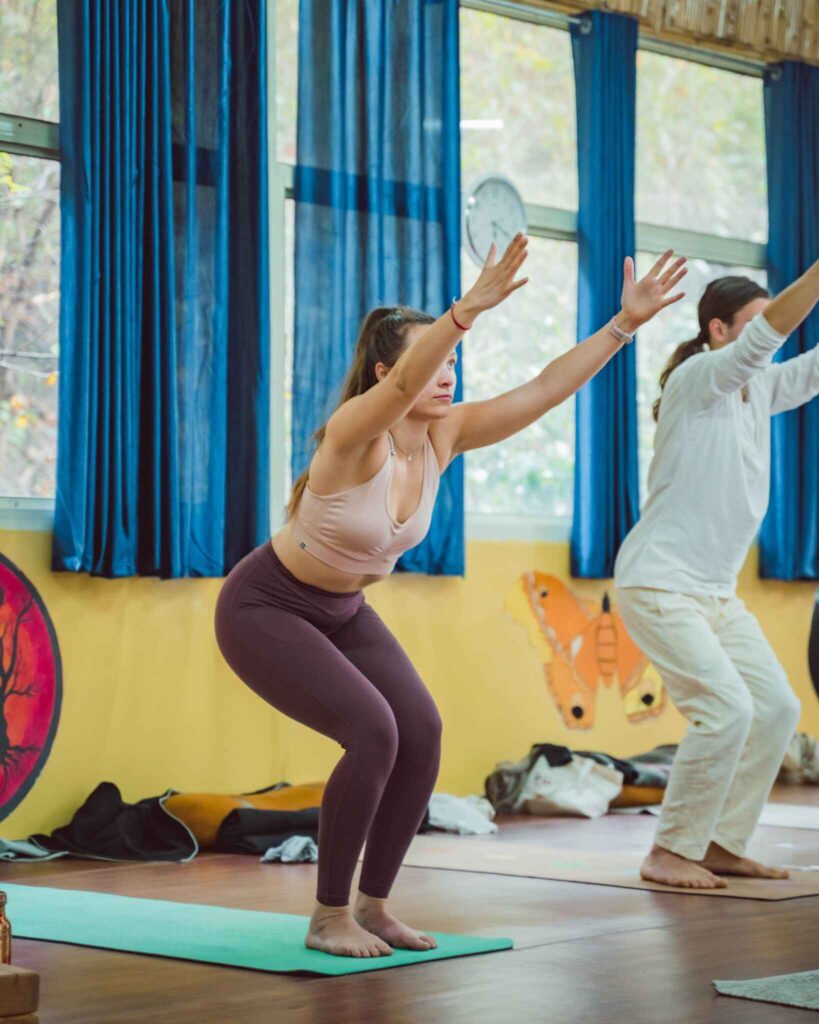
Chair Pose, or Utkatasana, is one of the standing poses of yoga that resembles the posture of sitting on a chair. It requires a lot of lower-body strength and mental determination, and it may feel harder than it looks.
What looks like a gentle squat in photos becomes a full-body exercise within seconds.
Whether you are stepping onto the mat for the first time or deepening your regular practice, Utkatasana, or the yoga chair pose, has much to offer. Here, we walk you through everything you need to know about Utkatasana yoga, along with its benefits, how to do it, how not to do it, and much more.
What Does Utkatasana Mean?
The name Utkatasana comes from the Sanskrit words “Utkata” and “Asana.”Asana means posture or seat, while Utkata can mean powerful, fierce, intense, mighty, or elevated.
Because of its strong and challenging nature, Utkatasana is often called Chair Pose or Fierce Pose in English. Yoga Chair Pose is another name used for Utkatasana. The name Chair Pose comes from the way the body looks as if it is sitting on an invisible chair. In Bikram Yoga, the pose is commonly known as Awkward Pose.
A Brief History of Utkatasana
The name Utkatasana and an older form of the pose come from earlier yoga traditions. An illustration of Utkatasana appears in the 19th-century Sritattvanidhi, where the pose looks quite different from the Chair Pose commonly practised today. In this older version, the practitioner sits in a deep squat with the heels on the ground and the body much closer to the heels.
The modern chair-like form of Utkatasana yoga, with the thighs lowered and the arms raised, is generally associated with the development of modern postural yoga, particularly the teachings of Tirumalai Krishnamacharya. His work had a major influence on several modern yoga traditions and teachers.
Over time, this standing version of Utkatasana became widely used in modern yoga practices, including Hatha, Ashtanga, Vinyasa, and Iyengar yoga. Today, Chair Pose yoga is commonly taught as a strengthening standing posture, especially in styles that use flowing sequences.
How to Do Utkatasana: Step-by-Step Process
Now we’ll tell you how to practise the chair yoga pose safely:
- Start in Tadasana (Mountain Pose), that is, stand straight with your feet together or about 6–8 inches apart, keep your arms relaxed by your sides, and distribute your weight evenly between both feet.
- Take a slow breath in and raise both arms straight above your head, keeping them about 12–18 inches apart with your palms facing each other
- Breathe out and slowly bend your knees as if you are sitting on a chair, push your hips back and down and keep your knees in line with your feet, lowering your thighs only as much as feels comfortable
- Keep your chest lifted and your back long as you lower down, your body may lean forward slightly, but do not round your back or let your chest drop
- Keep most of your weight on your heels rather than your toes, you can gently lift your toes to check that your heels are carrying your weight
- Gently pull your lower belly in and up to support your lower back and help keep your body steady
- Keep your face, jaw and shoulders relaxed while your legs and belly do the main work
- Stay in the pose for about 5–10 slow breaths, breathing in as you lengthen your spine and breathing out as you settle into the pose
- Take a breath in and slowly straighten your legs, then lower your arms to your sides and return to a standing position
Beginners can hold the pose for 30 seconds and build from there. Over time, aim for 60 seconds or more.
Chair Pose Key Alignment Tips
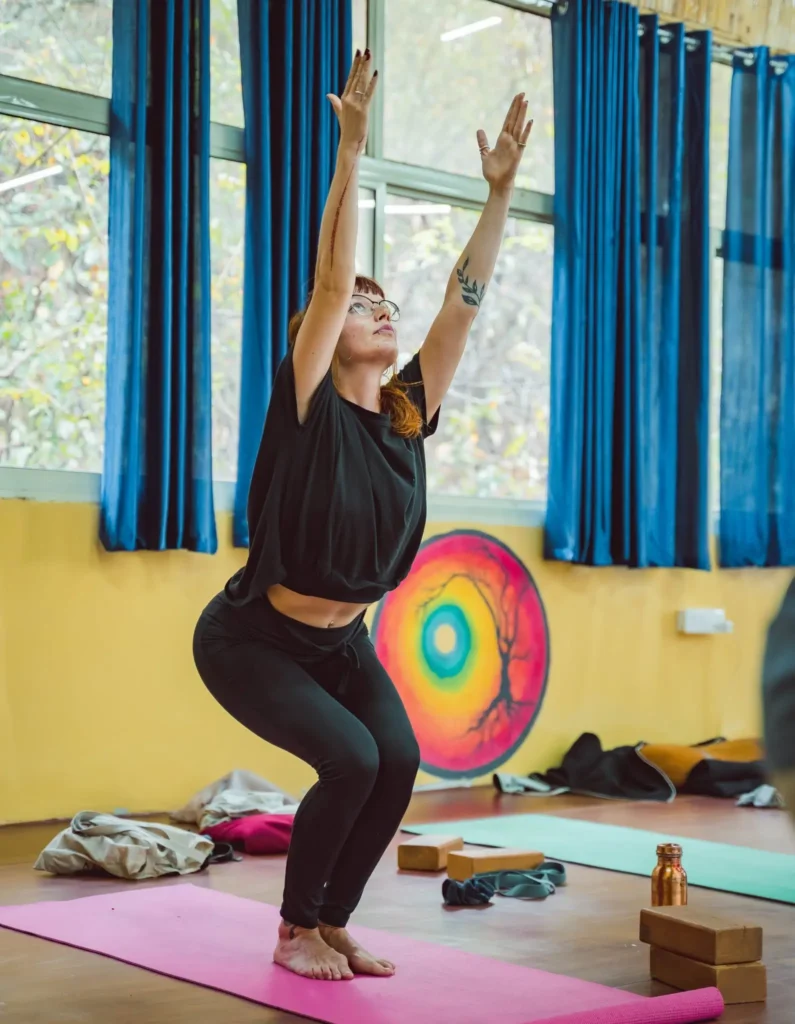
Good alignment in Utkatasana yoga makes the difference between a posture that strengthens and one that causes stress. Remember to keep these in mind:
- Knees Stay Behind the Toes: Look down and make sure you can see your toes. If your knees have gone past them, shift your weight back into your heels.
- Lower Back Down, Chest Up: Keep your back straight and natural. Let the lower part of your back move down gently while you lift your chest.
- Keep Your Arms Beside Your Ears: If your shoulders are tight, you may bring your hands to the Anjali Mudra (prayer position) at your chest instead. There is no necessity or benefit from stretching the arms overhead if your shoulders are not ready.
- Weight In The Heels: This technique protects the knees and allows the hip and thigh muscles to work properly instead of putting too much pressure on the knee joints.
- Breathe Throughout: Breathing is what keeps the pose alive. And this may sound obvious, but many people hold their breath in difficult poses, which is not recommended.
Learning alignment from qualified teachers significantly impacts your practice, particularly for standing poses like this one. At Samadhi Yoga Ashram, alignment is something that is practised with attention and care for every individual, from the first session.
Benefits of Utkatasana or Chair Pose
There are several utkatasana benefits that make this pose a useful part of a regular yoga practice:
- Strengthens your thighs, calves, and other leg muscles
- Makes your core stronger and helps support your body
- Improves your balance and stability
- Helps you maintain better posture
- Strengthens your ankles and improves their stability
- Strengthens your hip muscles
- Improves movement in your hips
- Improves movement in your ankles
- Helps improve coordination between your upper and lower body
- Prepares your body for other standing yoga poses
Variation of Utkatasana Worth Trying
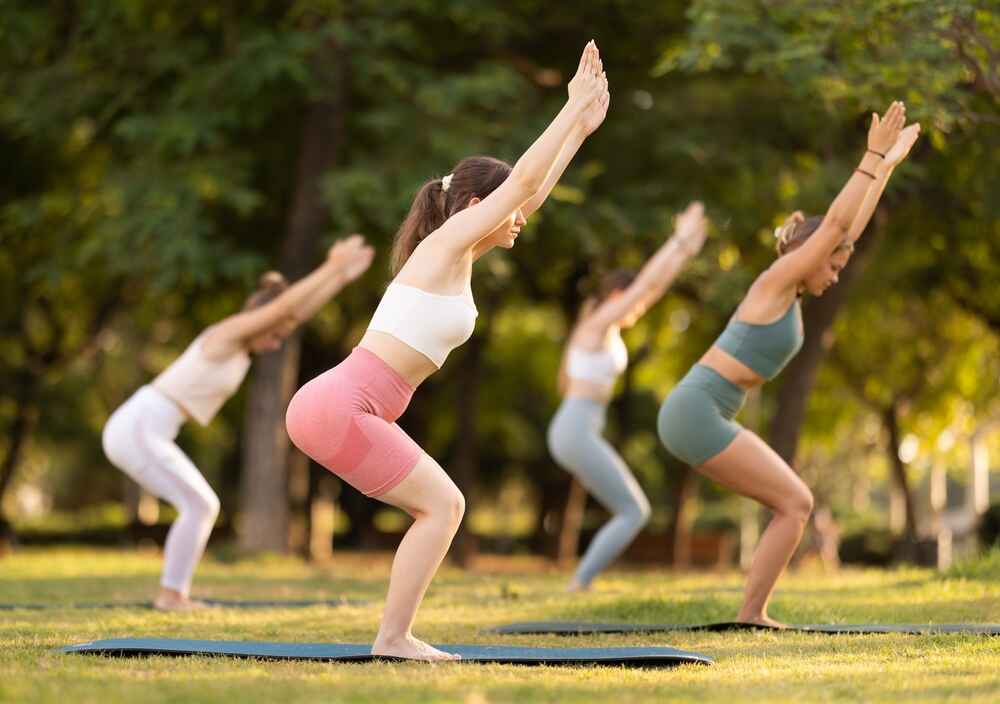
Once you get comfortable doing the basic form, here are some variations to give you places to go ahead:
- Parivrtta Utkatasana (twisted chair pose)
- Ardha Utkatasana (half chair pose)
- Wall-Supported Chair Pose
- Chair Pose with Eagle Arms (Garudasana Arms)
- Chair Pose with a Block (between thighs)
Common Mistakes in Utkatasana & Fixes
Most issues in Utkatasana come from alignment, breath, or attempting to go deeper than the body is prepared for. To achieve the best form, try to avoid these common mistakes people make, as shown in the table below:
| Common Mistake | What Can Happen | What to Do Instead |
| Knees moving too far forward | You may feel extra pressure around your knees | Move your hips back and keep your knees in line with your feet |
| Heels coming off the floor | You may feel less steady in the pose | Keep both heels firmly on the floor |
| Lower back bending too much | This can make your lower back uncomfortable | Keep your belly gently engaged and your back in a natural position |
| Rounding your back | It can make the pose harder to hold | Lift your chest and keep your spine long |
| Shoulders getting tight | You may feel tension around your neck and shoulders | Relax your shoulders and keep them away from your ears |
| Letting your arms drop | You may lose the proper position of the pose | Keep your arms raised or bring your hands together in front of your chest |
| Holding your breath | The pose may feel harder than it needs to | Keep breathing slowly and normally |
| Going lower than you can manage | You may lose your form or feel discomfort | Stay at a height where you can hold the pose comfortably |
| Putting too much weight on your toes | You may feel less stable | Keep your heels down and spread your weight across your feet |
| Dropping your head | This can put extra tension on your neck | Keep your head in line with your spine and look ahead |
Precautions & When Not To Do Utkatasana
Utkatasana is generally suitable for most people; however, there are certain situations where caution or avoidance is sensible. In case of:
- Knee injury or chronic knee pain
- Lower back problems
- High blood pressure or heart conditions
- Arthritis in the hips, knees, or ankles
- Headaches or migraines
- Pregnancy, especially during the third trimester
- Any recent surgery to the abdomen, hips, or legs
It is always advised to consult a medical or yogic professional first in case of any of the above conditions before you start with Utkatasana or any other asana.
Pre- & Post-Pairing Poses With Utkatasana
The Chair Pose, or Utkatasana, works well as part of a sequence with other yoga poses. Rather than holding it on its own for 30–60 seconds, you can pair it with one of the asanas below:
Before Utkatasana
- Tadasana (Mountain Pose): Helps you learn the proper alignment you need when holding Utkatasana.
- Virabhadrasana (Warrior): Opens the hips and ankles and warms up the legs
- Malasana (Garland Pose/Squat): Opens the hips and ankles and prepares the body for squatting during Utkatasana.
After Utkatasana
- Uttanasana (Standing Forward Fold): Natural resting pose for relaxation after Utkatasana. Releases the legs and lower back after the effort of the chair pose yoga.
- Balasana (Child’s Pose): Helps your body relax and gives your legs time to rest after Utkatasana.
- Viparita Karani (Legs-up-the-wall): Helps drain fatigue from the legs and brings a sense of calm.
If you would like to understand how poses sequence together and why that matters, a structured 200 Hour Yoga Teacher Training in Rishikesh at Samadhi Yoga Ashram gives you the framework to master your practice as a whole, rather than a collection of individual postures. Let’s change the way you practise forever.
Moving Forward
Utkatasana is a pose that gets easier with regular practice. It helps you build strength while learning to stay calm and keep breathing when the pose feels difficult. It is suitable for most people, so start at a level that feels comfortable for you. Use a wall for support if needed, hold the pose for a short time, and slowly increase the time as you get stronger. With regular practice, you will feel more comfortable and confident in Utkatasana.
And if you feel ready to go deeper into yoga and its multiple asanas, consider what a properly guided, traditional learning environment can do for you. At Samadhi Yoga Ashram, we have spent over a decade helping practitioners from all over the world build a practice that is grounded in authentic yoga philosophy, real-world alignment, and mastery of the craft.
Frequently Asked Questions
What is Utkatasana in yoga?
Utkatasana, also known as ‘Chair Pose’, is a standing yoga posture where the body looks like you are sitting on an invisible chair. It helps build strength in the legs, improves balance, and trains the body to stay steady under effort.
Is Utkatasana suitable for beginners?
Yes, it’s a beginner-friendly pose, though it takes time to build the strength to hold it comfortably.
Do I need equipment to practice the chair pose?
No, only a yoga mat, nothing else. A wall or having support can help if you’re just starting.
Can I practice Utkatasana every day?
Absolutely. It’s perfectly fine and recommended to include Chair Pose in your daily routine. In fact, doing it consistently is one of the best ways to see real progress in your strength and balance.
Does the chair pose affect my knees?
Yes, Utkatasana is beneficial for the knees if done with proper alignment. Poor form, however, can strain the knees and arms.
What are the main benefits of Utkatasana?
Utkatasana mainly strengthens your legs, hips and core. It also helps improve your balance and posture. Holding the pose for a few breaths can build muscle strength, stamina and focus.
Should I do Utkatasana (chair pose) if my lower back is aching?
With caution. If your back is aching, it’s best to hold it off until you’ve consulted a doctor or an experienced yoga teacher. They can help you figure out if you can somehow modify the pose or skip it entirely to avoid making the pain worse.
This article is for general information and is not medical advice. If you have a respiratory or heart condition, are pregnant, or are unsure whether these practices suit you, please speak to your doctor before beginning. Yoga poses and breathing exercises should be practiced with proper guidance from a qualified yoga teacher to help ensure safe and correct practice.