





Standing Spinal Twist (Kati Chakrasana): Meaning, Steps, Benefits & Contraindications
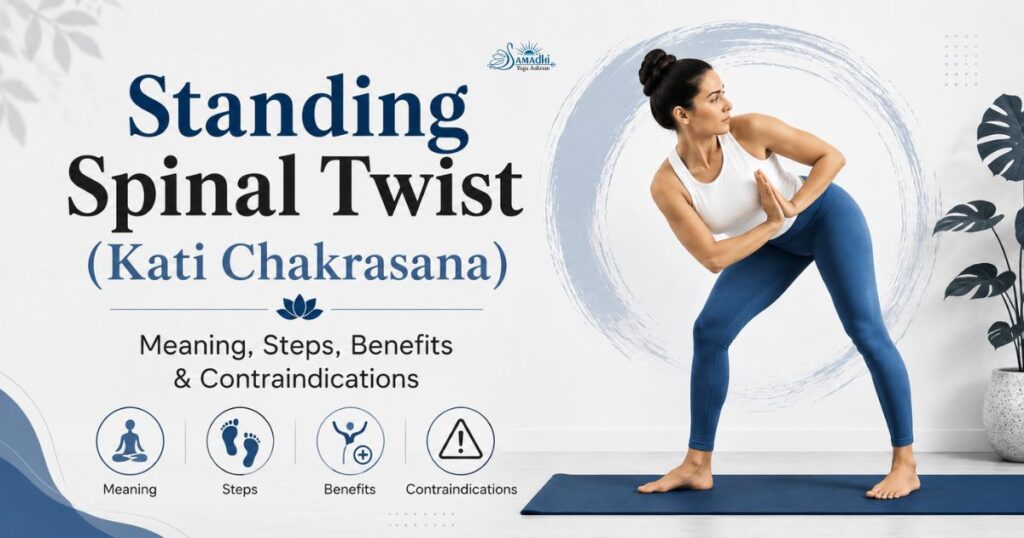
Table of Contents
- What Is Kati Chakrasana? (Katichakrasana Meaning)
- How To Do Katichakrasana, Step-by-Step
- Common Mistakes to Avoid
- Kati Chakrasana Benefits (Benefits of Kati Chakrasana and Katichakrasana Benefits)
- Modifications for Different Needs
- Kati Chakrasana Contraindications (Contraindications of Kati Chakrasana)
- Standing Twist vs. Seated Twist
- Why This Pose Is Taught in Yoga Teacher Training
- Conclusion
- Frequently Asked Questions
- What is Kati Chakrasana?
- What are the Katichakrasana procedure, benefits, and contraindications in short?
- What’s the difference between Kati Chakrasana and Chakrasana?
- How many rounds should a beginner do?
- Can it help with back pain?
- Is Kati Chakrasana safe during pregnancy?
- Best time of day to practice Kati Chakrasana?
Most beginner yoga classes start the same way. A few rounds of side-to-side twisting, arms swinging out, upper body turning left then right. That’s Kati Chakrasana, the standing spinal twist, sometimes written as one word, katichakrasana, depending on the source.
It doesn’t look intense. No deep bend, no balance challenge, nothing that would make it onto a yoga poster but teachers keep coming back to it for a reason. It wakes up the spine, loosens the waist, and gets the shoulders moving before the body attempts anything harder.
This article walks through what the pose actually means, the full kati chakrasana procedure, benefits and contraindications, common mistakes people make without realizing it, a few modifications, and who should think twice before trying it. There’s an FAQ section near the end too, for anyone who just wants quick answers.
What Is Kati Chakrasana? (Katichakrasana Meaning)
Three Sanskrit words make up the name:
- Kati – waist
- Chakra – wheel, or circular motion
- Asana – pose
So the Katichakrasana meaning, basically, is a rotating movement of the waist. Which is more or less exactly what happens in this kati chakrasana yoga pose.
People often mix this up with plain Chakrasana, the backbend, also called wheel pose. Same root word, completely different movement. Kati Chakrasana twists the spine while standing. Chakrasana arches it backwards while lying down. Anyone searching for chakrasana benefits or benefits of chakrasana hoping to learn about the twist should know these are two unrelated poses; it’s worth clarifying that difference early on.
A few other names are used for this same Kati Chakrasana yoga: standing spinal twist, standing spine twist, standing spinal twist pose, or just standing twist. Some spell it as one word, the katichakrasana yoga pose or katichakrasana yoga, and some spell it as two, kati chakrasana yoga. Occasionally it even shows up misspelled online as “kati chakrasan.” All of these point to the same pose.
In a typical Hatha sequence, this standing spinal twist yoga pose shows up early as a warm-up rather than a main pose. That’s probably why it gets overlooked; it’s not doing anything big. It’s just quietly preparing the body for what comes next.
How To Do Katichakrasana, Step-by-Step
Here is Kati Chakrasana broken down into simple steps:
- Stand with your feet about hip-width apart and keep your arms by your sides and your back straight.
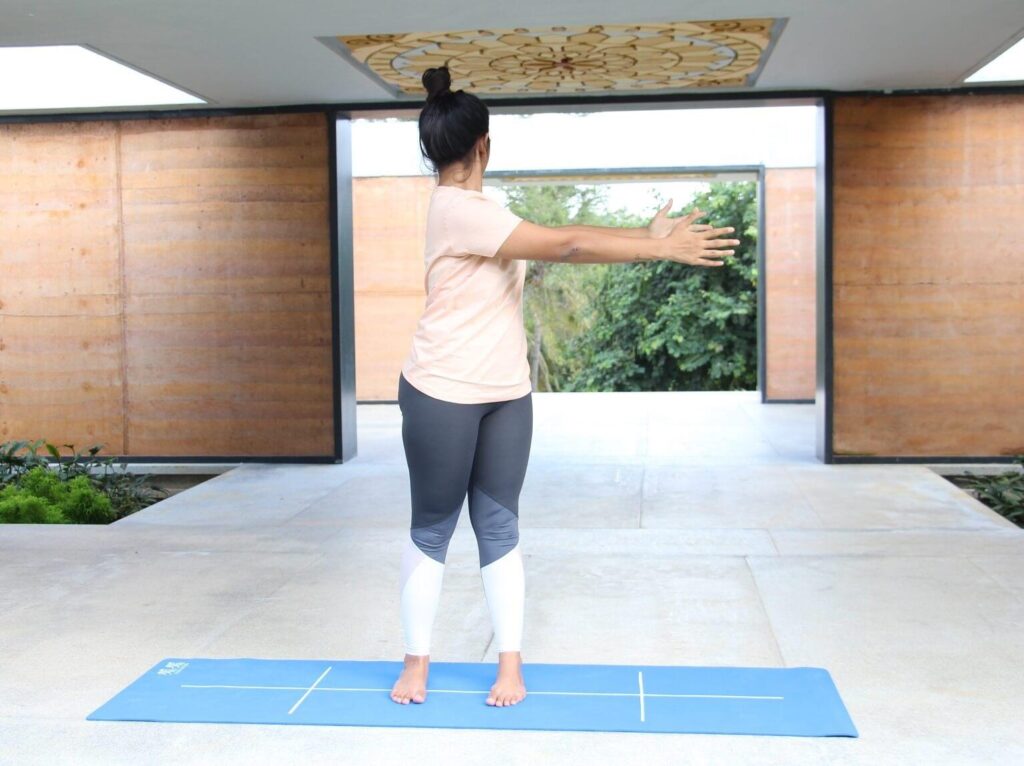
- Breathe in and raise both arms to shoulder level with your palms facing down.
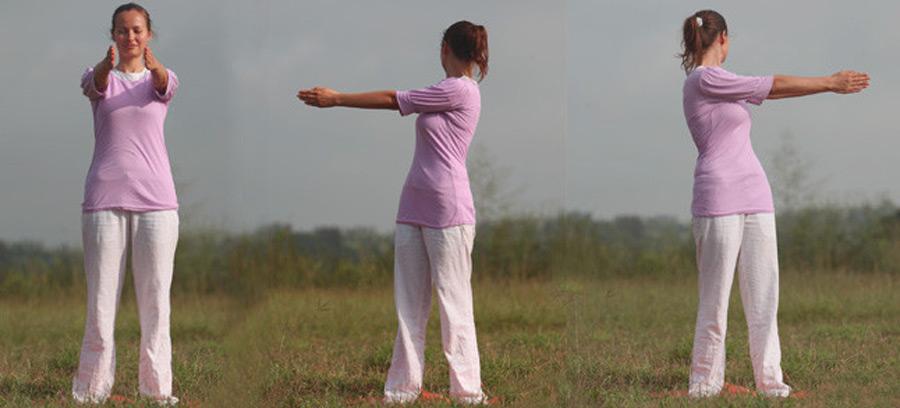
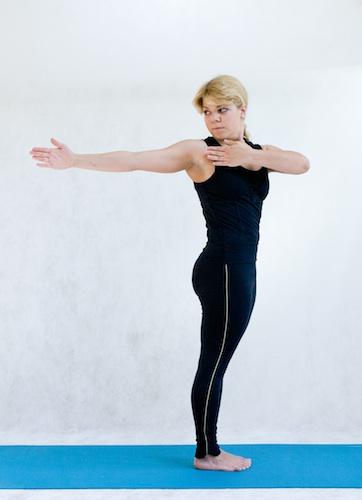
- Breathe out and slowly twist to the right and bring your left arm across your chest and move your right arm behind you, then turn your head and look over your right shoulder.
- Breathe in as you come back to the center.
- Breathe out and slowly twist to the left and bring your right arm across your chest and move your left arm behind you and look over your left shoulder.
- Keep twisting from side to side for 8 to 10 rounds, then move slowly and follow your breathing.
- When you finish, lower your arms and stand still for a few breaths.
A Few Form Notes:Keep your knees slightly bent and do not straighten them. Turn from your waist and middle back, not just your shoulders and try to keep your hips mostly still. This pose is about turning the spine, not the hips and most importantly, move slowly. Going too fast takes away the main benefit of the pose.
Common Mistakes to Avoid
Simple poses are often done incorrectly, even more than people expect.
- Twisting Only From the Shoulders: Probably the number one mistake. If the arms do all the work and the spine barely moves, most of the benefit disappears.
- Rushing the Movement: Some people turn this into a fast warm-up movement instead of a controlled twist. That speed cuts the benefit and can strain the lower back.
- Stiff Knees: Standing with stiff knees puts extra pressure on the joints and can make the whole movement feel less stable.
- Forcing the Head Turn: The head should follow the twist, not lead it. Forcing the neck further than it wants to go doesn’t add anything; it just risks strain.
- Holding the Breath: It’s easy to forget to breathe during this pose. Since you keep moving from side to side, keep your breathing steady as you move. Holding your breath makes the pose less useful.
Kati Chakrasana Benefits (Benefits of Kati Chakrasana and Katichakrasana Benefits)
A handful of reasons people keep this kati chakrasana pose in rotation. These cover the standing chakrasana benefits and standing twist benefits most commonly discussed by yoga teachers:
- Helps improve flexibility in the spine and eases stiffness in the back and shoulders
- Works the muscles around the waist and sides of the body
- Regular practice may help improve posture
- May gently massage the abdominal organs, which can support healthy digestion
- Works well as a simple warm-up before deeper twists or backbends
- Slow, steady movement paired with the breath may help you feel calmer
- Easy to do and suitable for most beginners
Taken together, these are the core kati chakrasana steps and benefits worth knowing before starting a regular practice. Worth being clear about one thing: none of this makes Kati Chakrasana a cure for everything. It’s a supportive piece of a routine, a good warm-up, a nice stress reliever, not a substitute for actual medical care.
Read More: How Yoga Supports Natural Healing and Self-Regulation
Modifications for Different Needs
Not everybody needs the same version of this pose.
- Stiff shoulders? Keep the arms lower, around waist height, and let them swing loosely rather than forcing them up to shoulder level.
- Balance concerns? Move your feet a little farther apart or stand near a wall for light support.
- Sensitive neck? Skip the head-turn altogether and just let the eyes follow the twist instead.
- Want it gentler? Move only a little to each side instead of making a big arm swing.
- Want more challenge? Add rounds slowly, or slow the pace so each side gets an extra breath before returning to center.
Kati Chakrasana Contraindications (Contraindications of Kati Chakrasana)
This is a gentle pose, generally speaking. That doesn’t mean everyone should do it without a second thought. There are a few situations where you should be careful or avoid the pose completely. Here are the main Katichakrasana contraindications and safety concerns to keep in mind:
- Recent Spinal Injury or Slipped Disc: Twisting can worsen a spine that’s already irritated.
- Severe Back Pain or Sciatica: Get a doctor or experienced teacher’s advice before trying this pose.
- Pregnancy: Twisting poses are usually modified or skipped. Always check with a qualified prenatal yoga instructor before practicing.
- Recent Abdominal or Spinal Surgery: The body needs time to heal before handling rotational movement.
- Vertigo or Balance Issues: Since it’s done standing with no support, a wall nearby (or skipping it entirely) is the safer call.
- Acute Neck Problems: Leave out the head turn, or reduce it, if it causes any discomfort.
If there’s any uncertainty at all, ask a teacher or doctor first. It’s always better to check before trying a new pose, especially one that involves spinal rotation.
Read More: Yoga After Surgery – Learn About The Most Beneficial Asanas Today
Standing Twist vs. Seated Twist
A common question: how does this compare to a seated twist like Ardha Matsyendrasana?
| Feature | Kati Chakrasana (Standing) | Seated Twist (e.g., Ardha Matsyendrasana) |
| Position | Standing | Seated on the floor |
| Difficulty | Beginner-friendly | Moderate; needs hip mobility |
| Depth of twist | Lighter, steady | Deeper, held |
| Best for | Warm-ups, quick breaks | Deeper release later in practice |
| Floor work | None | Required |
| Balance needed | Moderate | Minimal |
Neither one wins outright; they do different jobs at different points in a practice. Plenty of sequences use both: standing twist to warm up early and a seated twist later for something deeper.
Why This Pose Is Taught in Yoga Teacher Training
This pose shows up early in most beginner teacher training, since the focus there is on spinal alignment and safe movement before anything more demanding gets introduced. A 200 Hour Yoga Teacher Training in Rishikesh will typically start with exactly this kind of foundational asana; get the mechanics of a safe twist right, and everything built on top of it tends to go more smoothly. Samadhi Yoga Ashram includes this pose in its early curriculum for that same reason, alongside a handful of other foundational standing and seated poses.
Conclusion
Kati Chakrasana isn’t fancy, and it was never meant to be. Its main benefit comes from the basics: a simple twist, guided by breath, that loosens the spine and wakes up the waist in under a minute. Good as a morning habit, a quick desk-break reset, or a warm-up before something longer.
Like most yoga poses, it rewards patience over intensity. Slow movement, steady breath, avoiding the mistakes covered above, and being honest about any injuries- that matters more than doing extra rounds. Get these basics right, and this simple twist can become a regular part of your practice.
Frequently Asked Questions
What is Kati Chakrasana?
A standing yoga pose involving a side-to-side body twist. Usually used as a warm-up for the spine and waist at the start of a session. It’s also commonly called the standing spine twist or the standing spinal twist pose.
What are the Katichakrasana procedure, benefits, and contraindications in short?
The procedure involves standing with feet hip-width apart and twisting the body side to side with the arms raised. Benefits include improved spinal flexibility and waist toning. Contraindications include recent spinal injury, pregnancy, and severe back pain.
What’s the difference between Kati Chakrasana and Chakrasana?
Different poses entirely. Kati Chakrasana twists while standing. Chakrasana is a backbend, also called “wheel pose.” The names sound alike but the movements aren’t.
How many rounds should a beginner do?
5 to 8 rounds is a sensible starting point. That can grow to 10 or more as your body feels more comfortable.
Can it help with back pain?
For general stiffness, maybe. For anything like sciatica or existing back issues, check with a doctor or teacher before trying it.
Is Kati Chakrasanasafe during pregnancy?
Usually modified or skipped. A prenatal yoga instructor can offer safer alternatives depending on the trimester.
Best time of day to practice Kati Chakrasana?
Morning tends to work well, since it loosens an overnight-stiff spine, but any time works, including a midday break from sitting.
This article is for general information and is not medical advice. If you have a respiratory or heart condition, are pregnant, or are unsure whether these practices suit you, please speak to your doctor before beginning. Yoga poses and breathing exercises should be practiced with proper guidance from a qualified yoga teacher to help ensure safe and correct practice.