





Kundalini Yoga Teacher Training in Rishikesh: Benefits & What to Expect
Table of Contents
- What Is Kundalini Yoga?
- How Is Kundalini Yoga Different From Other Yoga Styles?
- What Happens During Kundalini Yoga Teacher Training?
- Why Choose Rishikesh for Kundalini Yoga Teacher Training?
- 10 Benefits of Kundalini Yoga Teacher Training in Rishikesh
- 1. You Stop Crashing After Stress
- 2. You Finally Learn to Breathe Properly
- 3. Your Back, Neck, and Shoulders Loosen Up
- 4. You Stop Snapping at People
- 5. You Actually Learn How to Meditate
- 6. You Get a Certificate That Gets You Hired
- 7. You Learn to Actually Run a Class
- 8. You Start Sleeping Properly Again
- 9. You Understand Why Yoga Actually Works
- 10. You Get Real Time to Reset Your Life
- Who Should Join This Course?
- What Students Learn During a 200-Hour Kundalini Yoga Teacher Training
- How to Choose the Best Kundalini Yoga Teacher Training in India
- Common Mistakes to Avoid Before Joining
- Quick Summary
- Self-Practice vs. Teacher Training
- Conclusion
- Frequently Asked Questions
- What is Kundalini Yoga Teacher Training?
- What are the benefits of Kundalini Yoga?
- Is Kundalini Yoga suitable for beginners?
- Why is Rishikesh famous for yoga?
- How long is a 200-hour Kundalini Yoga Teacher Training?
- What certification is received after completing the course?
- Can international students join Kundalini Yoga Teacher Training in Rishikesh?
- How much yoga experience is required to join?
- Is Kundalini Yoga physically demanding?
- What should students bring to a Kundalini Yoga Teacher Training?
- Does Kundalini Yoga help with anxiety?
- What is the difference between Kundalini Yoga and Kundalini meditation?
- Do students need to be vegetarian to join the course?
- Can Kundalini Yoga Teacher Training lead to a teaching career?
- Why should someone choose Samadhi Yoga Ashram for this training?
Quick Answer: Kundalini Yoga Teacher Training builds physical strength, mental clarity, and emotional balance, and it teaches students how to guide others through breathwork, kriyas, meditation, and mantra. A 200 Hour Kundalini Yoga Teacher Training in Rishikesh, like the one at Samadhi Yoga Ashram, pairs traditional teaching methods with Yoga Alliance-certified training, so students walk away with both personal growth and a credential they can actually use.
A lot of people show up to their first yoga class looking for a good stretch. Somewhere down the line, some of them start wanting more than that. That shift is usually what leads someone toward Kundalini Yoga.
This isn’t a style that stays quietly on the mat. It pulls in breath, sound, repetitive movement, and a fair amount of inward attention, all at once. For someone who’s outgrown the weekly drop-in class, a full teacher training gives that curiosity somewhere to go, structure, a teacher who can answer the harder questions, and a group of people doing the same work alongside them.
Rishikesh has been part of this story for a long time. Generations of teachers have taught here, right along the Ganga, in a setting that’s a lot quieter than most people expect. Schools like Samadhi Yoga Ashram run their training out of this environment, including the 200 Hour Kundalini Yoga Teacher Training in Rishikesh, for students who want to actually learn the practice properly, not just collect a certificate.
Here’s what Kundalini Yoga is, what students tend to get out of a teacher training, and a few things worth thinking about before choosing where to study.
What Is Kundalini Yoga?
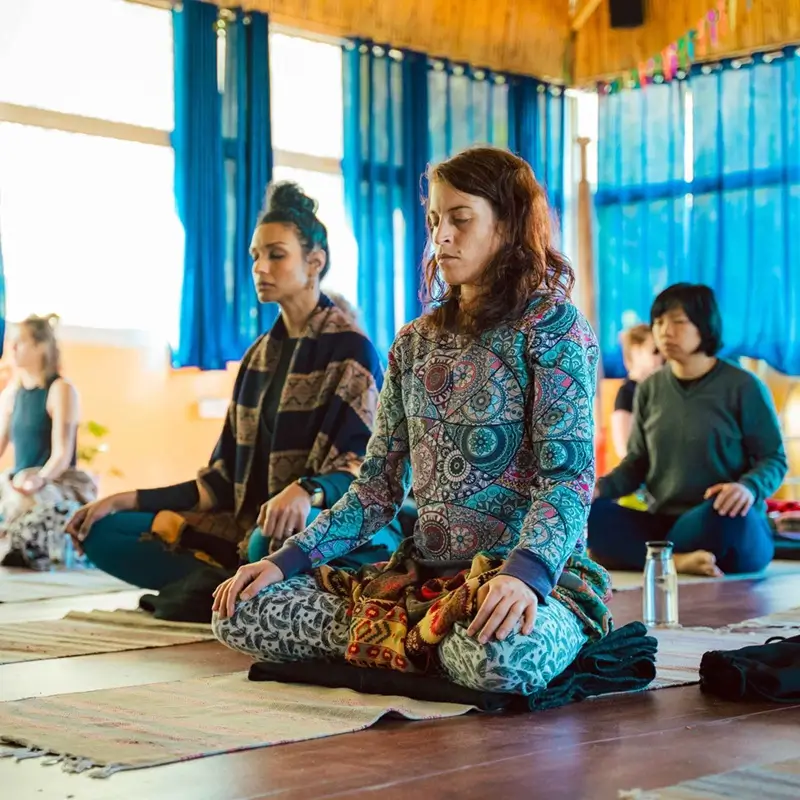
Kundalini Yoga blends physical postures with breathwork, chanting, and meditation. People sometimes call it the “yoga of awareness,” which is a fair description once you’ve sat through a class.
The word “kundalini” points to a kind of dormant energy that yogic philosophy places at the base of the spine. The practices in this tradition are built to gently stir that energy and move it upward through the body, using specific sequences called kriyas.
Where a lot of yoga styles are built around holding a pose well, Kundalini Yoga tends to work differently. A typical session might move through:
- Dynamic, repetitive movement
- Breath control, or pranayama
- Mantra and chanting
- Meditation
- A period of deep, guided relaxation
Every kriya is usually built around one specific intention: building energy, releasing tension held in the body, or simply getting the mind to settle down.
How Is Kundalini Yoga Different From Other Yoga Styles?
New students ask this a lot: how does Kundalini Yoga actually differ from Hatha or Vinyasa? The honest answer is that it uses many of the same building blocks, just arranged with a different focus.
| Feature | Hatha / Vinyasa Yoga | Kundalini Yoga |
| Main focus | Alignment, strength, flexibility | Energy, breath, awareness |
| Pace | Steady or flowing | Repetitive, rhythmic kriyas |
| Breathwork | Supportive role | Central role |
| Chanting | Rarely used | Often included |
| Meditation | Sometimes included | Core part of most sessions |
| Goal | Physical fitness, flow | Physical, mental, and energetic balance |
Neither style beats the other; they’re just built for different things. Plenty of practitioners end up doing both: Hatha or Vinyasa for physical conditioning and Kundalini Yoga for the deeper mental and energetic work.
What Happens During Kundalini Yoga Teacher Training?
It helps to say this upfront: a Kundalini Yoga Teacher Training is not a retreat with some yoga sprinkled in. It’s an actual educational program, with a schedule most students find more demanding than they expected.
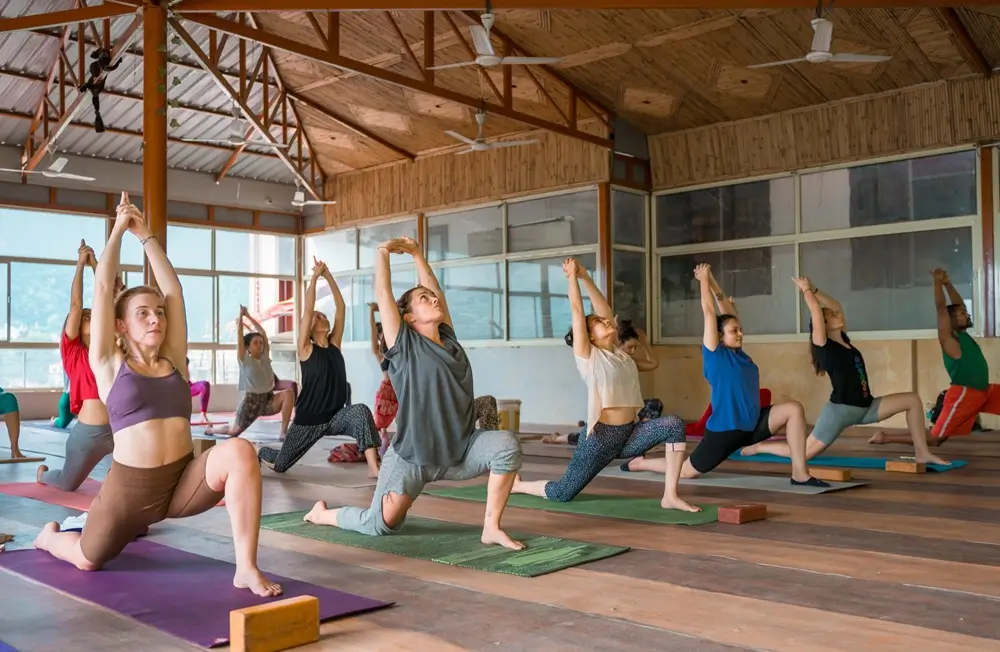
A typical day tends to include morning meditation and pranayama, a kriya practice session, lectures on philosophy or anatomy, a class on teaching methods, some chanting practice, and time spent practice teaching in small groups.
None of this is just poses. Students end up learning why a given technique works, how the nervous system reacts to different breathing patterns, and how to build a class that actually moves people toward a specific outcome instead of just filling time.
At Samadhi Yoga Ashram, students follow a structured daily schedule that combines practice, theory, and teaching preparation from morning to evening throughout the course.
Why Choose Rishikesh for Kundalini Yoga Teacher Training?
Rishikesh gets called the “Yoga Capital of the World” often enough that it starts to sound like marketing. It isn’t, really. The reputation was earned long before the phrase became a hashtag.
A few reasons students keep choosing this particular town:
- A Long Teaching Lineage: Yoga has been taught and practised here for generations, well before it became a global wellness trend.
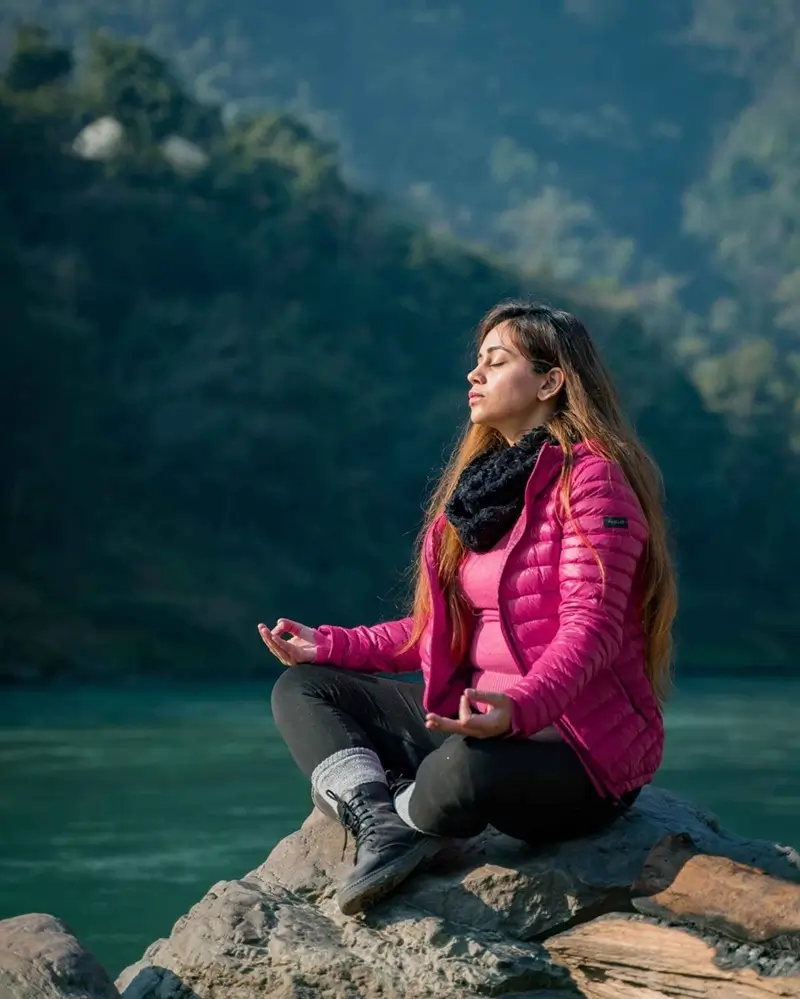
- A Genuinely Quiet Setting: The Himalayan foothills and the Ganga cut down on the kind of noise and distraction that’s hard to avoid in a city studio.
- A High Concentration of Experienced Teachers: Many of India’s senior yoga teachers either live here or trained here at some point.
- A Culture Built Around Study: Not tourism, even though tourists do pass through.
- Recognition from Indian Tourism: As a spiritual and wellness hub, it has helped keep the infrastructure for international students reasonably solid.
None of this makes Rishikesh magic, and it doesn’t guarantee anything. It just means the environment is set up for this kind of focused learning, which matters more than people expect once they’re a week into an intensive course.
10 Benefits of Kundalini Yoga Teacher Training in Rishikesh
You came here for the poses. You’ll leave knowing why your body was tight in the first place, why your mind won’t switch off at night, and how to fix both. That’s the real difference this training makes.
1. You Stop Crashing After Stress
Ever notice how one bad phone call can ruin your whole day? Kundalini kriyas train your body to bounce back fast. The fast movement and long breath hold teach your nervous system a new pattern — get stressed, then recover quickly. By week two, most students say a rough morning doesn’t wreck their whole afternoon anymore.
2. You Finally Learn to Breathe Properly
You’ve been breathing your whole life, but not like this. Breath of Fire, Sitali breath, long, deep breathing- each one does something different to your body. You’ll know exactly which breath to use when you’re anxious, tired, or need to focus. That’s a skill, not a trick.
3. Your Back, Neck, and Shoulders Loosen Up
If you sit at a desk all day, this is the benefit you’ll feel first. Kriyas move your spine and joints in slow, repeated patterns, very different from a normal stretch. Most students notice looser shoulders and less back pain within the first couple of weeks.
4. You Stop Snapping at People
A lot of anger and irritation is just built-up tension with nowhere to go. Kriyas, chanting, and deep relaxation release that tension before it turns into a fight with your partner or a rude reply to a coworker. It’s not magic; it’s just less pressure sitting inside you.
5. You Actually Learn How to Meditate
“Just sit and clear your mind” is useless advice if no one shows you how. Here, you learn real techniques, mantra meditation, silent meditation, what to do when your thoughts won’t stop racing. You walk away with tools you’ll actually use, not another app you download and forget.
6. You Get a Certificate That Gets You Hired
This is the part that pays off. A 200-hour certificate from a Yoga Alliance-registered school like Samadhi Yoga Ashram means you can register as a certified teacher and apply to teach at studios, retreats, and wellness centres anywhere in the world. Not a piece of paper. A real credential.
7. You Learn to Actually Run a Class
Knowing the poses and teaching a class are two different skills. You’ll learn how to build a full class around one goal, calming people down, energising them, or whatever the moment needs. You’ll practice teaching real students and get honest feedback from senior teachers. This is the part graduates say helped them the most on day one of their first real job.
8. You Start Sleeping Properly Again
Evening breathwork and deep relaxation calm your nervous system down before bed. Add a fixed daily schedule and no phone scrolling at 11 pm, and most students fall asleep faster and wake up less groggy, often within the first two weeks.
9. You Understand Why Yoga Actually Works
This training doesn’t stop at movement. You’ll learn the philosophy behind it, chakras, mantras, and the whole framework, so you’re not just copying a routine; you understand it. That’s what lets you explain your practice to others and keep going long after the course ends.
10. You Get Real Time to Reset Your Life
Three to four weeks away from your phone, your inbox, and your usual routine does something a weekend trip never can. Early mornings, simple food, a fixed schedule – it gives old habits enough time to actually break. Many students say this space to think was the biggest benefit of all, more than any single technique.
Who Should Join This Course?
This training isn’t only for people planning to teach full-time. It tends to suit a wider mix of students than people expect:
- Beginners building a serious personal practice
- Working yoga teachers adding Kundalini Yoga to what they already offer
- Meditation practitioners after more structured breathwork training
- People navigating a life transition who want the space to think
- Wellness professionals looking to expand their offerings
- And honestly, anyone curious about yoga philosophy beyond the poses
Prior experience helps, but it isn’t really required. Most Kundalini Yoga Teacher Training programs, including the one at Samadhi Yoga Ashram, are set up to work for sincere beginners right alongside students who’ve been practicing for years.
What Students Learn During a 200-Hour Kundalini Yoga Teacher Training
A 200 Hour Kundalini Yoga Teacher Training in Rishikesh usually works through the following:
- Kriyas – Structured sequences combining movement, breath, and sound
- Pranayama – Breathing techniques used to regulate energy and calm the nervous system
- Meditation Techniques – Both mantra-based and silent forms
- Mudras – Hand gestures used to direct energy and hold focus
- Bandhas – Internal locks, taught and practised safely within kriya work
- Anatomy and physiology – How the body actually responds to breath and movement
- Yoga philosophy – The framework sitting underneath the physical practice
- Teaching Methodology – Class planning, sequencing, and how to communicate clearly
- Practice Teaching – Hands-on time actually leading a session, not just watching one
It’s this combination, practice plus theory plus real teaching reps, that lets a 200-hour certification prepare someone for both a stronger personal practice and an actual teaching career.
How to Choose the Best Kundalini Yoga Teacher Training in India
With so many schools offering what looks like the same course on paper, it’s worth knowing what actually separates a strong program from a mediocre one.
A few things are worth checking before enrolling:
- Whether the school carries genuine Yoga Alliance certification.
- Whether the teachers have real, specific experience in Kundalini Yoga rather than just a general yoga credential.
- How small the class sizes actually are (this affects how much real feedback anyone gets during practice teaching).
- Whether there’s a clear daily schedule that balances practice, theory, and teaching skills.
- How transparent the school is about accommodation and food before anyone applies.
- What past students actually say in their reviews, not just the highlights but the full picture.
A good school won’t make anyone dig for this information.
Common Mistakes to Avoid Before Joining
- Picking a school purely on price. This sometimes means cut corners on teaching quality or certification.
- Skipping the step of confirming Yoga Alliance registration directly with the school, rather than taking a website’s word for it.
- Assuming no preparation at all is needed. A bit of basic fitness and an open mind genuinely make the first week easier.
- Ignoring the actual daily schedule. Some programs run far more intensively than others.
- Not asking enough questions about food and accommodation. Both affect energy levels through weeks of intensive practice.
- Expecting guaranteed outcomes. No honest school should ever promise these in the first place.
Quick Summary
- Kundalini Yoga combines movement, breath, sound, and meditation.
- Teacher training builds physical, mental, emotional, and spiritual benefits.
- Rishikesh offers a long-standing environment for serious yogic study.
- A 200-hour course covers kriyas, pranayama, meditation, philosophy, and teaching skills.
- The course suits both aspiring teachers and dedicated personal practitioners.
- Choosing a Yoga Alliance certified school, such as Samadhi Yoga Ashram, matters for both education quality and future teaching opportunities.
Self-Practice vs. Teacher Training
| Self-Practice | Kundalini Yoga Teacher Training |
| Learn basic kriyas and poses | Learn to teach kriyas confidently |
| Informal, self-paced learning | Structured curriculum with daily guidance |
| Limited understanding of philosophy | In-depth study of yogic philosophy and anatomy |
| No formal feedback | Direct feedback from experienced teachers |
| No certification | Yoga Alliance recognised certification |
| Practice stays personal | Skills can be shared and taught to others |
Conclusion
Kundalini Yoga is a lot more than a workout. Between the breath, the movement, the sound, and the meditation, it works on the body and the mind and something a bit harder to name, all at once. A structured teacher training is what turns that experience into something a student actually understands and can pass along to someone else if they choose to.
Rishikesh remains one of the most respected places anywhere to study this seriously, thanks to its teaching lineage, its quiet setting, and the sheer number of experienced schools based there. A 200 Hour Kundalini Yoga Teacher Training in Rishikesh, like the one at Samadhi Yoga Ashram, gives students the structure, the guidance, and the certification they need to grow their own practice and, if they want it, step into teaching with real confidence.
For anyone who’s been thinking about going deeper with Kundalini Yoga, this kind of training is worth looking into properly.
Frequently Asked Questions
What is Kundalini Yoga Teacher Training?
It’s a structured program teaching students how to practice and teach Kundalini Yoga, covering kriyas, pranayama, meditation, philosophy, and teaching methodology, usually over a set number of hours such as 200,300 or 500.
What are the benefits of Kundalini Yoga?
Students often notice better flexibility, sharper focus, less stress, more emotional steadiness, and a deeper grasp of yogic philosophy. Results vary from person to person, and none of this replaces medical treatment.
Is Kundalini Yoga suitable for beginners?
Yes. Most programs, including at Samadhi Yoga Ashram, are built to work for beginners right alongside experienced practitioners. No prior yoga background is needed to start.
Why is Rishikesh famous for yoga?
Generations of teachers and ashrams have called Rishikesh home, and its location along the Ganga, combined with a genuinely quiet setting, supports the kind of focused, immersive learning this practice needs.
How long is a 200-hour Kundalini Yoga Teacher Training?
Most 200-hour programs run roughly three to four weeks, though the exact length depends on how a particular school structures its daily schedule.
What certification is received after completing the course?
Students typically receive a certificate letting them register as a teacher with Yoga Alliance, provided the school itself holds that certification.
Can international students join Kundalini Yoga Teacher Training in Rishikesh?
Yes, schools like Samadhi Yoga Ashram regularly host students from dozens of countries, and courses are generally taught in English.
How much yoga experience is required to join?
Not much, honestly. A basic, consistent practice helps, but most programs are designed to welcome sincere beginners without prior training.
Is Kundalini Yoga physically demanding?
It can be, since kriyas involve repetitive movement and sustained breathing. That said, most sequences can be adapted for different fitness levels and physical limitations.
What should students bring to a Kundalini Yoga Teacher Training?
Comfortable, breathable clothing, a journal, a water bottle, and a genuinely open mind cover most of it. Ashrams typically provide mats and course materials.
Does Kundalini Yoga help with anxiety?
Many practitioners describe feeling calmer and more grounded after consistent practice, largely thanks to the breathwork and meditation. It shouldn’t replace professional mental health care when that’s actually needed.
What is the difference between Kundalini Yoga and Kundalini meditation?
Kundalini Yoga combines physical kriyas, breathwork, and meditation together, while Kundalini meditation usually refers just to the meditative and mantra-based piece of that larger practice.
Do students need to be vegetarian to join the course?
Most ashrams, Samadhi Yoga Ashram included, serve sattvic (vegetarian) food during the course, in keeping with traditional yogic practice. Nobody’s required to keep that diet once the course ends.
Can Kundalini Yoga Teacher Training lead to a teaching career?
Yes, for a lot of graduates, teaching at studios, wellness centers, retreats, or online. How far that goes really comes down to individual effort and ongoing practice.
Why should someone choose Samadhi Yoga Ashram for this training?
It offers a Yoga Alliance-certified, Gurukul-style 200 Hour Kundalini Yoga Teacher Training in Rishikesh, led by experienced teachers, with a curriculum that treats practice and teaching skills as equally important.
This article is for general information and is not medical advice. If you have a respiratory or heart condition, are pregnant, or are unsure whether these practices suit you, please speak to your doctor before beginning.