





The Importance of Meditation Yoga for a Holistic Lifestyle
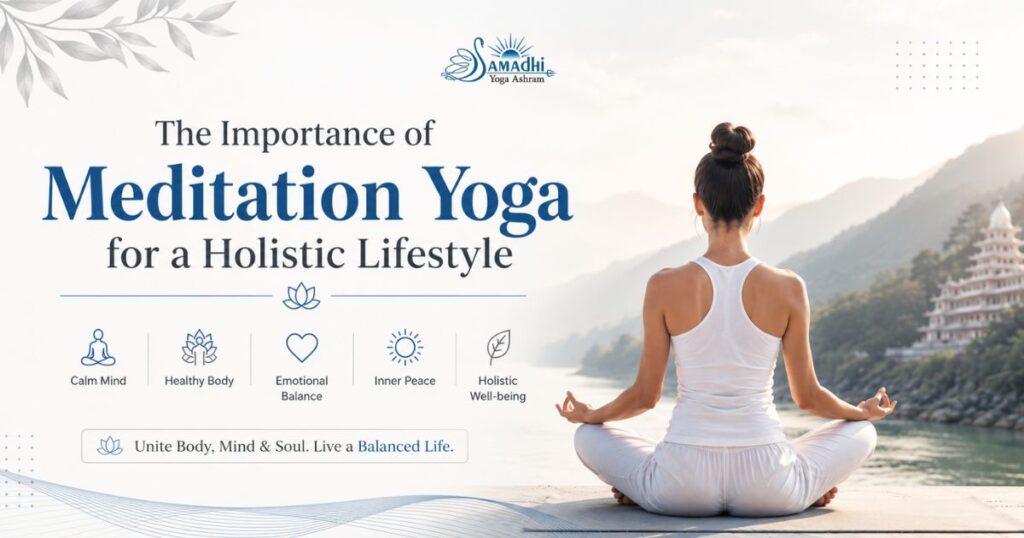
Table of Contents
- What Is Yoga Meditation in Simple Terms?
- The Importance of Meditation in Yoga
- Benefits of Yoga and Meditation for Body, Mind, and Emotions
- Yoga and Meditation: A Quick Comparison
- Importance of Yoga and Meditation in Daily Life
- Benefits of Meditation
- Yoga Meditation for Every Age and Stage
- Why Daily Practice Matters More Than Occasional Practice?
- How to Actually Get Started?
- Common Misconceptions About Yoga and Meditation
- Rishikesh: The Best Place to Learn Yoga Meditation
- Where You Can Learn It Properly?
- Conclusion
- Frequently Asked Questions
- What is yoga meditation?
- Why does meditation matter so much in yoga?
- What do you actually get from doing yoga and meditation together?
- I’ve never done this before, where do I even start?
- How much time does this actually take before I notice anything?
- Is there somewhere that teaches this properly instead of scattered YouTube videos?
Key takeaway: Meditation yoga — combining yoga poses, breathwork, and seated meditation is a daily practice (20–30 minutes a day) that lowers stress hormones, improves focus and sleep, and steadies mood. It’s suitable for beginners, students, and seniors alike. Samadhi Yoga Ashram, a Yoga Alliance–certified yoga school in Rishikesh, India, teaches it through structured courses like the 200 Hour Yoga Teacher Training.
Whether you’re practising for personal stress relief or training to become a certified yoga teacher, Samadhi Yoga Ashram offers both standalone meditation guidance and accredited yoga teacher training courses within India’s Rishikesh-based yoga education industry.
Life today feels busier and more tiring than ever. Between long work hours, phone notifications, rushed meals, and everyday stress, it’s easy to feel drained, physically and mentally. Medicine can treat a lot of physical problems, but it doesn’t really touch the tiredness in your mind or that feeling of being “off” even when nothing’s technically wrong. That’s where yoga meditation comes in.
This isn’t a new idea. Yoga and meditation have been practised together for thousands of years for one simple reason: they work better as a team than they do alone.
What Is Yoga Meditation in Simple Terms?
Yoga meditation just means doing three things together instead of separately: yoga poses, breathing exercises, and meditation.
- Poses loosen up your body
- Breathing calms your nervous system
- Meditation quiets your mind
Each part makes the other work better. Your breath is really the bridge between the physical side of yoga and the mental side; you’re not just stretching, you’re paying attention while you do it, and that’s what makes the difference.
The Importance of Meditation in Yoga
A lot of people think yoga is just the poses, and meditation is optional if you have time left over. Most experienced teachers would say it’s the opposite: meditation in yoga is really the core of the practice, not an add-on.
The importance of meditation in yoga comes down to this: without it, yoga is just another workout. With it, you get real self-understanding. People who stick with it long enough usually notice:
- Better focus
- Calmer emotions
- Less anxiety
- More patience
- A habit of staying present, even off the mat, in traffic, at work, in arguments
Benefits of Yoga and Meditation for Body, Mind, and Emotions
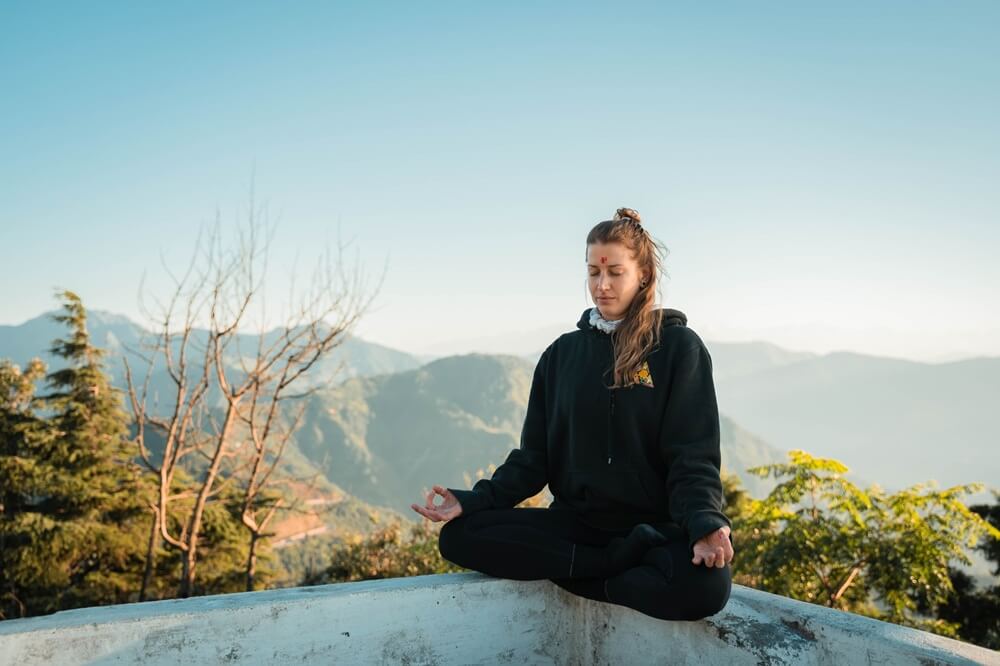
- Physically: Yoga builds strength and flexibility, fixes posture problems from too much sitting, and improves blood flow and organ function. Meditation adds to this by lowering stress hormones, which helps blood pressure, sleep, and digestion.
- Mentally: With so much information coming at us daily, regular practice trains your mind to focus on one thing at a time instead of jumping around. Some studies on meditation and brain health suggest it can improve attention and memory over time.
- Emotionally: You start noticing your feelings before they take over. You don’t stop feeling things; you just stop getting swept away by them so easily.
- On a Deeper Level: Yoga was never meant to be only physical. It’s always encouraged people to sit with bigger questions: Who they are, what matters to them. Meditation gives you the space to actually do that instead of rushing past it.
Yoga and Meditation: A Quick Comparison
| Area | What Yoga Does | What Meditation Does |
| Body | Builds strength, flexibility, and better posture | Lowers stress hormones, calms heart rate |
| Mind | Improves body awareness | Improves focus and attention span |
| Emotions | Releases physical tension tied to stress | Helps you notice feelings before reacting |
| Sleep | Releases the day’s physical tension | Quiets racing thoughts before bed |
| Long-term | More flexibility, less chronic pain | Steadier mood, sharper memory |
Importance of Yoga and Meditation in Daily Life
You don’t need hours free for this to help; twenty to thirty minutes a day makes a real difference.
- Stress: slows your breathing, gives your mind one thing to focus on instead of many
- Focus: trains your brain to stay on one task longer, whether you’re a student, employee, or parent juggling everything
- Sleep: meditation quiets the mind, yoga releases the day’s tension; together, they make deep sleep easier to reach
Read More: The Importance Of Yoga In Our Daily Life And What It Can Do For You
Benefits of Meditation
- Less anxiety
- A steadier mood
- Sharper memory
- Better heart health through lower blood pressure
- A stronger immune system, since less stress means your body defends itself better
- Better sleep and steadier blood pressure (something doctors generally agree on)
- More space to respond thoughtfully instead of reacting quickly
One specific type worth mentioning: mindfulness meditation, simply paying close attention to the present moment without judging it. It helps especially with overthinking, that habit of replaying the same worry over and over. Pairing it with yoga tends to make both easier to stick with, since a calmer body settles the mind faster.
Yoga Meditation for Every Age and Stage
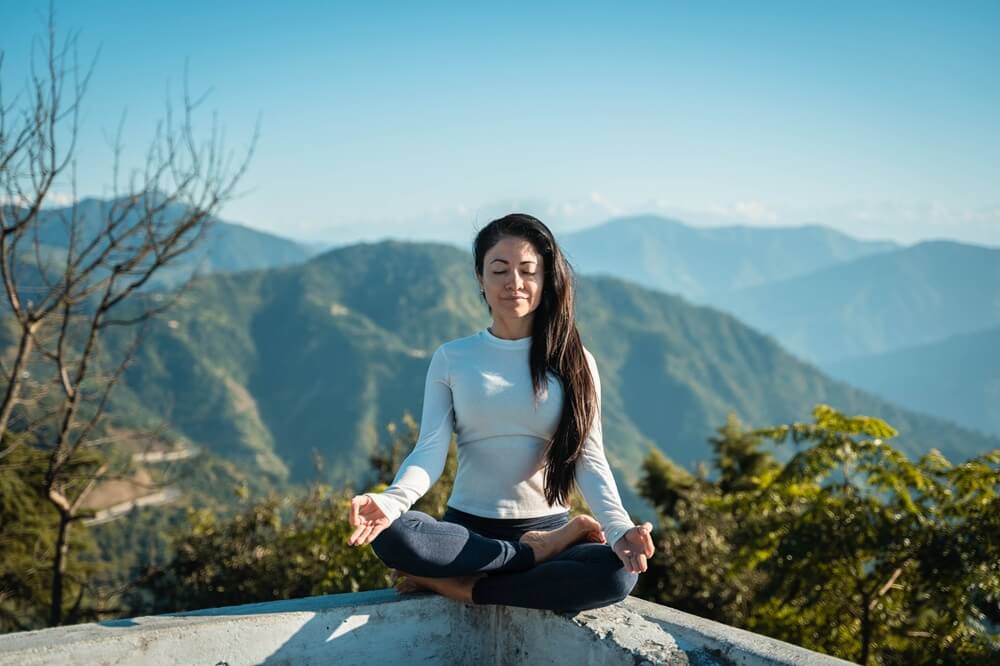
- Beginners: Start small, a few gentle stretches, slow breathing, five to ten minutes of quiet sitting
- Students: Benefits usually show up first as better focus and calmer nerves before exams
- Seniors: A gentler approach works well, more sitting and breathing than deep stretching, helping with sleep, joint stiffness, and low mood
Why Daily Practice Matters More Than Occasional Practice?
Daily practice compounds; occasional practice doesn’t. Fitness trends come and go, but the benefit of meditation and yoga is that they keep building instead of fading. People who practise daily usually notice, over time:
- More flexibility as they get older
- Less chronic pain
- Steadier emotions
- Better posture
- An overall better sense of well-being
How to Actually Get Started?
Start with 10–15 minutes a day: a few gentle poses, slow breathing, then quiet sitting.
- Find a quiet spot; it doesn’t need to be fancy
- Do a few gentle yoga poses to loosen your body
- Spend a couple of minutes breathing slowly
- Sit for ten to fifteen minutes with your back straight, follow your breath, repeat a simple word in your mind, or just notice your thoughts without holding onto them
- Repeat daily; consistency matters far more than long, occasional sessions
If sitting quietly feels hard at first, that’s completely normal. A guided yoga meditation or a class to learn the basics can help a lot before you continue on your own.
Common Misconceptions About Yoga and Meditation
- Meditation doesn’t mean stopping all your thoughts; it means noticing them without getting caught up
- Yoga isn’t only a physical exercise; strength and flexibility are a side effect, not the main goal
- You don’t need much time; ten to twenty minutes a day is enough
- You don’t need to already be flexible to start; flexibility comes from practising yoga
Rishikesh: The Best Place to Learn Yoga Meditation
Rishikesh is known as the Yoga Capital of the World for good reason. Sitting at the base of the Himalayas along the river Ganga, it’s attracted yogis and spiritual seekers for a very long time. The calm surroundings make it easier to focus and go deeper than a busy city ever could.
Where You Can Learn It Properly?
If you want to learn yoga meditation the right way, not just from videos but with real guidance, Samadhi Yoga Ashram is worth considering. It focuses on traditional teaching: yoga poses, breathing, meditation, philosophy, and the basics of the body, so you get the full picture, not just a slice of it.
One of its well-known programmes is the 200 Hour Yoga Teacher Training in Rishikesh, suitable whether you want to teach someday or simply want to understand the practice more deeply for yourself.
Conclusion
None of this is about becoming a perfectly calm, stress-free person overnight. It happens slowly, a bit more flexible, a little steadier emotionally, better sleep, sharper focus, and an easier time handling things that used to overwhelm you. That’s really the importance of meditation and yoga: not one big transformation, but a quieter, steadier version of your everyday life.
A few minutes a day, kept up consistently, is enough to start noticing the shift. And if you ever want to go deeper and learn the practice properly instead of piecing it together from videos, a place like Samadhi Yoga Ashram teaches it the traditional way, poses, breathing, meditation, and philosophy as one connected whole, including through its 200 Hour Yoga Teacher Training in Rishikesh for anyone who wants a more structured understanding.
So don’t overthink it. Roll out a mat, take a few slow breaths, and sit quietly for just a few minutes today — that’s really all it takes to begin.
Read More: 5 Pranayama That You Should Make a Part of Your Daily Life
Frequently Asked Questions
What is yoga meditation?
It’s just yoga and meditation practiced as one thing instead of two separate activities. You move through some poses to loosen up, breathe slowly to settle your nervous system, and then sit quietly for a few minutes. Nothing complicated, the poses and the stillness are meant to support each other.
Why does meditation matter so much in yoga?
Because without it, yoga is really just stretching. The poses are useful on their own, sure, but meditation is what turns the practice into something that actually changes how you handle stress, focus, and your own emotions. Most long-time practitioners will tell you this part matters more than the poses themselves.
What do you actually get from doing yoga and meditation together?
Calmer nerves, better sleep, and a mind that doesn’t feel so scattered. Yoga loosens the body up first, which makes it a lot easier to sit still and actually meditate afterward. On their own, each helps a little. Together, people tend to notice the difference faster.
I’ve never done this before, where do I even start?
Nothing fancy. A few easy stretches, some slow breathing, then five or ten minutes of just sitting quietly. That’s genuinely enough for week one. Flexibility and the ability to sit still without fidgeting both come later, with practice, you don’t need either to begin.
How much time does this actually take before I notice anything?
Most people start feeling calmer within a couple of weeks of doing this daily, even just twenty minutes at a time. Ten minutes done every day beats an hour done once a week, consistency is really what’s doing the work here, not the length of any single session.
Is there somewhere that teaches this properly instead of scattered YouTube videos?
Samadhi Yoga Ashram in Rishikesh is one option — it covers the actual foundations: poses, breathwork, meditation, and the philosophy behind all of it. They also run a 200 Hour Yoga Teacher Training there for anyone who wants to go deeper, whether or not they plan on teaching.
This article is for general information and is not medical advice. If you have a respiratory or heart condition, are pregnant, or are unsure whether these practices suit you, please speak to your doctor before beginning.