





Matsyasana (Fish Pose): Steps, Benefits & Precautions Explained
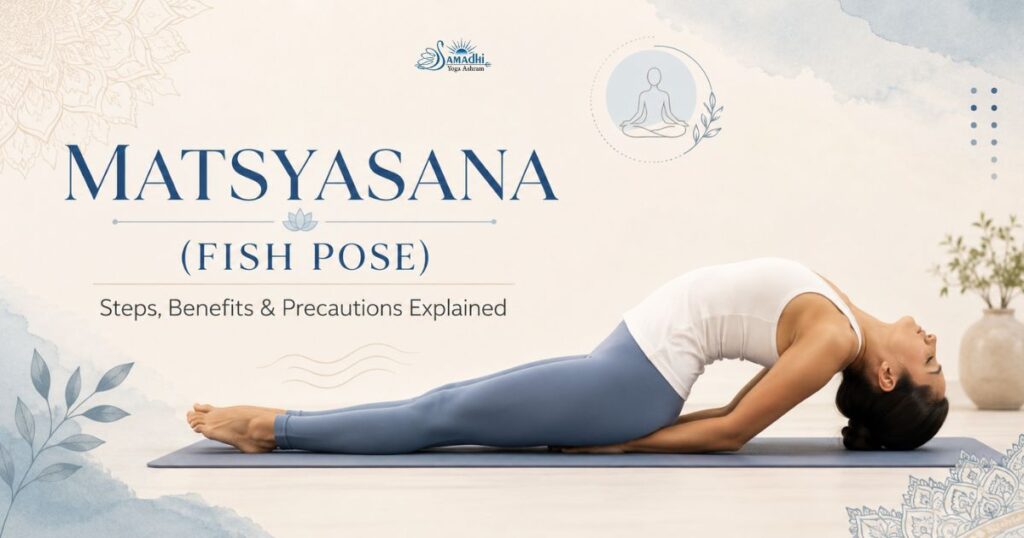
Table of Contents
- Benefits Of The Fish Pose
- How To Do Matsyasana?
- Precautions and Contraindications
- Tips To Do The Fish Pose
- Conclusion
- Frequently Asked Questions About Matsyasana
- What is Matsyasana good for?
- How long should you hold Fish Pose?
- Can beginners do fish pose?
- Who should avoid practicing Fish Pose?
- What’s the best time to practice Matsyasana?
- Which chakra does Fish Pose activate?
- Is Matsyasana a backbend or a forward bend?
Matsyasana means ‘fish pose‘. “Matsya” is the Sanskrit word for fish. It is a backbend, and it gently opens your chest and throat while you hold it.
This pose is old. It comes from the Gheranda Samhita, an ancient yoga text, and yogis still practice it the same way today. It belongs to the same group of poses as Simhasana (Lion Pose) and opens the heart chakra.
Long ago, Lord Vishnu once took the form of a fish to save the world’s sacred knowledge from a great flood. That is why this pose is dedicated to him. The yoga fish pose also has a place in traditional yoga practices because of its connection with this story and its symbolic meaning.
Fish Pose is simple to learn, but it does a lot for the body; it stretches the neck and spine, expands the chest, and helps you breathe more deeply. If you want to learn it properly, step by step, our yoga teacher training covers it in detail.
Benefits Of The Fish Pose
Fish pose yoga offers many benefits for the body and mind. Let’s look at some of them here:
- When you practice this pose on a regular basis, you enhance your upper body flexibility. There will be relief from tension and stiffness, as well.
- It’s a regular practice that also strengthens the hips and spine.
- You can improve blood flow towards the head if you practice this asana daily. This improves brain function and aids in making you focused.
- This asana acts as a chest opener and also improves lung capacity. Your respiratory health will improve for the better.
- The gentle stretch also gives a massage to the abdominal organs.
- You will get relief from menstrual pain as well, due to the gentle stretch that this asana gives to the hip flexors and pelvis.
- Practicing the Matsyasana stimulates the heart and throat chakras.
These Matsyasana benefits are just the beginning. If you are passionate about yoga and want to go deeper into poses like Matsyasana, you can learn to teach these poses in our YTT program at Samadhi Yoga Ashram, where every asana is broken down in a structured and practical way.
How To Do Matsyasana?
So, now that you know a bit about the background of Matsyasana, let us understand how to do it:
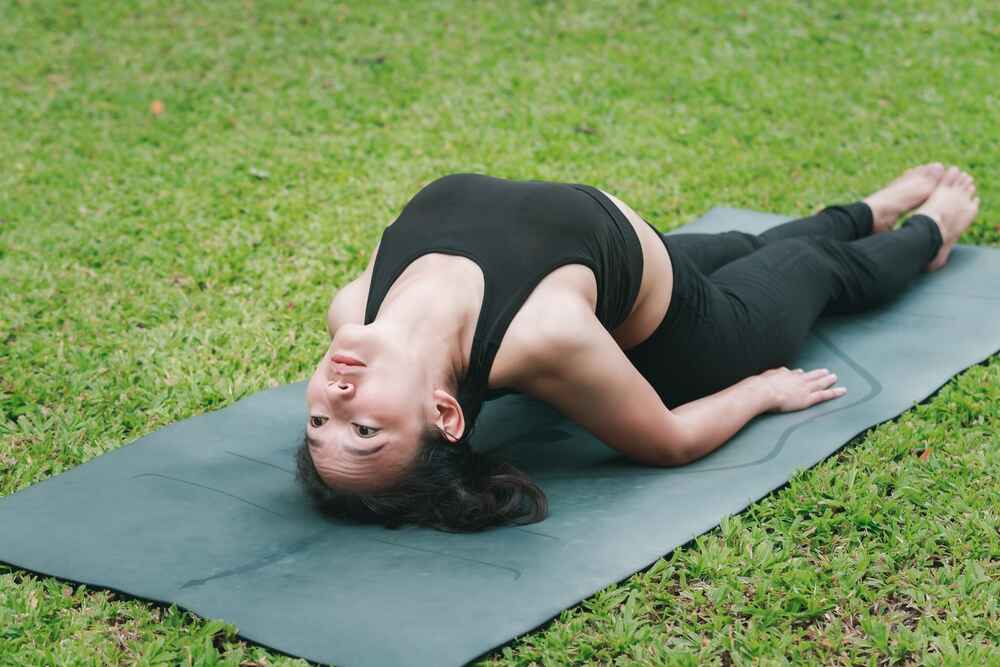
- Start by lying down on the mat, on your back. The arms will be by your side, with palms facing downwards.
- Cross your legs, just like in Padmasana.
- Take a deep breath in, then breathe out. Press your crossed legs into the mat and lift your chest up.
- You are also required to lift your neck from the floor and rest the crown (top) of your head on the mat. Look backward.
- Hold the feet while keeping the elbow in touch with the mat.
- You can maintain the position for a few seconds. Breathe continuously.
- You can either keep your eyes open or closed.
- The spine gets a deep stretch in this pose.
- Slowly inhale and release the arch position. Rest the back on the mat again.
- On your next inhalation, release the legs and relax.
Precautions and Contraindications
- While resting the top of your head on the mat, do not put too much pressure on it.
- Do not try to stretch the body beyond its limits.
- You must practice this asana on an empty stomach.
- Do not put too much pressure on your neck while arching your spine.
- Those with spondylitis must avoid this asana.
- If you have blood pressure issues, migraines, or cardiac issues, then you must avoid this asana.
- If you had a neck or shoulder injury in the recent past, avoid this asana.
- Pregnant ladies should not practice this asana.
Tips To Do The Fish Pose
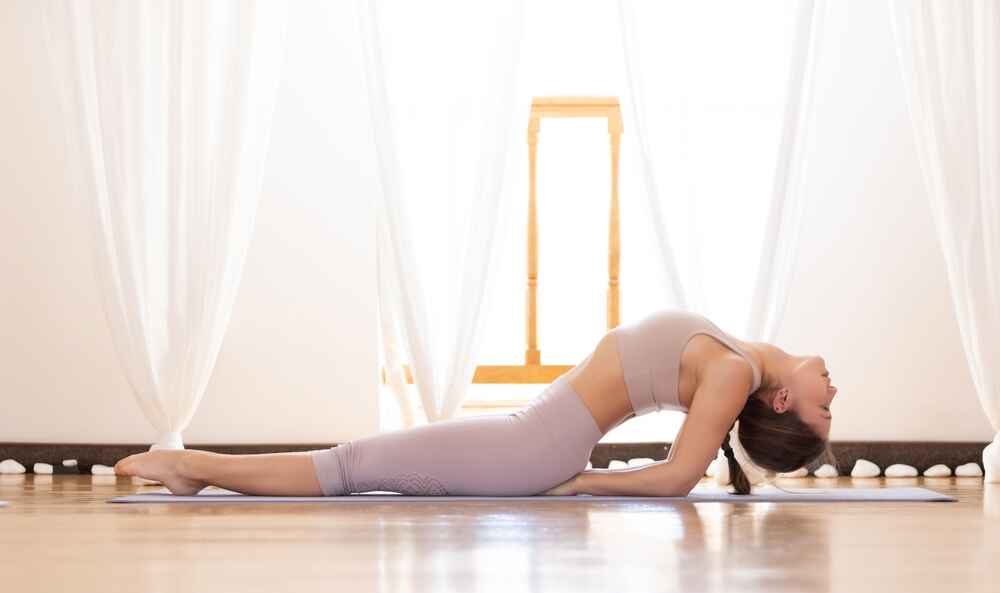
- If you are someone who is having issues with keeping the legs crossed in Padmasana, you can keep them straight. In such a case, you can keep the forearms on the mat, with palms facing upwards.
- Beginners may feel that this pose is challenging for them. So, one can also start with hands stretched over the head and back flat on the ground.
- In case you have difficulty keeping the crown of your head on the mat, you can place a yoga block underneath.
- You can also place a rolled blanket under your back, as it provides support to your back.
These simple adjustments can make the yoga fish pose easier to practice with proper support.
Conclusion
Fish Pose Yoga is not just a backbend; it is a pose that stays with you. Once you start practicing it regularly, you will notice the difference not only in your posture and flexibility but also in how you breathe and feel throughout the day. The chest opens up, the tension in the neck and shoulders slowly melts away, and over time, even the mental fog starts to clear.
Yes, it may feel awkward or uncomfortable in the beginning, and that is completely normal. Every practitioner has been there. Go slow, respect your body’s limits, use a block or blanket if needed, and just keep showing up on the mat. The pose will come to you, and when it does, it is absolutely worth it. This deep heart-opening backbend is taught in the Yoga teacher training in India in a detailed manner. The teachers at Samadhi Yoga Ashram will provide you with complete knowledge and guidance on how to perform this asana in the best way.
Frequently Asked Questions About Matsyasana
What is Matsyasana good for?
Mainly, it’s a chest opener. The backbend lifts your ribcage and stretches the front of the neck, so breathing gets noticeably deeper once you settle into the pose. That’s also why it’s often taught right alongside pranayama; one naturally supports the other. These are some of the key matsyasana benefits that make the pose useful in a regular yoga routine.
How long should you hold Fish Pose?
For most beginners, 15-30 seconds is plenty to start. With practice, you can work up to a minute or two, but the moment you feel your neck straining, that’s your sign to come out; there’s no benefit in pushing past that point.
Can beginners do fish pose?
Absolutely, though it usually needs a modification or two at first. Keeping the legs straight instead of crossing them, or resting on the forearms rather than balancing on the crown of the head, makes it far more manageable. A block or folded blanket under the head helps too, especially if your upper back is still stiff.
Who should avoid practicing Fish Pose?
Anyone with a neck or shoulder injury, high blood pressure, migraines, a cardiac condition, or spondylitis should avoid this pose. It’s also not recommended during pregnancy. If you’re not sure whether it’s safe for you, it’s worth checking with a doctor or an experienced teacher before trying it.
What’s the best time to practice Matsyasana?
Morning, on an empty stomach, is ideal, and it helps to warm up the neck and spine a little first rather than going straight into a cold backbend. If you’re practicing later in the day, just leave a gap of 3-4 hours after eating.
Which chakra does Fish Pose activate?
It’s linked to the heart chakra (Anahata) and the throat chakra (Vishuddha). Physically, the pose opens up the chest and throat, and in yogic thought, that area is tied to compassion and speaking your truth, so the physical and symbolic sides of the pose line up fairly directly.
Is Matsyasana a backbend or a forward bend?
It’s a backbend. The spine and chest arch upward and back, which is the opposite of a forward fold, where the body curls in and the back of the upper body stretches instead.
This article is for general information and is not medical advice. If you have a respiratory or heart condition, are pregnant, or are unsure whether these practices suit you, please speak to your doctor before beginning. Yoga poses and breathing exercises should be practiced with proper guidance from a qualified yoga teacher to help ensure safe and correct practice.