







Mudras are an essential part of yoga practice. If you are interested in learning yoga or have already begun your journey, this will be useful. Yoga, as you may already know, is just 10 per cent asanas, and the remaining consists of bandhas, meditation, pranayama, and so on. No matter which yoga form you have chosen, you will study the above in the same way. The Yoga School in India is one of the best places where you can perfect your practice of yoga.
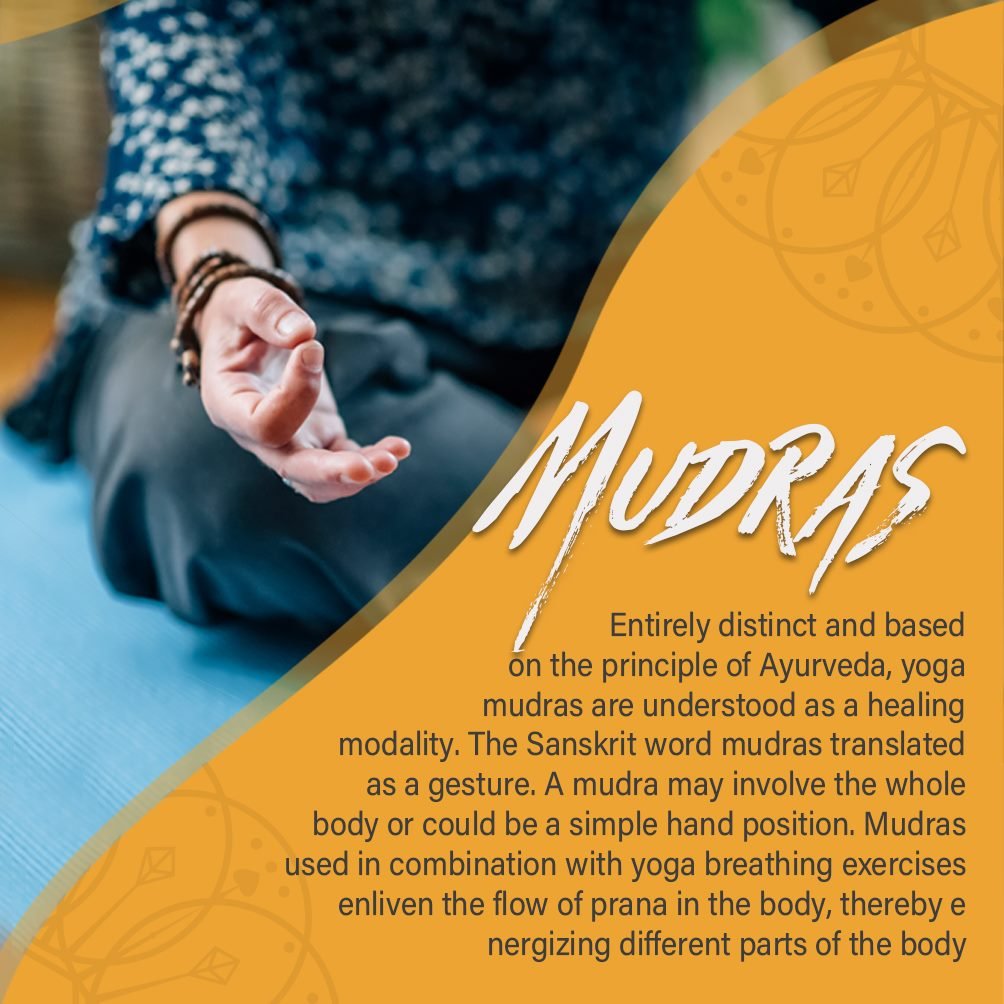
When you do asanas, you must have been asked by a guru or teacher to keep your hands in a certain manner. Moreover, you must have seen yogis assuming several hand gestures during meditation and asana practice. These gestures of the body and the hands are called Mudras. They are also called seals.
Mudras In The 300 Hour Kundalini Yoga Teacher Training in India
You will learn about mudras in the 300 Hour Kundalini Yoga Teacher Training in India. The word ‘Mudra’ mainly comes from Sanskrit. If you do the same along with your other yogic practices, the results will be better. Kundalini Yoga is a more spiritually inclined yoga form. It will take you on a mindful and holistic journey, and will help you to become one with the universe. Mudras can affect the body, the mind, and the soul at various levels.
They have been around for many years, but no one can specify their actual origins. You will find that mudras are used in various religions, like Hinduism, Buddhism, Christianity, and Taoism. Many tantric rituals, which are a part of Kundalini studies, also use them. It is believed that, when you perform mudras, you actually stimulate the flow of the Prana. Before you try to figure out the different mudras, it is important for you to know what each finger represents.
The thumb represents the element fire, the forefinger represents wind, the middle finger represents space, the ring finger represents earth, and the little finger represents water. Read about the various yoga mudras here.
Types of Mudras
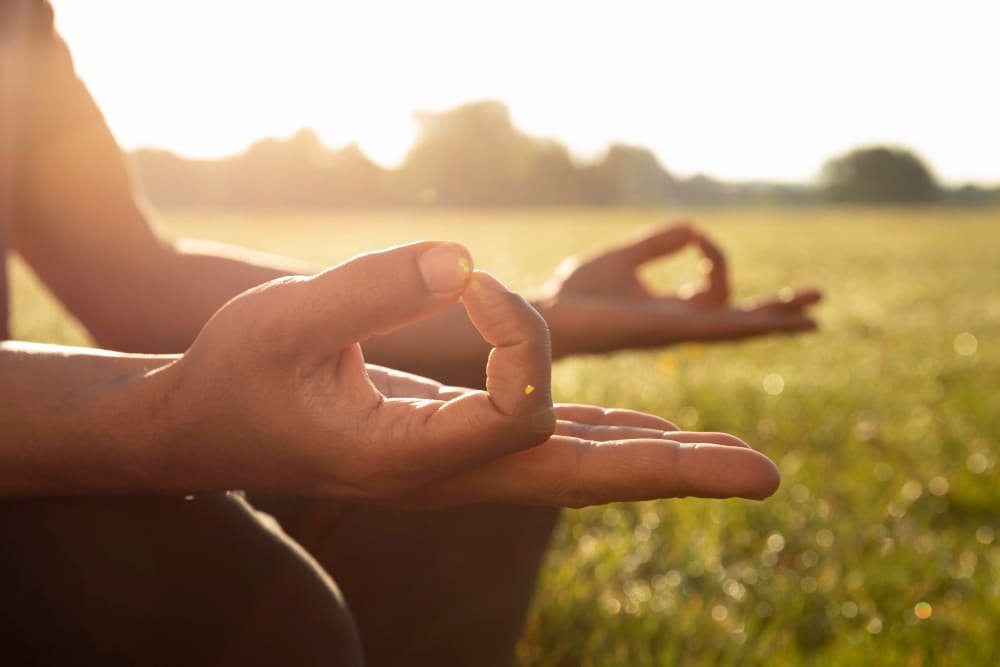
- Gyan Mudra: You will learn about this mudra when you start your yogic studies at the Yoga School in India. It is also quite popular as the mudra of wisdom. You have to join the tip of the index finger with the tip of the thumb, and let the other three fingers be straight or folded. You can rest the back of your hands on your knees when you are doing the same in the cross-legged position. The thumb is a representation of the universal consciousness. The index finger represents the individual’s consciousness. You are bringing about a union of the self and the universe by joining the fingertips.
- Chin Mudra: The Chin mudra is another common mudra that yoga practitioners practice on a daily basis. You can do the same during meditation. The thumbs and the index finger touch one another, but in this case, the palms face downwards. This position of the hands and the fingers has an introspective effect. Your focus and attention also increase manifold.
- Apana Mudra: As a part of the 300 Hour Kundalini Yoga Teacher Training in India, you will also learn about the Apana mudra. You need to connect the tip of the thumb with the tip of the middle and ring fingers, while leaving the other fingers stretched out. You can keep the back of your hand resting on your knee if you are in a seated position. The mudra helps in the detoxification of toxins in the body, making it an essential part of yogic cleansing in Kundalini practice. You will also feel your digestion improving as a result of its practice. Moreover, you can also release your emotional baggage by practising this mudra regularly.
- Dhyana Mudra: In this mudra, you have to keep the left hand with palms facing upwards, on the lap. Then, you have to place the right hand with palms facing upwards, atop the left hand. The fingers of the right hand should be stacked on the fingers of the left hand. The thumbs should just be touching one another gently. It is also quite popular as a gesture of meditation. You will be able to increase your concentration by practising this mudra on a regular basis. It is also known to induce tranquillity. You will often find people with spiritual aims practising this mudra while meditating.
- Vayu Mudra: This is yet another mudra that brings about immense changes in the practitioner. You simply have to bend the index finger and use the thumb to press the index finger down. In this position, the tip of the index finger will touch the base of the thumb. The remaining fingers remain extended. You can allow the back part of the hands to rest on the knees or the thighs. This mudra is one of the most beneficial mudras that you can practice. It is known to balance the air element. If you are suffering from any neurological disorders, then this mudra will be beneficial to you. If you are not that affected by such diseases, but still feel anxious and stressed out, this is a good practice for you.
Significance of Mudras
The learned teachers will explain the significance of mudras in the 300 Hour Kundalini Yoga Teacher Training in India in great detail. Mudras mainly help to improve body functions, and also help in improving the concentration of the mind. If you suffer from diseases like Dementia, Cancer, and Depression, they can aid you and help you to get rid of them. Mudras mainly work on the brain and the nervous system.
Anyone can practice mudras, irrespective of age, gender, and religion. You can practice mudras for 15-30 minutes on a daily basis. Moreover, you can practice mudras while walking, standing, sitting, or watching TV. You can also perform mudras as a life-saving activity when someone is having an attack or stroke. It has been known to save lives. If you want to know more about the mudras and their benefits, you should enroll in the yoga course at a renowned Yoga School in India.
Final Thoughts
Mudras are one of those rare practices that ask very little from you but give back far more than you expect. Fifteen minutes a day, no equipment, no special space — just your hands and your awareness working together toward something deeper.
After everything we have explored here, one thing is clear. Yoga was never meant to live only on the mat. It runs through your breath, your focus, your daily habits, and yes, even the way you hold your hands. Mudras complete that picture in a way nothing else quite does.
If you are serious about going deeper into your practice, a 300 Hour Kundalini Yoga Teacher Training in India will give you the grounded, hands-on experience these teachings truly deserve. Some things are simply better learned in person, from a teacher who has lived them.
Start with one mudra. Practice it with intention. Let the rest follow naturally.