





Lion Pose (Simhasana): How to Do It, Benefits & Precautions
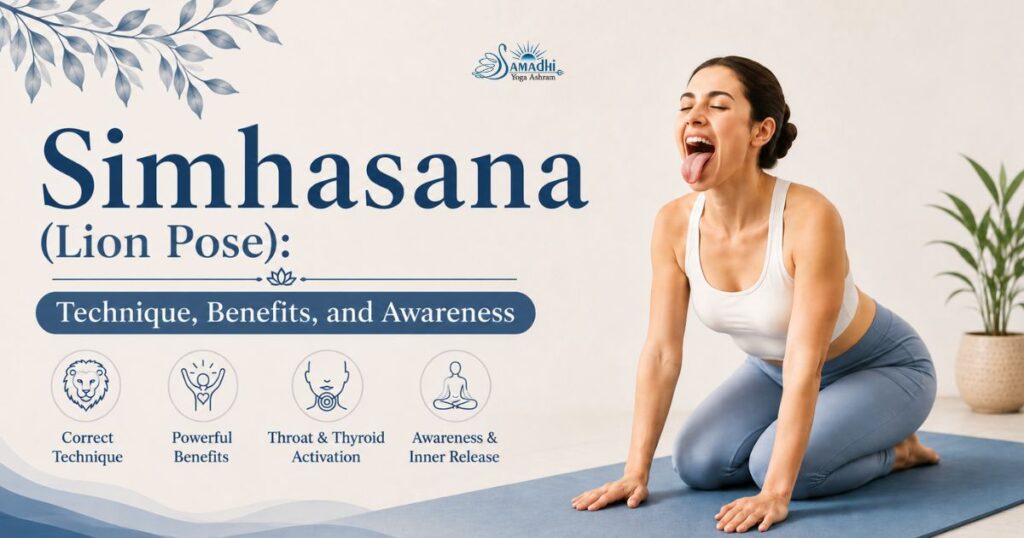
Table of Contents
- What Is Lion Pose (Simhasana)?
- Why Simhasana Deserves More Attention
- How to Do Simhasana
- Step 1: Get Into Position
- Step 2: Hands On the Knees or On the Mat
- Step 3: Breathe In
- Step 4: The Roar
- Step 5: Rest, Then Repeat
- Simhasana Benefits: What Makes This Pose So Effective
- Simhasana Precautions: Who Should Avoid It
- How Simhasana Fits Into a Larger Yoga Practice
- Why Learn Traditional Poses Like Simhasana Through Proper Training
- Bringing It All Together
- Frequently Asked Questions About Simhasana (Lion Pose)
- What is Simhasana used for?
- How many times a day should Lion Pose be practised?
- Can Simhasana help with anxiety?
- Is Lion Pose good for the thyroid?
- Can beginners try Simhasana safely?
- Is it normal to feel a bit embarrassed doing this pose?
- Where can someone learn poses like Simhasana properly?
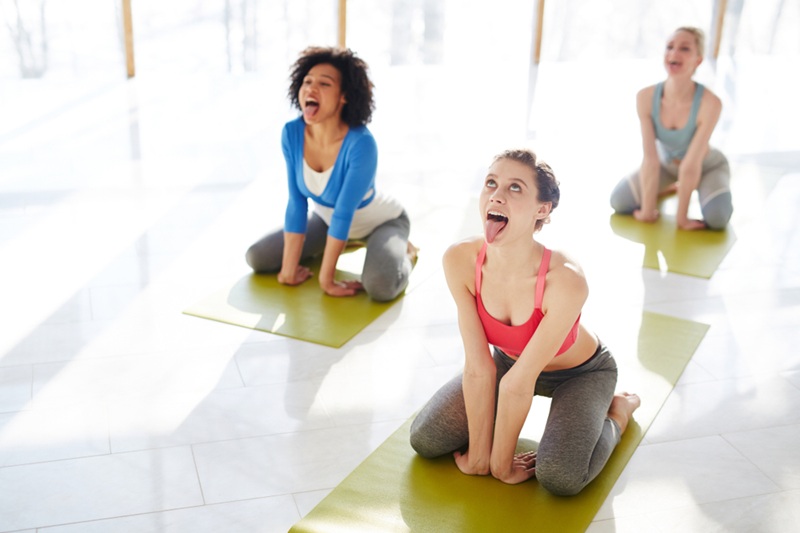
Picture a yoga class. Someone kneels on their mat, spreads their fingers wide on their knees, breathes in deeply, and then lets out a loud roar. Tongue out, eyes rolled up, mouth wide open. A few people nearby start laughing.
That’s a normal reaction, and that’s actually part of the practice.
Many people carry tension in the jaw and throat without even knowing it. Stress does that. And strangely enough, this odd-looking yoga pose, Simhasana, or Lion Pose, is one of the best ways to let that tension go.
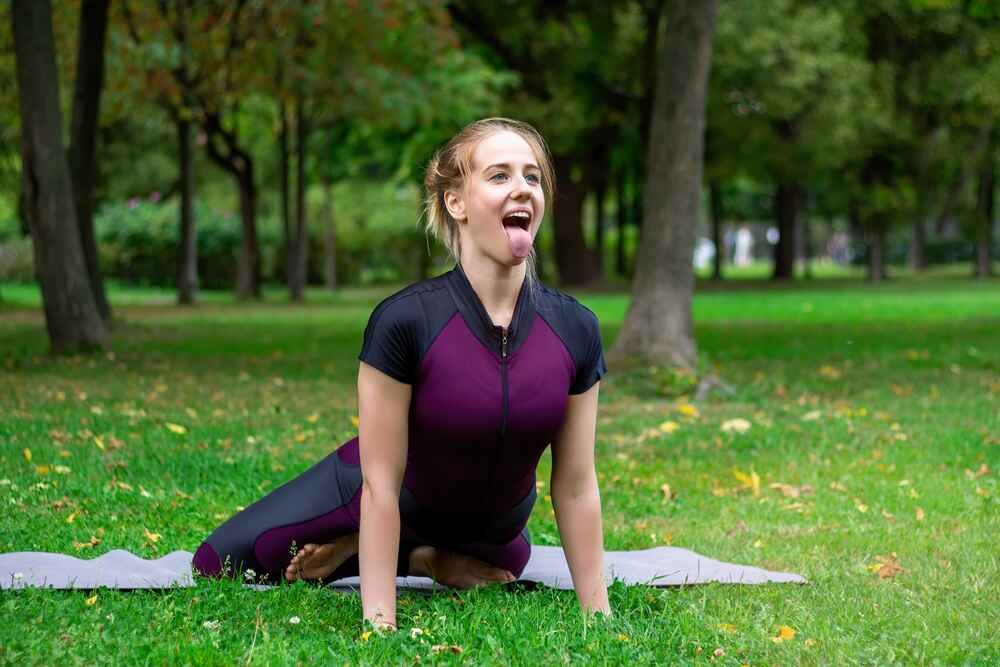
The move is simple: open the mouth as wide as it goes, stretch the tongue toward the chin, and breathe out hard with a sound like a roar. It looks funny, and most people laugh the first few times they try it. But with a little practice, it stops feeling silly and starts feeling like something the face and throat really needed.
This blog covers what Simhasana is, how to do it the right way, who should be careful with it or skip it, and where it fits into a full yoga practice, the kind of detail a proper yoga teacher training would normally walk students through step-by-step.
What Is Lion Pose (Simhasana)?
The name breaks down simply enough. “Simha” is Sanskrit for “lion“, and “asana” means “pose“, so together it’s just “Lion Pose“. The name makes sense because the whole thing is built around mimicking a lion’s roar, the wide-open jaw, the stretched tongue, the intensity of it all. Some practitioners simply call it the lion yoga pose, since the whole shape and sound of it comes from the image of a lion.
What makes it stand out from most other poses is where it works. Nearly everything in yoga targets the body below the neck: hips, spine, shoulders, back of the thighs. This lion yoga pose goes the other way. It’s all about the face, the jaw, the tongue, and the throat, with a bit of a chest and spine stretch thrown in as a bonus.
Older yoga texts talk about this pose as a way to release tension that tends to sit unnoticed in the body for years. There’s also a connection drawn between the throat and how freely a person expresses themselves, which, honestly, makes sense. Most of us do carry stress right there without realizing it.
Why Simhasana Deserves More Attention
Let’s be honest about why this pose gets skipped so often. It looks strange. Picture someone kneeling on a yoga mat, eyes rolled up, tongue hanging out, roaring like a cartoon lion, not exactly the image most people have of a “peaceful yoga session“.
But here’s the important thing: poses that feel strange or uncomfortable at first can have benefits that go beyond what you can see. Simhasana benefits reach further than just a facial stretch. It touches the nervous system, affects voice quality, builds confidence in strange but noticeable ways, and even seems to support immune function according to some traditional beliefs.
If any of that sounds interesting—facial tension, throat health, a stress-relief method that doesn’t require lying still for half an hour—this pose is worth actually trying instead of just reading about.
How to Do Simhasana
Getting this one right takes a little patience. Because the face, tongue, and breath all have to work together, rushing through it kind of defeats the purpose. Anyone new to simhasana yoga should focus less on getting the roar “right” and more on simply following the steps below.
Step 1: Get Into Position
- Start kneeling on the mat in Vajrasana (Thunderbolt Pose), sitting back onto the heels. Knees bothering you? Sitting cross-legged works just as well; there’s no strict rule here.
- Keep the spine upright but not stiff. Shoulders should drop, not hunch.
Step 2: Hands On the Knees or On the Mat
Place both palms flat on the knees (or on the mat, in some variations) and spread the fingers wide, almost like claws. Small detail, but it matters more than people assume; it pulls the whole body into the pose instead of leaving it just as a face exercise.
Step 3: Breathe In
Take a slow inhale through the nose. Let the chest lift a little and the spine stretch upward as the lungs fill.
Step 4: The Roar
Here’s the part everyone remembers afterwards. While exhaling:
- Open the mouth as wide as it comfortably goes.
- Push the tongue out and down, reaching toward the chin.
- Roll the eyes upward, toward the eyebrows, and open them wide.
- Exhale hard through the mouth with a strong “haaa” sound coming from the back of the throat.
- Press the fingers firmly into the knees at the same time.
Step 5: Rest, Then Repeat
Close the mouth and go back to breathing normally for a few seconds before starting the next round.
Somewhere between three and five rounds is a good place to start. A bit of lightheadedness or watery eyes isn’t unusual, but if something feels genuinely off, stop and just breathe normally instead of pushing through.
A quick note for anyone nervous about it: the roar doesn’t need to sound impressive. Nobody’s grading this. Some people barely make a sound the first few times, and that’s completely fine; the stretch and the breathing still do their job either way.
Simhasana Benefits: What Makes This Pose So Effective
Now for the part most people actually came here for. What does this pose really do, beyond looking strange?
- It eases tension in the jaw and face. A lot of people tighten their jaws all day without even noticing; stress does that. The intense stretch here can help release that tightness in a way few other poses manage.
- It sharpens the voice. Because the throat, tongue, and vocal cords are all engaged directly, teachers, singers, and public speakers often lean on this pose. Lion pose yoga benefits tend to show up gradually here, not overnight, but they do show up.
- It may stimulate the thyroid. In traditional yoga, the throat stretch in Simhasana is believed to gently stimulate the thyroid gland, which plays an important role in regulating metabolism and energy. While many yoga practitioners value this benefit, more scientific research is needed to confirm a direct effect on thyroid function.
- It cuts down on stress. It helps reduce stress. Forcefully breathing out with a loud sound can feel surprisingly relieving, almost like releasing built-up pressure. Many people say they feel calmer and lighter after practising just a few rounds of Simhasana.
- It boosts blood flow to the face. The stretch, combined with the strong exhale, pushes more blood into the facial muscles, which can leave the skin looking a bit fresher afterwards.
- It builds respiratory strength. The deep inhale paired with a forceful exhale gives the lungs and diaphragm a workout, which can improve breath control the more it’s practised.
- It may also help build confidence. Opening the mouth wide and making noise, even in a controlled setting, pushes people slightly outside their comfort zone. For anyone who tends to hold back, that small act of expression adds up over time.
- It might help with sleep. Some practitioners fold it into an evening routine to release built-up tension, even though it’s traditionally done in the morning on an empty stomach.
- It has a supportive role with snoring. A few yoga therapists suggest that strengthening the throat and tongue this way might help with mild snoring, though this is not a substitute for medical treatment.
Taken together, these simhasana benefits explain why so many teachers keep coming back to this one odd little pose.

Simhasana Precautions: Who Should Avoid It
Not every pose suits every body, and this one’s no exception. Knowing when to skip it matters just as much as knowing how to do it.
Better to avoid or modify this pose in these situations:
- Recent knee injury or surgery—kneeling puts real pressure on the joint
- Jaw issues like TMJ disorders
- Uncontrolled high blood pressure
- Recent facial or dental surgery
- Vertigo or dizziness (that upward eye roll can make it worse)
- Pregnancy — only with guidance from a qualified instructor
A few general safety notes worth keeping in mind: practice on an empty stomach, ideally in the morning; don’t force the tongue further than what’s comfortable; stop immediately if dizziness kicks in; and if the sound feels embarrassing at first, just practice somewhere private until it feels less strange.
Anyone with an existing health condition should really check with a doctor or a certified yoga teacher before adding this into their routine. It’s a small ask that can save a lot of trouble later.
How Simhasana Fits Into a Larger Yoga Practice
This pose rarely stands alone. It tends to work best woven into a broader sequence alongside pranayama and other seated postures. Teachers often place it near the end of a session focused on the face or throat, pairing it with poses such as the following:
- Ustrasana (Camel Pose), for opening the chest and throat
- Matsyasana (Fish Pose), which stimulates the throat further
- Bhramari Pranayama (Bee Breath), which helps settle the nervous system afterwards
For anyone genuinely interested in how individual poses connect into a full, easy-to-follow practice, this is exactly the kind of detail that gets real attention during a yoga teacher training in India.
Why Learn Traditional Poses Like Simhasana Through Proper Training
Watching a two-minute video and copying a pose is easy enough. But yoga, especially something as old and specific as Simhasana, carries a lot of context that gets lost without someone actually explaining it: breath timing, small alignment tips, and the reasoning behind each step.
This is really where structured training earns its value. At Samadhi Yoga Ashram, students work directly with experienced teachers in a setting built specifically for this kind of focused learning. Some choose the 200 Hour Yoga Teacher Training in Rishikesh, tucked into the quiet foothills of the Himalayas. Others go for Yoga Teacher Training in Bali, with its warmer, slower pace and tropical surroundings. Either way, the training covers far more than the poses themselves; it gets into the philosophy and breathing techniques that give the poses their actual meaning.
For anyone who’s ever wondered if they’re “doing yoga right”, this kind of guided training can clear that doubt quickly.
Bringing It All Together
Simhasana looks like the odd one out, no question. But it’s actually one of the more thoughtfully built poses in the whole practice, working the face, throat, breath, and even mood, all through one simple, repeatable action.
Give it a real shot, not just once out of curiosity, but consistently over a few weeks. The jaw loosens up. The voice starts sounding a touch clearer. And that roar, strange as it feels at first, tends to leave people feeling lighter than expected. Sometimes it’s the poses that feel a little silly that end up teaching the most.
And if this has made you a little more curious about the benefits of simhasana and yoga in general, beyond just the physical shapes, looking into a proper certified training program might be a solid next step.
Frequently Asked Questions About Simhasana (Lion Pose)
What is Simhasana used for?
It’s mainly used to release tension in the face, jaw, and throat, while also improving voice clarity, gently stimulating the thyroid, and easing stress through a deep stretch combined with a forceful exhale.
How many times a day should Lion Pose be practised?
Three to five rounds is a good starting point, ideally in the morning on an empty stomach. That number can increase gradually as it becomes more familiar.
Can Simhasana help with anxiety?
Quite a few practitioners find that it helps release built-up tension; the forceful exhale feels like letting out built-up pressure. That said, it shouldn’t replace professional mental health support when that’s genuinely needed.
Is Lion Pose good for the thyroid?
Traditionally, yes. The throat stretch involved is believed to gently stimulate the thyroid gland, which plays a role in metabolism and hormone balance.
Can beginners try Simhasana safely?
Definitely. It doesn’t require flexibility or strength; the real focus should be on comfortable kneeling and steady breathing rather than a “perfect” roar.
Is it normal to feel a bit embarrassed doing this pose?
Very normal, actually. Most people feel self-conscious the first few times. Practising somewhere private until confidence builds usually solves that.
Where can someone learn poses like Simhasana properly?
Structured programs such as the 200 Hour Yoga Teacher Training in Rishikesh or the 200 Hour Yoga Teacher Training in Bali at Samadhi Yoga Ashram cover traditional asanas like this one in real depth, with correct technique, benefits, and safety all included.
This article is for general information and is not medical advice. If you have a respiratory or heart condition, are pregnant, or are unsure whether these practices suit you, please speak to your doctor before beginning.