




6 Calming Yoga Poses for Stress Relief, Anxiety, and Emotional Exhaustion
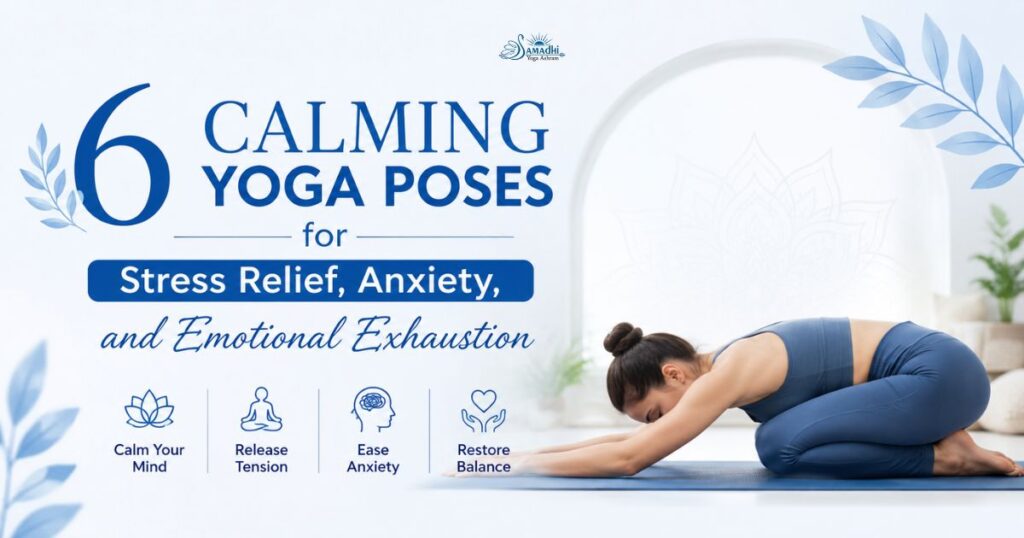
Table of Contents
- Why Yoga Actually Works for Stress — The Science in Simple Terms
- 6 Calming Yoga Poses for Stress Relief and Emotional Exhaustion
- 1. Happy Baby Pose (Ananda Balasana)
- 2. Thread the Needle
- 3. Legs Up the Wall (Viparita Karani)
- 4. Supine Spinal Twist (Supta Matsyendrasana)
- 5. Standing Forward Fold (Uttanasana)
- 6. Child’s Pose (Balasana)
- Best Time of Day to Practise These Poses
- Final Thought
- Frequently Asked Questions
- Can yoga actually help with stress and anxiety?
- How long should I hold each yoga pose for stress relief?
- Is yoga good for beginners dealing with anxiety?
- Can I do these yoga poses before bed?
- How often should I practise yoga for stress relief?
- Can yoga help with burnout and emotional exhaustion?
- Do I need any equipment to practise these yoga poses?
There is a kind of exhaustion that sleep alone cannot fix.
After a long day, your shoulders stay tense, your jaw feels tight, and your mind keeps replaying stress long after the laptop is closed. Over time, this constant tension quietly becomes emotional exhaustion, making it difficult for the body to truly relax, even when it finally has the chance.
But here is the good news: your body does not always need intense workouts to feel better. Sometimes it simply needs slower movement, deeper breathing and a moment to finally let go.
These 6 calming restorative yoga poses are designed for exactly that: gently releasing tension, quieting the mind, and helping your nervous system come back down. Whether you are looking for yoga for stress relief, bedtime yoga, or gentle yoga poses for anxiety, this is your starting place.
Why Yoga Actually Works for Stress — The Science in Simple Terms
When you are stressed from work pressure, screen fatigue, emotional exhaustion, or constant overthinking, your body automatically shifts into “fight-or-flight” mode. Your muscles tighten, your breathing becomes shallow, and your mind struggles to slow down. The problem is that modern stress rarely switches off completely, which means the body stays tense for hours every day and slowly begins storing that stress in the neck, shoulders, chest, hips, and lower back.
This is where yoga for stress relief becomes so powerful. Gentle movement combined with slow, mindful breathing helps activate the parasympathetic nervous system — the body’s natural “rest and digest” state. Deep breathing and longer exhales help lower heart rate, release physical tension, calm racing thoughts, and relax an overstimulated nervous system. This is why restorative yoga poses and yoga poses for anxiety can create an almost immediate feeling of calm and emotional relief after a stressful day.
Research continues to show that gentle restorative yoga poses can have a real effect on both the body and mind. A peer-reviewed study published in MDPI found that even a single session of slow, meditative yoga helped reduce cortisol levels – the body’s primary stress hormone – while also lowering anxiety and improving emotional well-being. The study suggests that mindful breathing, slow movement, and relaxation-based yoga practices can directly help calm an overstimulated nervous system and support better stress regulation over time.
6 Calming Yoga Poses for Stress Relief and Emotional Exhaustion
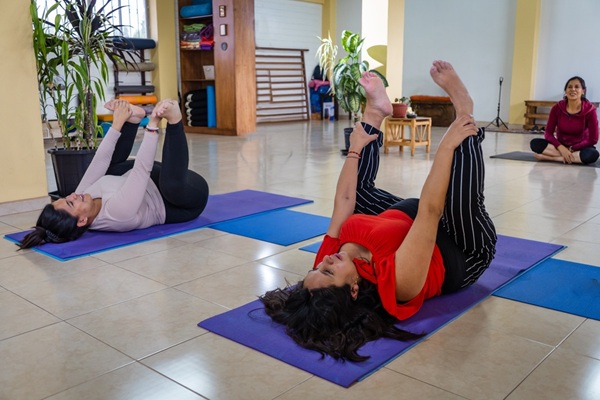
1. Happy Baby Pose (Ananda Balasana)
Happy Baby Pose is one of those rare calming yoga poses that often makes people smile the moment they practise it. This yoga pose gently opens the hips, inner thighs and lower back, areas that often become tight from stress, long hours of sitting and emotional overload. The gentle movement in this pose also creates a calming, self-soothing effect that helps the body and mind relax naturally. When you let yourself move gently, hold your own feet, and breathe, you’re practising a form of self-soothing that works on a neurological level.
Step-by-Step Instructions
- Lie on your back. On an exhale, hug both knees into your chest.
- As you inhale, allow your knees to open slightly wider than your upper body.
- Bring each foot toward the ceiling, flexing it so your soles face up.
- Reach up and hold the sides of your feet
- Gently pull your knees down toward your armpits. Keep your lower back flat on the mat.
- Move side to side
- Practise for 1–2 minutes.
Breathing Guidance: Try taking long, gentle exhales; even a soft sigh out through the mouth can help release stress and calm the nervous system.
If this pose resonates deeply with you and you want to explore hip-opening sequences more intentionally, the 200 Hour Yoga Teacher Training in Rishikesh offers structured, expert-guided practice that takes you well beyond the basics in one of the most powerful places in the world to study yoga.
2. Thread the Needle
Thread the Needle is a gentle floor-based twist that targets the upper back and the muscles at the back of the shoulders. It creates a slow, gentle turn that opens the upper back without any strain.
This pose is especially helpful for people who spend long hours sitting, working on laptops, or scrolling on phones. If yoga for neck and shoulder tension is what brought you here, this pose will quickly become one of your favourites. The gentle twisting movement helps release tightness trapped around the upper back and shoulders, areas that often stiffen from stress, poor posture, and emotional stress.
Step-by-Step Instructions
- Get down on the floor with your hands and knees touching the floor.
- Place your hands directly below your shoulders and your knees directly below your hips.
- Lift your right arm up toward the ceiling.
- Bring your right arm under your left arm.
- Slowly slide your right arm across the floor, with your palm facing up.
- Lower your right shoulder and the right side of your face to the floor.
- Keep your left hand on the floor in front of you.
- Stay in this position for 1–2 minutes and breathe slowly.
- Come back to your hands and knees, then repeat on the other side.
Breathing Guidance: Let each exhale deepen the twist naturally. Don’t force the rotation; just breathe and let the weight of your shoulder do the work.
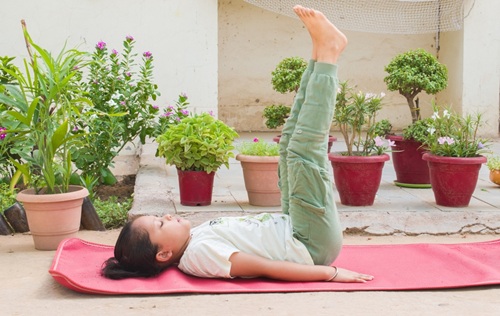
3. Legs Up the Wall (Viparita Karani)
This is one of the most effortless restorative poses in yoga. You simply lie on your back with your legs extended vertically up a wall. There is no effort, no flexibility required, and no balance. Gravity reverses the normal downward flow in your legs and reduces swelling, and within minutes, the nervous system begins to quiet noticeably.
What makes this pose so powerful is its gentle nature. After long hours of standing, sitting, travelling, or dealing with mental exhaustion, the body often feels heavy, overstimulated, and drained. Legs Up the Wall gently encourages the entire body to slow down. As the legs rest above the heart, circulation improves and tension in the lower body begins to soften naturally.
Step-by-Step Instructions
- Sit on the floor next to a wall.
- Lie down on your back and lift your legs up against the wall.
- Move your body closer to the wall until your legs feel comfortable.
- Let your arms rest by your sides, with your palms facing up.
- Close your eyes and relax your legs.
- Stay in this position for 5–15 minutes.
Breathing Guidance: Breathe slowly and naturally. With each exhale, consciously let your jaw, shoulders, and hands soften. There is nothing to do here — that is the entire practice.
4. Supine Spinal Twist (Supta Matsyendrasana)
The Supine Spinal Twist is one of the most soothing yoga poses for anxiety because it relaxes both the spine and the mind at the same time. In this pose, you lie on your back, hug one knee into your chest, and gently guide it across the body while keeping both shoulders grounded. The soft spinal rotation creates a deep release throughout the lower back, hips, waist, and shoulders — areas where stress and emotional tension often quietly build.
For people dealing with screen fatigue, emotional overwhelm or stiffness from sitting all day, this pose can feel incredibly relieving within just a few breaths. The gentle twisting motion helps decompress the spine, improve circulation and release tightness stored in the back body.
Step-by-Step Instructions
- Lie down on your back with your legs straight.
- Bend your right knee and bring it toward your chest.
- Hold your right knee with your left hand and slowly move it across your body to the left.
- Let your right knee rest on the floor if it feels comfortable.
- Stretch your right arm out to the side, with your palm facing up.
- Turn your head to the right if it feels comfortable.
- Keep both shoulders on the floor. Do not force your knee down.
- Stay here for 1–2 minutes and breathe slowly.
- Bring your right knee back to the centre and repeat on the other side.
Breathing Guidance: On each inhale, feel your chest expand. On each exhale, let your knee drop a little heavier toward the mat.
5. Standing Forward Fold (Uttanasana)
Standing forward fold is one of the most calming restorative yoga poses for both the body and mind. As you fold forward and let your upper body hang heavy, the spine decompresses, the neck softens, and built-up physical tension begins to release naturally. The folded shape also encourages slower, deeper breathing, helping the body shift out of “fight-or-flight” mode and into a calmer, more regulated state. This is gentle yoga for relaxation, working at its most elemental: when you bow forward, you are physically signalling to your nervous system that the urgency is over.
Emotionally, Uttanasana can feel like physically letting go of the stress, pressure, and mental heaviness collected throughout the day. It is quiet. It is humble. And it is one of the most underrated yoga poses for emotional stress and nervous system regulation available to us.
Step-by-Step Instructions
- Stand with your feet slightly apart.
- Bend your knees as needed.
- Slowly bend forward from your hips and let your upper body hang down.
- Let your arms hang down toward the floor.
- Relax your neck and let your head hang down.
- Keep your knees bent as much as you need.
- Stay in this position for 1–2 minutes and breathe slowly.
Breathing Guidance: Each inhale creates length in the spine. Each exhale lets you fold a little deeper without effort. Long, slow exhales here directly calm the nervous system.
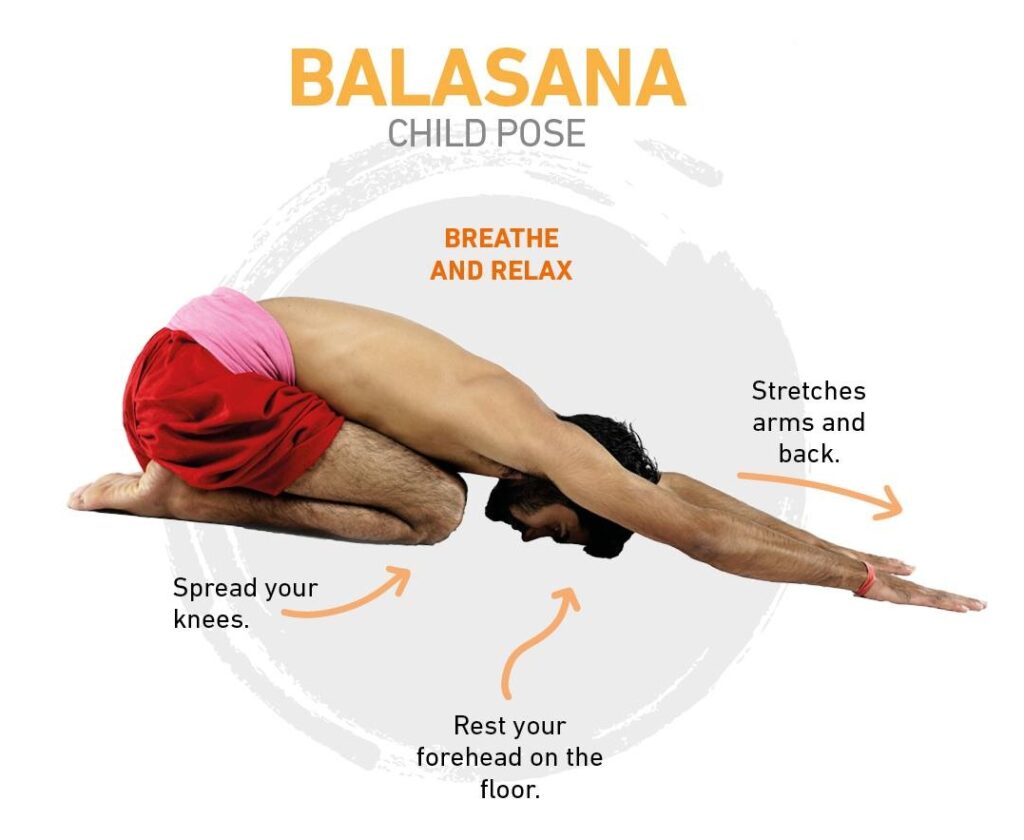
6. Child’s Pose (Balasana)
Child’s Poseis often called yoga’s “reset button” because of how quickly it encourages the body to soften and the nervous system to downshift. At first glance, it may look simple: you kneel, fold forward, and rest, but the effect it has on stress and emotional exhaustion can be surprisingly powerful.
Child’s Pose gently releases accumulated tension along the spine, hips, neck, and shoulders — areas where emotional stress often gets stored unconsciously, sometimes for years. Emotionally, the curled, inward posture creates a feeling of comfort, protection, and quiet that many people deeply need but rarely allow themselves to experience. There is something about folding inward that gives the nervous system full permission to stop performing, stop managing, and simply be.
For people dealing with burnout, emotional exhaustion, anxiety, screen fatigue, or mental overstimulation, Child’s Pose can feel less like an exercise and more like a moment of finally exhaling after holding tension all day. It is one of the most healing yoga poses for anxiety and emotional stress, and perhaps the most honest reminder that rest is not something you have to earn.
Step-by-Step Instructions
- Kneel on the floor.
- Bring your big toes together and keep your knees comfortable.
- Slowly sit back on your heels.
- Bend forward and lower your forehead to the floor.
- Stretch your arms forward, or keep them beside your body.
- Relax your shoulders and neck.
- Close your eyes and breathe slowly.
- Stay here for 1–3 minutes, or as long as you feel comfortable.
Breathing Guidance: Feel your breath moving into your lower back and the back of your ribcage. Each inhale gently expands the back body. Each exhale lets your hips sink a little heavier toward your heels. Slow, deep, effortless.
If Child’s Pose feels like coming home and you want to go deeper, Yoga Teacher Training in Indiaat Samadhi Yoga Ashram is where many practitioners take that meaningful next step.
Best Time of Day to Practise These Poses
- Morning practice, done within the first hour of waking, sets a calm and grounded neurological baseline for the entire day.
- Even ten minutes of gentle yoga for relaxation before reaching for your phone can meaningfully reduce the reactive stress response throughout the morning.
- Starting the day with intentional breath and movement tells the nervous system, before the day gets busy, that you can handle the day ahead.
- Evening practice, particularly in the thirty to sixty minutes before bed, works as a powerful relaxing routine.
- After a day of accumulated physical tension, shallow breathing, and emotional load, these restorative yoga poses help the body actively transition out of sympathetic activation and into the parasympathetic state needed for deep, restorative sleep. This makes bedtime yoga particularly effective for people who feel wired at night, struggle to switch off, or wake in the early hours with an anxious mind.
Final Thought
If you made it through even one of these poses today, that matters.
Stress relief does not have to look like a 60-minute class or a perfectly still mind. Sometimes it looks like lying on your back with your legs up a wall for eight quiet minutes. The truth about yoga for stress relief is simple: it works not because it is complicated, but because it asks you to slow down in a world that never stops asking you to speed up.
Even five to ten minutes of gentle yoga for relaxation, practised consistently, can begin to shift how your nervous system responds to daily pressure. Over time, the shoulders do not climb quite as high. The breath comes a little easier.
Roll out your mat tonight. Begin with one pose. Breathe slowly. Let your body remember that stillness is not the absence of life — it is where the deepest part of it lives. Your calming yoga practice is waiting for you. It always has been.
Read More: Utkatasana (Chair Pose): Benefits, Steps & 10 Common Mistakes Beginners Must Avoid
Frequently Asked Questions
Can yoga actually help with stress and anxiety?
Yes, absolutely. Yoga activates the parasympathetic nervous system (your “rest and digest” mode), which directly counters the stress response. Even 10 minutes of gentle, slow-paced yoga can noticeably reduce cortisol levels and calm an overactive mind.
How long should I hold each yoga pose for stress relief?
For restorative or calming poses, 1–3 minutes per side is ideal. Poses like Legs Up the Wall can be held for up to 15 minutes. The longer you stay and breathe, the deeper the nervous system release becomes.
Is yoga good for beginners dealing with anxiety?
Yes, especially the gentle, floor-based poses in this guide. You do not need prior yoga experience, flexibility, or any equipment. Start with Child’s Pose or Happy Baby Pose and simply focus on your breath.
Can I do these yoga poses before bed?
Yes, all six of these poses make excellent bedtime yoga. They are designed to calm the nervous system, release physical tension, and prepare both the body and mind for deep, restful sleep.
How often should I practise yoga for stress relief?
Even 5–10 minutes daily makes a meaningful difference. Consistency matters far more than duration. A short daily practice is significantly more effective for stress and anxiety than an occasional long session.
Can yoga help with burnout and emotional exhaustion?
Yes. Restorative yoga poses are particularly effective for burnout because they require no effort, only rest and breath. They signal to a too-tired nervous system that it is finally safe to slow down.
Do I need any equipment to practise these yoga poses?
No, just a mat or a soft surface like a carpet or a folded blanket. For Legs Up the Wall, you only need a clear wall. Most of these poses can even be done on your bed.
This article is for general information and is not medical advice. If you have a respiratory or heart condition, are pregnant, or are unsure whether these practices suit you, please speak to your doctor before beginning.