





Yoga for Lungs: Simple Poses and Breathing Exercises for Easier Breathing
Table of Contents
- Is Yoga Good for the Lungs?
- What Yoga for Lungs Can and Can’t Do
- Before You Start
- Breathing Exercises for Lungs: Start with These Two
- 1. Belly Breathing (Diaphragmatic Breathing)
- 2. Pursed Lip Breathing
- Pranayama Breathing Exercises: Which Pranayama Is Good for Breathing?
- 1. Three-Part Breath (Dirga Pranayama)
- 2. Alternate Nostril Breathing (Nadi Shodhana)
- 3. Humming Bee Breath (Bhramari)
- 4. Skull Shining Breath (Kapalbhati)
- Which Yoga Is Good for the Lungs? 5 Easy Poses
- 1. Cat-Cow Pose (Marjaryasana-Bitilasana)
- 2. Cobra Pose (Bhujangasana)
- 3. Bridge Pose (Setu Bandhasana)
- 4. Seated Spinal Twist (Chair Version)
- 5. Supported Fish Pose (Matsyasana with a Blanket)
- Can Yoga Improve Lung Capacity?
- A 15-Minute Yoga for Lungs Routine
- Why a Good Teacher Helps
- When to See a Doctor
- Final Thoughts
- Frequently Asked Questions
- How long does yoga for lungs take to work?
- Can I do yoga if I have asthma or COPD?
- Can yoga protect my lungs from air pollution?
- Can yoga detox or clean my lungs?
- Should I breathe through my nose or mouth?
Most of us don’t think about how we breathe. We just do it but watch yourself for a minute. Your breaths are probably quick and shallow and your shoulders might be a little tight.
Yoga for lungs is about slowing that down. Below, you’ll find easy poses and breathing practices to try at home, plus honest facts on what yoga can and can’t do.
Short answer: Yoga can help you breathe more easily and use your lungs better. It trains your breathing muscles, helps your posture and calms your body. But it won’t make your lungs bigger and it can’t treat lung disease on its own.
Is Yoga Good for the Lungs?
For most people, yes. Yoga for lungs is a gentle, safe way to build better breathing habits.
Your main breathing muscle is the diaphragm. It sits just below your lungs, shaped like an upside-down bowl. The American Lung Association says that when your lungs are healthy, this muscle does about 80 percent of the work of breathing.
Stress and sitting in a bent position change that. We start using our neck and shoulders instead, which takes more effort. Yoga breathing exercises help you go back to using your diaphragm. And yoga poses open your chest, so your lungs have more space to move.
What does the research say?
The research looks good, but the gains are small.
- Asthma: A Cochrane review of 15 studies with 1,048 people found that yoga probably helps a little with asthma symptoms and quality of life. Its effect on lung test results and medicine use was less clear.
- COPD: A 2019 review of 11 studies with 586 patients found that people with COPD who did yoga could walk a bit farther and had slightly better lung test results. These benefits showed up mainly with breathing-focused yoga, not with poses alone.
In most studies, people kept taking their usual medicine. Yoga was an add-on, not a swap.
What Yoga for Lungs Can and Can’t Do
People often mix these up, so let’s keep it simple:
- Supporting Healthy Breathing: Yes, it helps you build better breathing habits.
- Making Breathing Easier and More Aware: Yes, this is the biggest benefit.
- Increasing Lung Capacity: Not the way most people think, your lungs won’t get bigger.
- Treating a Lung Condition: No, it may help some people feel better alongside treatment but it isn’t a treatment.
A quick note: traditional yoga links breath to prana, or life energy. That’s a meaningful idea for many people but science cannot test or measure it. Studies look at things like how fast you breathe, symptoms, and lung test results.
Before You Start
- Practice before eating, or wait 2 to 3 hours after a meal.
- Sit tall and let your shoulders drop.
- Breathe in through your nose unless told otherwise.
- Stop if you feel dizzy or out of breath.
- If you have a lung or heart problem, check with your doctor first.
Breathing Exercises for Lungs: Start with These Two
Lung recovery teams teach these two to people with asthma and COPD, so they’re a safe start for almost anyone.
1. Belly Breathing (Diaphragmatic Breathing)
How to do it:
- Sit up straight or lie on your back.
- Put one hand on your chest and one on your belly.
- Breathe in slowly through your nose and let your belly rise like a balloon, keep your chest fairly still.
- Breathe out slowly, a little longer than your breath in.
- Keep going for about 5 minutes.
Why it helps: It slows your breathing and helps you breathe more easily, so breathing takes less energy.
Be careful: Keep your neck and shoulders soft. If you have COPD, ask your doctor or a breathing therapist to show you how to do it.
2. Pursed Lip Breathing
How to do it:
- Breathe in through your nose for a slow count of 2.
- Shape your lips like you’re blowing out a candle.
- Breathe out gently through your lips for a count of 4.
- Repeat until your breathing settles.
Why it helps: It keeps your airways (breathing tubes) open a bit longer and helps push out air that gets stuck in the lungs. It’s helpful after climbing stairs or walking fast.
Be careful: Blow softly, don’t force it. If you still can’t catch your breath, get medical help.
Pranayama Breathing Exercises: Which Pranayama Is Good for Breathing?
Short answer: If you’re new, stick with gentle ones like three-part breath, alternate nostril breathing, and humming bee breath. Fast ones like Kapalbhati are only for healthy, experienced people.
Pranayama breathing exercises are yoga’s breath practices. Here are four, from easiest to hardest.
1. Three-Part Breath (Dirga Pranayama)
How to do it: Sit or lie down and breathe in slowly, filling your belly first, then your ribs, then your upper chest then breathe out in the opposite order. Do 8 to 10 breaths.
Why it helps: It’s one of the easiest deep breathing exercises in yoga. Over time, full breaths start to feel natural.
Be careful: Don’t strain for the biggest breath ever. A full, easy breath is enough.
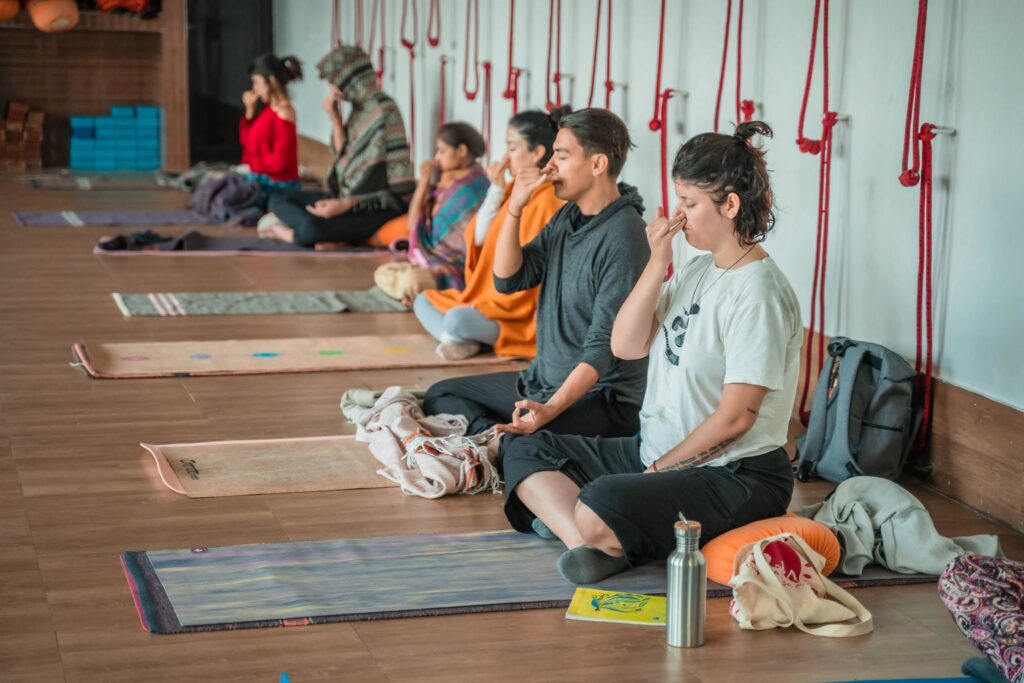
2. Alternate Nostril Breathing (Nadi Shodhana)
How to do it:
- Sit tall and close your right nostril with your right thumb and breathe in through the left.
- Close the left nostril with your ring finger then open the right and breathe out.
- Breathe in through the right, then close it and breathe out through the left.
- That’s one round. Do 5 to 10.
Why it helps: It slows your breathing and helps you relax, which makes breathing feel easier.
Be careful: Skip it if your nose is blocked and don’t hold your breath when changing nostrils unless a trained teacher is guiding you.
3. Humming Bee Breath (Bhramari)
How to do it: Sit and close your eyes. Breathe in through your nose and breathe out with your mouth closed while humming softly, like a bee. Repeat 5 to 7 times.
Why it helps: Humming makes your breath out longer and slower without effort. Most people find it very soothing.
Be careful: Keep the hum soft and stop if you feel light headed.
4. Skull Shining Breath (Kapalbhati)
How to do it: Sit tall and take a normal breath in then push the air out quickly through your nose by pulling your belly in. Let the next breath in happen on its own. Start with 10 to 15 breaths, then rest.
Why it helps: Yoga tradition sees it as cleansing and energizing. There’s much less medical proof for it than for slow breathing.
Be careful: Yoga teachers usually say to avoid it if you’re pregnant or have high blood pressure, heart disease, a hernia, epilepsy or recent surgery. With asthma or COPD, ask your doctor first. It’s best learned from a teacher.
Read More: 5 Pranayamas That You Should Make a Part of Your Daily Life
Which Yoga Is Good for the Lungs? 5 Easy Poses
Short answer: Simple poses that open your chest, stretch your sides and help you sit up straighter.
Bending your body reduces the space your diaphragm needs. These yoga for lungs poses do the opposite. Breathe slowly through your nose in each one.
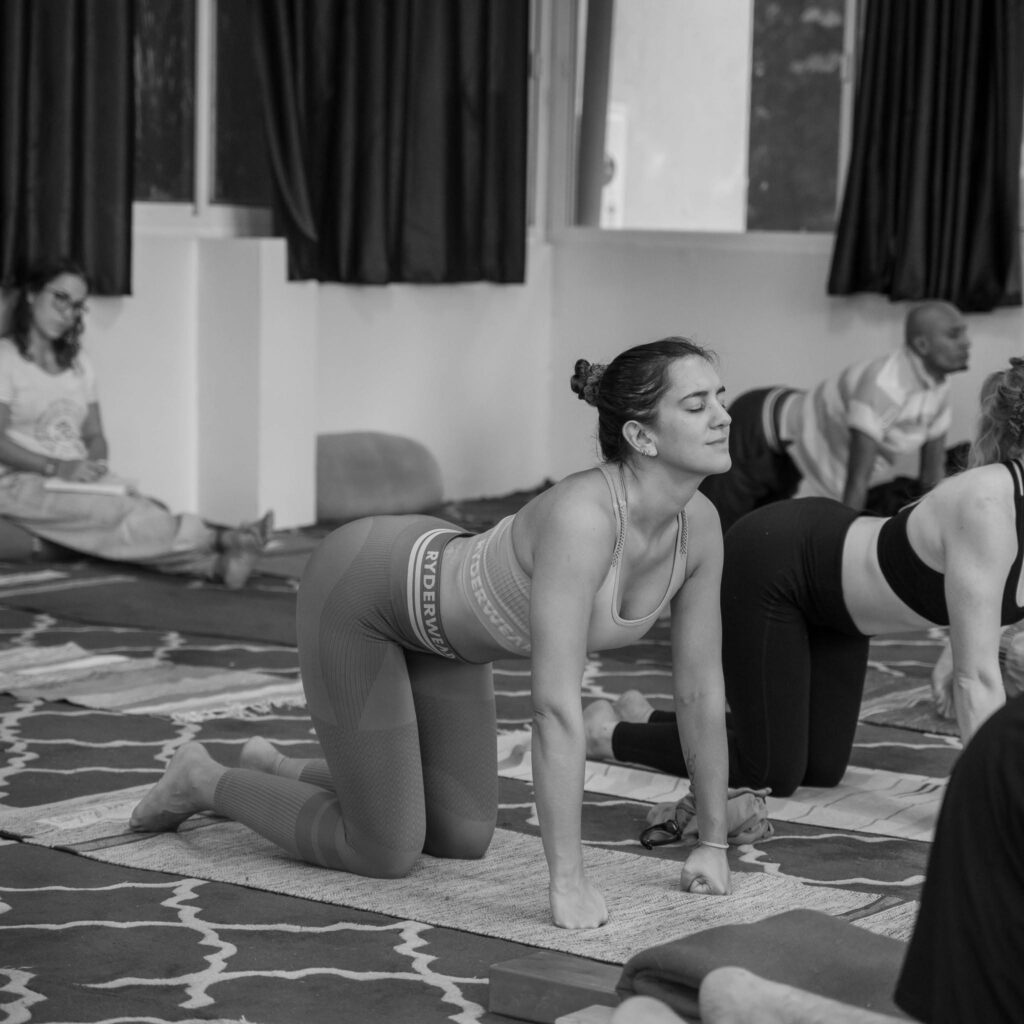
1. Cat-Cow Pose (Marjaryasana-Bitilasana)
How to do it: Start in a tabletop position with your hands and knees on the floor. Breathe in, lower your belly toward the floor and lift your chest (Cow) then breathe out, round your back and bring your chin toward your chest (Cat). Repeat 8 to 10 times.
Why it helps: It links breath with movement and loosens your spine and ribs.
Be careful: Use a folded blanket under sore knees and go easy if your neck hurts.
2. Cobra Pose (Bhujangasana)
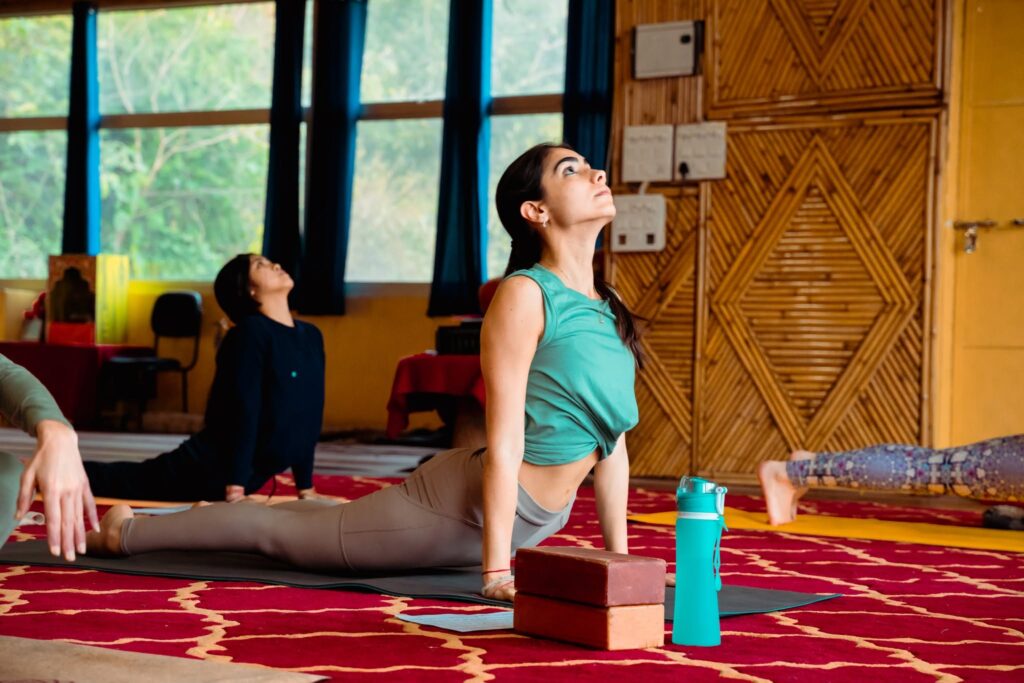
How to do it: Lie on your tummy with hands on the floor next to your chest. Gently press your hands into the floor and slowly lift your chest and stay for 3 to 5 breaths.
Why it helps: It opens your chest. Great if you sit bent forward over a laptop.
Be careful: Only lift as high as feels good. Skip it with a back injury or during pregnancy.
3. Bridge Pose (Setu Bandhasana)
How to do it: Lie on your back, knees bent, feet flat. Press into your feet and lift your hips. Hold for 3 to 5 breaths, then lower slowly.
Why it helps: It opens your chest so your ribs have more space to spread.
Be careful: Don’t turn your head while your hips are up and skip it if you have neck trouble.
4. Seated Spinal Twist (Chair Version)
How to do it: Sit tall on a chair. Breathe in and grow taller then breathe out and turn to the right, holding the back of the chair. Stay for 3 to 5 breaths, then switch sides.
Why it helps: It stretches the muscles around your ribs. The chair version is easy for beginners and older adults.
Be careful: Turn gently and avoid deep twists with back problems or during pregnancy.
5. Supported Fish Pose (Matsyasana with a Blanket)
How to do it: Roll up a blanket and lie back so it sits under your upper back, just below your shoulder blades, the bones at the back of your shoulders. Let your arms fall open. Rest for 1 to 3 minutes.
Why it helps: Your chest opens while the rest of you fully relaxes.
Be careful: Start with a thin roll. Put a pillow under your head if your neck feels pulled.
Read More: Matsyasana (Fish Pose): Steps, Benefits & Precautions Explained
Can Yoga Improve Lung Capacity?
Short answer: It can’t make your lungs bigger but it can help you use the space you already have.
The Cleveland Clinic explains that breathing exercises can help you feel less out of breath but they don’t change how much air your lungs hold.
So what do breathing exercises to increase lung capacity really do? They can:
- Make your breathing muscles stronger
- Help you take slower, fuller breaths
- Improve your posture so your lungs aren’t pressed
- Help you feel less out of breath in daily life
You’ll get more from breathing exercises to increase lung capacity if you also walk, swim or cycle. And don’t make a habit of long breath-holding to “stretch” your lungs without a doctor’s guidance.
A 15-Minute Yoga for Lungs Routine
Try this 4 or 5 days a week:
- Belly breathing – 3 minutes
- Cat-Cow – 1 minute
- Cobra – 3 to 5 breaths, twice
- Seated spinal twist – 3 to 5 breaths each side
- Bridge – 3 to 5 breaths, twice
- Three-part breath – 2 minutes
- Alternate nostril breathing – 2 minutes
- Supported fish pose – 2 minutes
Once these deep breathing exercises feel easy, add a few more minutes.
Why a Good Teacher Helps
Yoga breathing exercises look simple but it’s easy to strain or hold your breath without noticing. A trained teacher can spot this and tell you what to skip.
If you want to really understand pranayama breathing exercises, courses like a Yoga Teacher Training in India or a Yoga Teacher Training in Bali usually spend a lot of time on breath work and safe practice. Even a few classes with a good teacher can make your home practice safer.
When to See a Doctor
Yoga doesn’t replace medical care. Talk to a doctor if you:
- Have asthma, COPD or another lung condition
- Get out of breath more than you used to
- Have a cough that won’t go away
- Have trouble breathing or feel tight in your chest
Get emergency help right away if you’re short of breath along with chest pain or pressure, feel sick or faint.
If you have a lung condition, ask your doctor about pulmonary rehab (lung recovery treatment). It often uses the same breathing exercises for lungs you’ve read about here.
Final Thoughts
You don’t need to be flexible to breathe better. Start with five minutes of belly breathing a day, then add a few gentle poses.
Yoga for lungs won’t make your lungs bigger or cure a lung problem but it can help you breathe more easily and feel calmer. If you have breathing trouble, chest pain or a cough that won’t go away, talk to a doctor first.
Take one slow breath in, let it out even slower and you’ve already started.
Frequently Asked Questions
How long does yoga for lungs take to work?
You’ll likely feel calmer after your first session. Breathing more easily usually takes a few weeks of regular practice but the time can vary from person to person.
Can I do yoga if I have asthma or COPD?
Often, yes, but ask your doctor first. Start with slow practices, skip Kapalbhati, keep your inhaler close and keep taking your medicine.
Can yoga protect my lungs from air pollution?
No. Yoga can’t clean the air or undo what pollution does. On bad air days, check the air quality index (AQI), stay indoors and practice inside. A well-fitted mask helps when you go out.
Can yoga detox or clean my lungs?
There’s no good proof of that. Your lungs have their own way of clearing things out. The best things you can do are quit smoking, avoid other people’s smoke, get your flu and pneumonia shots and keep the air at home clean.
Should I breathe through my nose or mouth?
Mostly your nose, especially when breathing in. It warms and cleans the air and slows your breath. A few practices, like pursed lip breathing, use your mouth to breathe out.
This article is for general information and is not medical advice. If you have a respiratory or heart condition, are pregnant, or are unsure whether these practices suit you, please speak to your doctor before beginning. Yoga poses and breathing exercises should be practiced with proper guidance from a qualified yoga teacher to help ensure safe and correct practice.